

Abstract:
Bangladesh’s universities have historically played a formative role in national political transformation. Yet the contemporary politicisation of student organisations and academic life has increasingly undermined institutional autonomy, academic quality, and student welfare. This article examines how partisan capture of campus politics distorts governance, incentives, and meritocratic norms, and argues for structural reforms to restore universities as spaces of critical inquiry rather than partisan contestation.
Introduction:
Universities are expected to serve as sites of intellectual independence, critical reasoning, and societal advancement. In Bangladesh, however, higher education institutions have become deeply entangled with national partisan politics. The result is not political engagement in its constructive sense, but systemic politicisation that weakens governance, erodes academic standards, and compromises the educational mission of universities.
Historical Legacy and Contemporary Distortion:
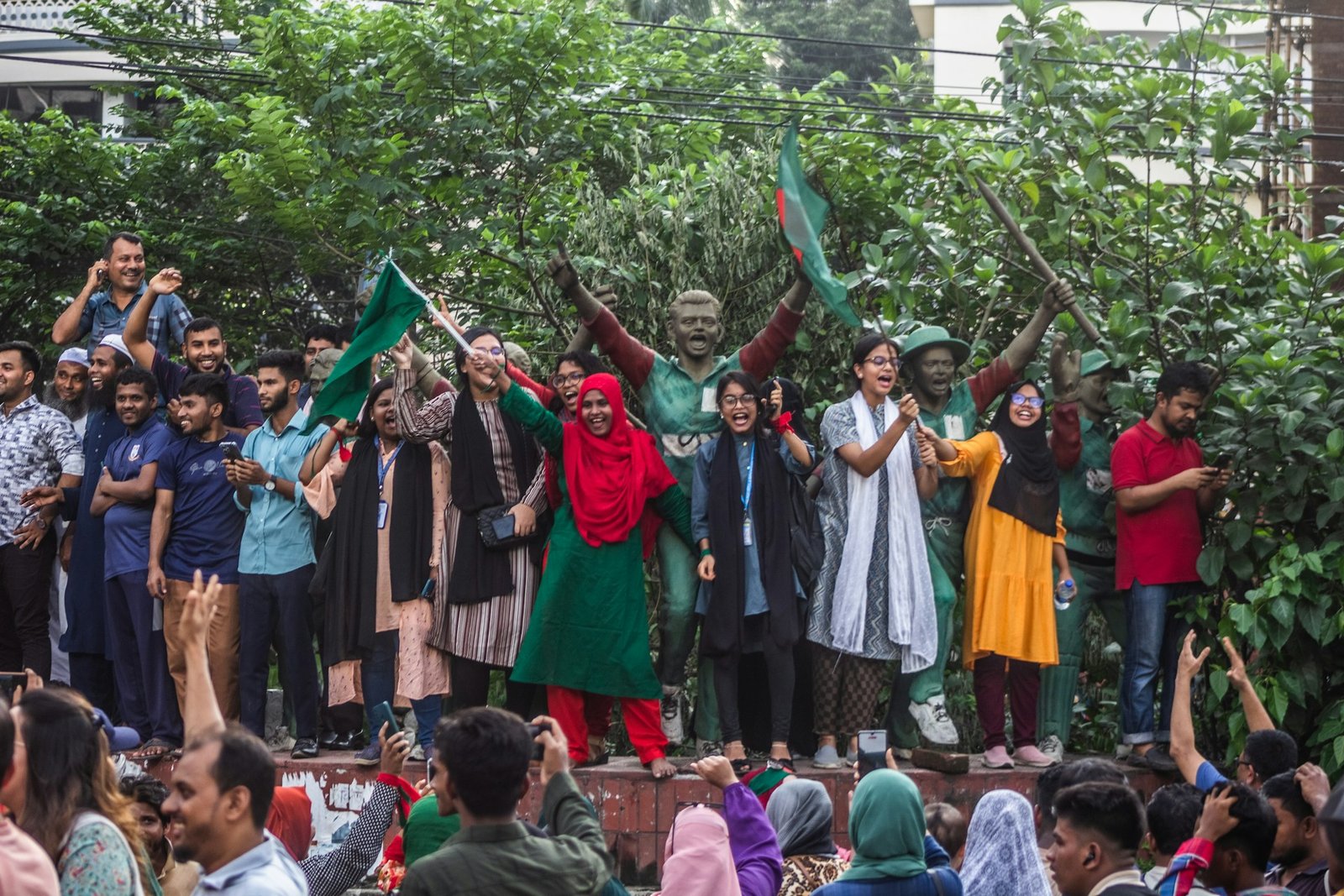
Student politics in Bangladesh has a complex history, often celebrated for its decisive role in the Language Movement of 1952, the Liberation War of 1971, the mass student led uprising against military dictatorship in 1990, and more recently the mobilisation against authoritarian excesses and democratic erosion in 2024. These moments illustrate the capacity of students to act as a moral and political conscience of society during periods of national crisis.
However, this historical legacy has been increasingly instrumentalised to justify the routine domination of campuses by partisan student organisations. In everyday university life, student politics now bears little resemblance to these principled episodes of resistance. Student bodies are predominantly aligned with national political parties and operate less as mechanisms of representation than as tools of territorial control and political signalling. Access to residential halls, academic opportunities, and even personal safety is frequently contingent on political affiliation rather than merit or institutional rules.
Consequences for Academic Life and Student Outcomes:
The effects of politicisation are both immediate and structural. Campus violence, intimidation, and factional conflict disrupt academic calendars and extend time to degree completion. Informal power structures discourage participation by politically unaffiliated students, disproportionately affecting those from marginalised backgrounds. Learning environments characterised by fear and coercion inevitably weaken student engagement, creativity, and academic ambition.
Beyond student politics, the increasing politicisation of academic staff represents a further institutional risk. While academics retain the right to political expression, problems arise when partisan alignment influences appointments, promotions, research funding, and leadership selection. Perceptions of political favouritism, whether substantiated or not, undermine trust in governance systems and weaken institutional legitimacy.
Implications for Knowledge Production and Governance:
When academic advancement is perceived to depend on political proximity rather than scholarly contribution, research agendas become constrained. Intellectual pluralism gives way to ideological conformity, and critical or dissenting perspectives are marginalised through formal or informal mechanisms. Over time, universities risk becoming echo chambers rather than sites of innovation and critical thought.
At a societal level, this dynamic reproduces patterns of patronage and loyalty driven advancement that extend well beyond higher education. Graduates socialised within politicised institutions are less likely to challenge authority on principled grounds and more likely to reproduce adversarial political cultures in public and professional life.
Policy Implications and Reform Agenda:
Universities need not, and should not, be politically indifferent institutions. Engagement with social justice, governance, and national development is intrinsic to higher education. However, a clear distinction must be drawn between critical civic engagement and partisan capture.
Policy reform should focus on depoliticising student representation by severing formal and informal links with national party structures and strengthening independent student unions focused on welfare and academic quality. University governance frameworks must enforce codes of conduct consistently, regardless of political affiliation. For academic staff, transparent and merit-based systems of recruitment, promotion, and leadership appointment are essential to restoring confidence in institutional processes.
Conclusion:
The long term sustainability of Bangladesh’s higher education system depends on reclaiming universities as spaces of reasoned debate rather than partisan rivalry. Without deliberate reform, politicisation will continue to undermine academic excellence, institutional autonomy, and social trust. Restoring universities to their core mission is not merely an educational imperative, but a national development priority.