

Society
This theme focuses on social trends and their policy implications. Research examines civil society, inequality, identity, migration, digital communication, and radicalization, highlighting how societal change affects governance, security, and economic participation.
Expert Comments
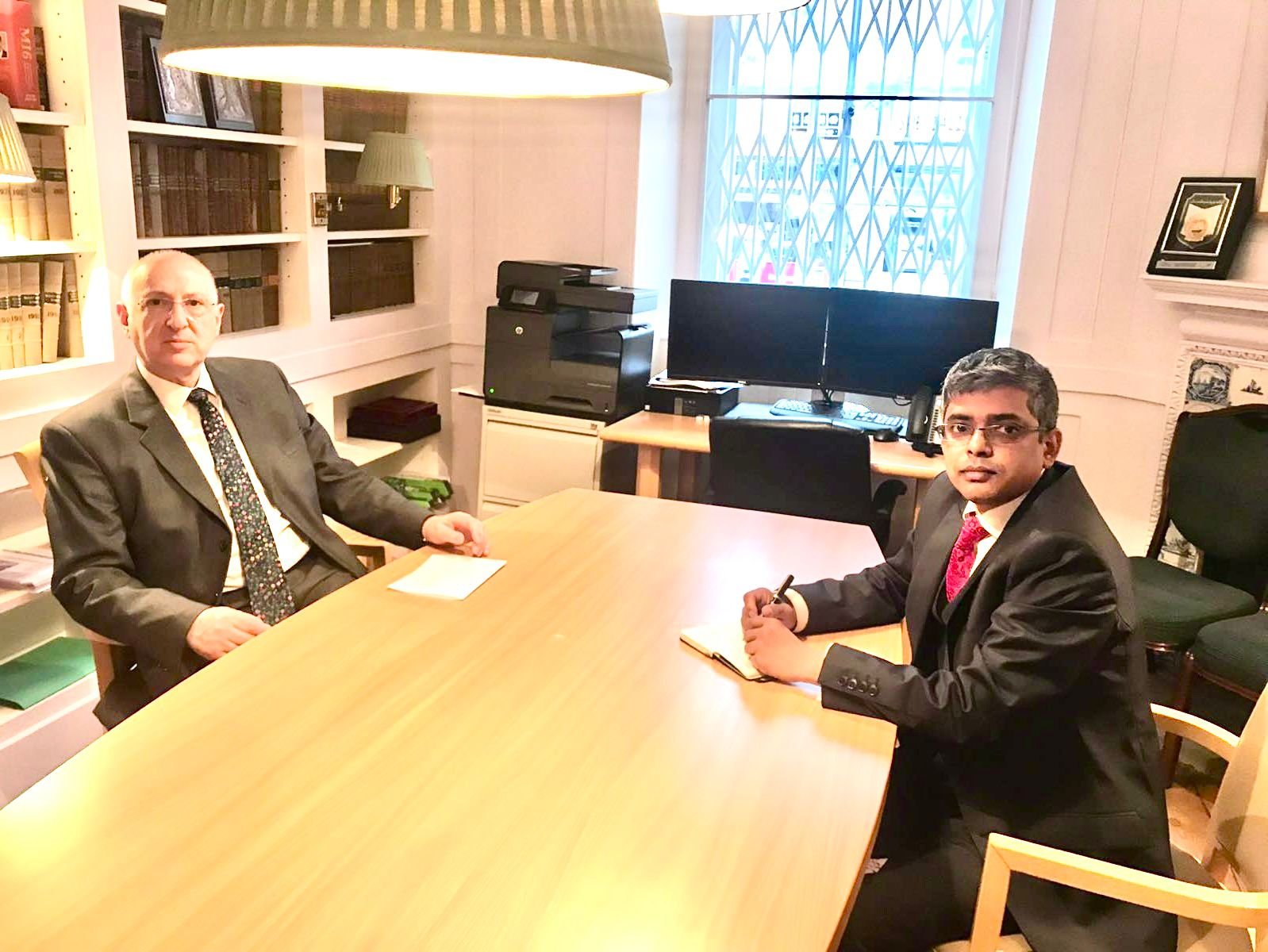
Exclusive: ‘Bangladesh Must Return to the Rule of Law’ — Lord Carlile Warns from House of Lords
Senior British lawmaker Lord Alex Carlile has issued a stark warning about Bangladesh’s political and judicial direction, calling for urgent restoration of the rule of law, free and fair elections, and political plurality, during an exclusive interview with Politika News at the House of Lords.Speaking on the sidelines of a parliamentary seminar on Bangladesh, Lord Carlile said the discussion was essential for British parliamentarians, many of whom maintain long-standing support for Bangladesh and its democratic aspirations.“I think it’s very important for British parliamentarians to discuss what is going on in Bangladesh. Many of us here feel a great deal of support for Bangladesh and particularly for the notion of free and fair elections and Bangladesh making its way back into the friendliness of nations — the community of nations, as we call it.”However, he stressed that reintegration into the international community must be achieved through lawful means.“It has to be done properly, and we’re very concerned about the nature of the trials that are taking place at the moment, and about the facilities being given to defendants in these trials. However guilty some of them may be, they’re entitled to fair trials.”Lord Carlile expressed hope that Bangladesh would embark on a process of reconciliation and truth, allowing all legitimate political parties to participate in elections.“We hope that a process will be started which is one of reconciliation and truth, and that when the elections take place, all proper political parties can participate, and the world at large will look upon Bangladesh as a nation that is welcomed back into the family of nations — which it is not at the moment. At the moment, it’s regarded as an outlier.”Responding to a question about reports that Sheikh Hasina had been given a death sentence by Bangladesh’s International Crimes Tribunal, Lord Carlile was unequivocal in his legal assessment.“Well, I’m a lawyer, right? I’m a British King’s Counsel, and my reaction is that the process of the trial was not a proper, fair trial. She was not entitled to choose her own counsel.”He cited a recent incident in the same court as deeply troubling.“Indeed, in another case yesterday in the same court, there was a shocking exchange between prosecuting and defence counsel in which prosecuting counsel, according to reports — if they’re correct — threatened defence counsel that she might be put on trial. That is not compliant with the rule of law.”Lord Carlile said Britain’s own parliamentary system, grounded in legal safeguards, has a responsibility to support Bangladesh’s return to democratic norms.“So we are here in the UK Parliament — a Parliament that’s subject to the rule of law — to help Bangladesh return to the rule of law, have free and fair elections, and plurality of political parties in the future, so we don’t swing from one dynasty to the other every few years.”Asked whether elections under the interim government could be genuinely free and fair, he said interim leader Muhammad Yunus appears committed to that goal, though obstacles remain.“At the moment, I believe that Muhammad Yunus, the interim leader, wishes to have free and fair elections. I’m not sure that everyone in the interim administration agrees with him, and I hope that he will have his way, and that we will see free and fair elections. Otherwise, we’ll be back where we are in three or four years’ time.”He called for a national reset.“This should now be a resettlement, a calming down, and reconciliation, so that those who are fit to stand for election — and there will be some who will have to be disqualified — those who are fit to stand for election are enabled to do so, whichever political parties they come from.”On whether elections should proceed under the caretaker administration, Lord Carlile said conditional support was essential.“I think the election should be under the caretaker government, but they have to give guarantees of freedom and fairness, and I think there should be international observers to ensure that freedom and fairness. Otherwise, it will not be credible.”Addressing the role of student protesters who helped bring down the Awami League government, he said they had achieved their core objective.“Student protesters achieved what I thought they wanted to do, which is to bring an end to the Awami League government, which in my view committed many gross errors and worse — but to have free and fair elections.”He added that political exclusion would undermine that achievement.“Now, if the Awami League is still a political party and has people who have not been involved in killings and violence, who wish to stand as Awami League candidates in an election, then the circumstances should be created in which they can do so.”Lord Carlile said he would prefer a delay in elections if it allowed time for reconciliation.“I would be much happier if the election was delayed somewhat longer so that there could be a truth and reconciliation commission set up to sort out who can stand in the elections, and then they will be free and fair, with foreign observers involved.”On proposals to hold elections alongside a referendum, he expressed concern that the current process is failing.“I think that there should be a reset of the situation now because it’s not working. The interim leader Muhammad Yunus wishes to have free and fair elections, but he’s being prevented from doing so.”He concluded by urging student leaders to reconsider their role.“The students and their leaders now step back from claiming political leadership, unless they’re prepared to resume full democracy.” Source:Exclusive interview with Lord Alex CarlileMember of the House of Lords, United KingdomHouse of Lords, London | 25 November 2025
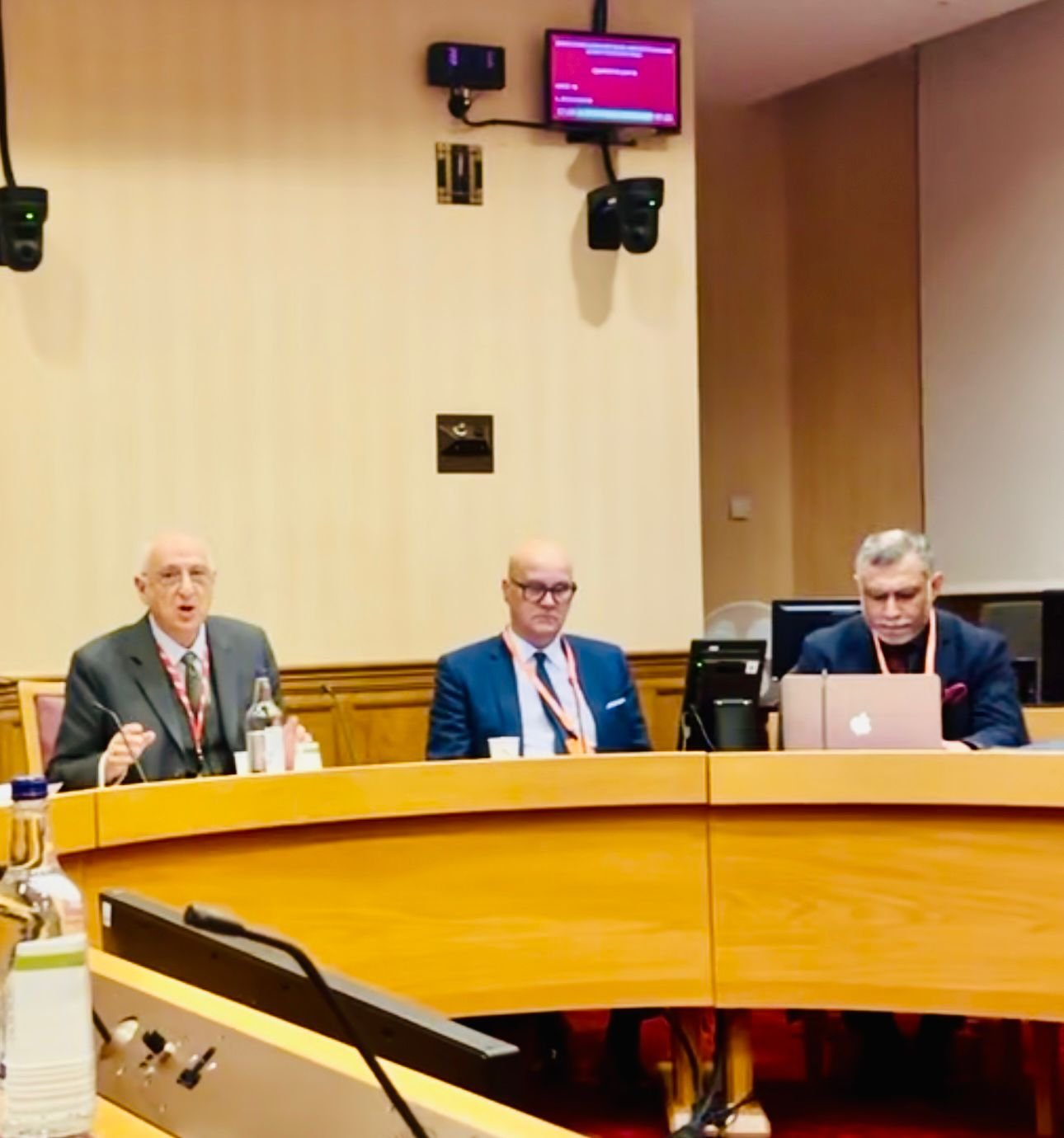
Bangladesh’s Moment of Truth: Reform, Justice, or Another Lost Decade
Bangladesh’s political future, economic direction, and international standing now hinge on whether the country can translate promises of reform into genuine rule of law, warned Lord Alex Carlile in a detailed and candid statement at the House of Lords on 25 November 2025.Opening a meeting whose working title he described as “not snappy,” Lord Carlile suggested it could be more accurately summarised as “Bangladesh: Revive and Reform.” He stressed from the outset that the purpose of the discussion was not to attack Bangladesh, but to allow frank, even uncomfortable, criticism intended to be constructive.Lord Carlile told the gathering that his engagement with Bangladesh spans more than two decades, beginning with his first visit in 2005. His involvement deepened during his tenure as the United Kingdom’s Independent Reviewer of Terrorism Legislation, when he was asked by the British government to examine how terrorism was defined in UK law. As part of that work, he commissioned extensive global research into counterterrorism legislation, identifying what appeared on paper to be some of the strongest legal systems in the world.What he discovered, he said, was a recurring and dangerous gap between law and practice. Countries with exemplary “black letter” laws often applied them in the worst possible ways. He illustrated this with an experience in Pakistan, where he addressed a room full of judges. Every judge confirmed they had tried terrorism cases, yet not a single one had ever secured a conviction. The lesson, Lord Carlile argued, was clear: the quality of a law is meaningless unless it is applied properly and independently.It was against this backdrop that he later encountered Bangladesh’s legal and political environment. He said he met many significant figures and saw a country with immense potential — a large population, a functioning university system, strong historical ties with the United Kingdom, and a capable legal profession, much of it trained in Britain’s Inns of Court. Despite political complexities, he said he initially felt optimistic about Bangladesh’s future.That optimism faded over time. Reflecting on the past 20 years, Lord Carlile said Bangladesh had effectively been governed by two administrations, neither of which, in his view, would “win the Nobel Prize for good government.” Elections were routinely unfair, courts failed to operate according to international rule-of-law standards, and undocumented killings of a terrorist nature were carried out by state actors. Politics, he said, became dominated by vengeance between two dynastic parties, creating an atmosphere that left him deeply pessimistic about the country’s trajectory. Economic progress during this period, he added, was mixed, while political progress remained limited.The student-led protests that eventually brought down the last government marked a turning point. Lord Carlile said he felt renewed optimism — not because of how the government fell, but because it represented a genuine, de facto change of power. He described interim leader Muhammad Yunus as a good choice, expressing his belief that Yunus was genuinely motivated to establish a government rooted in the rule of law. If achieved, Lord Carlile argued, such governance could trigger an economic surge capable of elevating Bangladesh into the ranks of Asia’s tiger economies.He pointed to global manufacturing trends to illustrate what Bangladesh could become. Cars are now being built in China, he said, but there is no reason they should not be built in Bangladesh. Luxury clothing for global designer labels is manufactured in China, Romania, Albania, and other emerging economies — yet Bangladesh has not fully captured that opportunity, despite being well placed to do so.Despite recognising the presence of well-intentioned politicians who share Yunus’s reformist aims, Lord Carlile warned that serious problems persist. Since the fall of the Awami League government, he said, there have been reports of extrajudicial killings. Prospective elections, if held as planned, risk being neither free nor fair. Most concerning, he argued, is the exclusion of a major political party from the political process. Regardless of that party’s past actions, banning it as an organisation — rather than disqualifying specific individuals through due process — is, in his view, a grave mistake.Lord Carlile said Bangladesh missed a critical opportunity to establish a Truth and Reconciliation Commission, drawing comparisons with Northern Ireland, South Africa, and Rwanda. Such a mechanism, he argued, could have disqualified individuals unfit for public office while allowing legitimate candidates to contest elections. Without it, Bangladesh risks swinging back to the very political conditions it is trying to escape.He expressed deep concern over the tribunal proceedings against former Prime Minister Sheikh Hasina. Even if she were guilty of every allegation against her, he said, she remains entitled to a fair trial. Denying her the right to appoint counsel, restricting her ability to appear, or failing to disclose evidence properly undermines justice itself. Lord Carlile warned that the manner in which this process is unfolding is dangerous not only for the accused, but for Bangladesh’s legal future.Bangladesh’s international reputation, he added, is also at stake. Though a member of the Commonwealth, the country is increasingly viewed as an outlier — even a renegade — because of its failure to adhere to rule-of-law norms. Full re-engagement with the Commonwealth, he said, could provide vital support and legitimacy, emphasising that the organisation is no longer UK-centric but a collective of nations committed to mutual assistance.If elections were conducted with international consultation or supervision, and reconciliation mechanisms were put in place, Lord Carlile said there would be a real chance of breaking Bangladesh’s dynastic political cycle. He was clear that both the Awami League and the BNP should evolve into genuine political parties rather than vehicles of personal power.The stakes, he warned, are not merely political but economic. Governments that silence opposition and suppress dissent inevitably weaken themselves. Political exclusion drives instability, deters investment, and stalls growth. Economic stagnation deepens poverty, which in turn fuels further dissent — a spiral that can lead to national crisis.Lord Carlile concluded by urging participants to take the message of the meeting back to their contacts in Dhaka. He warned that current actions fall short of the ambitions that led Muhammad Yunus to be called upon to save the country. “At the moment,” he said, “he looks like a tragedy, not a saviour — but he can still be a saviour.” Source:Lord Alex CarlileMember of the House of Lords, United KingdomStatement at the House of Lords, 25 November 2025
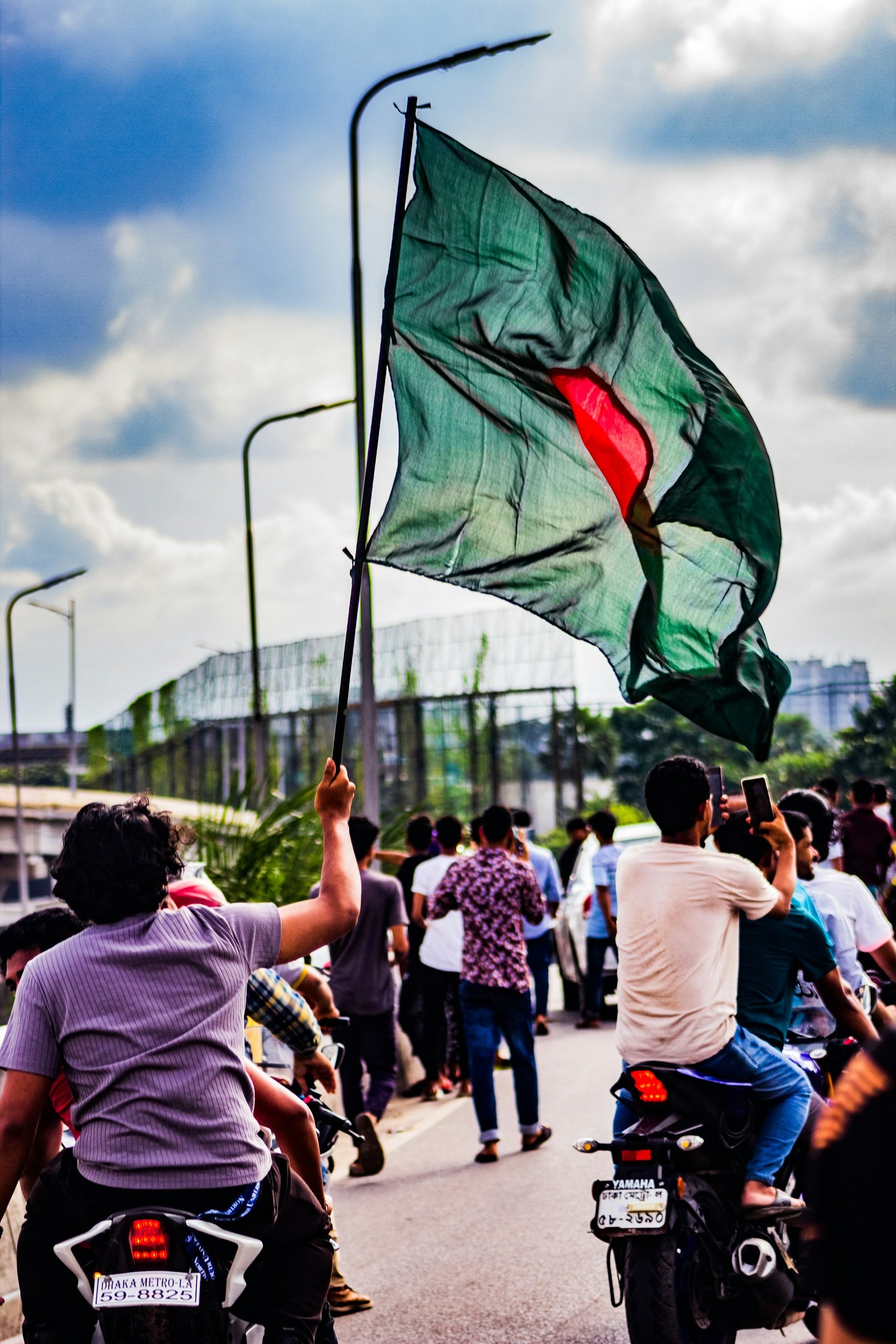
July 2024 Uprising in Bangladesh: Context, Consequence, Cooperation
The July uprising has become a turning point in Bangladesh’s political journey. It has forced the country to confront uncomfortable questions about governance, inclusion and the relationship between the country and its citizens. To understand the July uprising in Bangladesh, one must undertake an honest and critical assessment of the causes of such unimaginable, unprecedented unrest. Although the uprising surfaced as a surprise but it did not just appear suddenly or without warning. It was in fact waiting to happen because we know that too much of everything is bad be it in politics, in society, in religion or in every sphere of life- it leads to collapse. Favouritism and Nepotism were at their peak. Money and power were in the hands of few elites. Banks were looted, money laundering was widespread, political opponents were routinely imprisoned, abducted and killed. Vote rigging was normal practice. Unemployment continued to rise sharply. These conditions generated frustrations and anger among students, unemployed youths and the people of every walk of life. By July, these pressures reached its breaking point turning dissatisfaction into an organised protests and processions.It was largely youth-led, decentralised and focused on demands, rights rather than political ideologies. The protesters demanded fairness, accountability, dignity, not simply a change of faces at the top. Following the success of this uprising and fall of the government, several ambitious youth leaders chose to form their own political parties. This was seen by many as a sign of political renewal. For the first time in history, there appeared to be a possibility of breaking the cycle of dominance by a small number of traditional political parties . The Generation Z showed their strength, their spirit, determination and mental attitudes to bring about positive changes. They showed their unity against inequality and injustice in the society. However, it attracted criticism and questions about their ability, leadership, experience and their commitment to democratic norms. Critics argued thatIf these new political parties are to play a constructive role in rebuilding the Nation, they must demonstrate that they can rise above protest politics and offer credible and inclusive solutions.Election is just round the corner. Few young July leaders have merged with other political leaders and campaigning together. Whether this merge and historic election bring peace and stability in the country remains to be seen. Dr Prof Muhammad Yunus in the meantime is committed to a free, fair and credible election schedule for 12th February 2026. Since he became the Head of the interim Government, he is committed to bring July Charter in a referendum which will bring July uprising as a part of national history, curtail the power of the President, the Prime Minister and much more. He wants to see the July Charter as a multi-ethnic, inclusive society, with a formal recognition of diversity in language, culture, and communities in the constitution. For Bangladesh to move ahead, political leadership—both old and new—must demonstrate humility and learning. Old political parties need to acknowledge governance failures and open genuine space for youth participation. Youth-led parties must demonstrate leadership, commitment to democratic norms and institutional respect, maturity rather than moral superiority, cooperation rather than confrontation. Bangladesh stands at a crossroads and the direction it takes today will define its future tomorrow. Ultimately the July uprising should not be seen as a red signal but as a green signal.

Why Creativity Matters
I am a British Bangladeshi woman, and I have lived in Britain throughout my adult life. I am a professional and have wroked in the field of data and analytics for twenty years. I am also a Muslim, a wife, and a mother. I navigate all these identities while maintaining a strong bond with Bangladesh. That connection with my motherland has lived primarily through creativity, art, literature, music, and cultural expression. It is through this connection that I became a writer. I write in Bangla and have published six novels, drawing on my lived experience as an immigrant and the complexity of holding multiple identities.I deeply believe that creativity, in any form, whether music, art, dance, or literature, carries a positive power when its true essence is understood and nurtured. Creativity brings reflection, balance, and emotional wellbeing. As someone who is learning to sing in my forties, I know how deeply this practice has supported my emotional health. To attempt to stop or destroy creativity is, for me, heartbreaking. In Islam, there are clear warnings against grave moral wrongs such as backbiting, gossip, corruption, and causing harm to others. These are explicitly condemned. Yet it is troubling that anger is often directed at creative expression, while serious ethical violations that harm individuals and society are overlooked. I struggle to understand this, except that creativity allows people to think freely and reflect deeply, something that can feel threatening to those who wish to control thought and expression. The recent attacks on organisations such as Chhayanaut and Udichi Shilpigoshthi reflect this fear and hostility towards creativity.As a woman writer, I have felt the pressure of self-censorship from the very beginning. We live in a patriarchal society where a woman’s voice can be easily dismissed or demeaned. While this has always existed, the pressure has intensified in recent times. I am not politically motivated, nor do I promote any political party, but I am politically, religiously, and socially curious, and these realities inevitably find their way into my writing. The growing culture of vindictiveness, where disagreement turns quickly into personal attack, has made writing feel increasingly constrained. What pains me most is seeing the religion I deeply believe in being used to justify hostility.I do not believe this mindset emerged overnight or through a single political shift. It has existed for a long time, but the current environment has allowed it to surface openly. At the same time, my experience as a visible Muslim reminds me that hostility or negativity towards religious practices from certain people, consciously or subconsciously, also exists, and addressing one form of intolerance must not mean ignoring another. Any practice, whether religion or creativity, that breeds pride or a sense of superiority ultimately becomes harmful.As Bangladesh approaches another election, I hope and pray that whoever forms the next government will take these issues seriously. Nurturing creativity, protecting cultural expression, and safeguarding women’s rights must not be sidelined if society is to move forward. Beyond governments and policies, this is also a collective responsibility. What matters is whether our beliefs and practices bring compassion, positivity, and humanity, or fear, negativity, and harm.
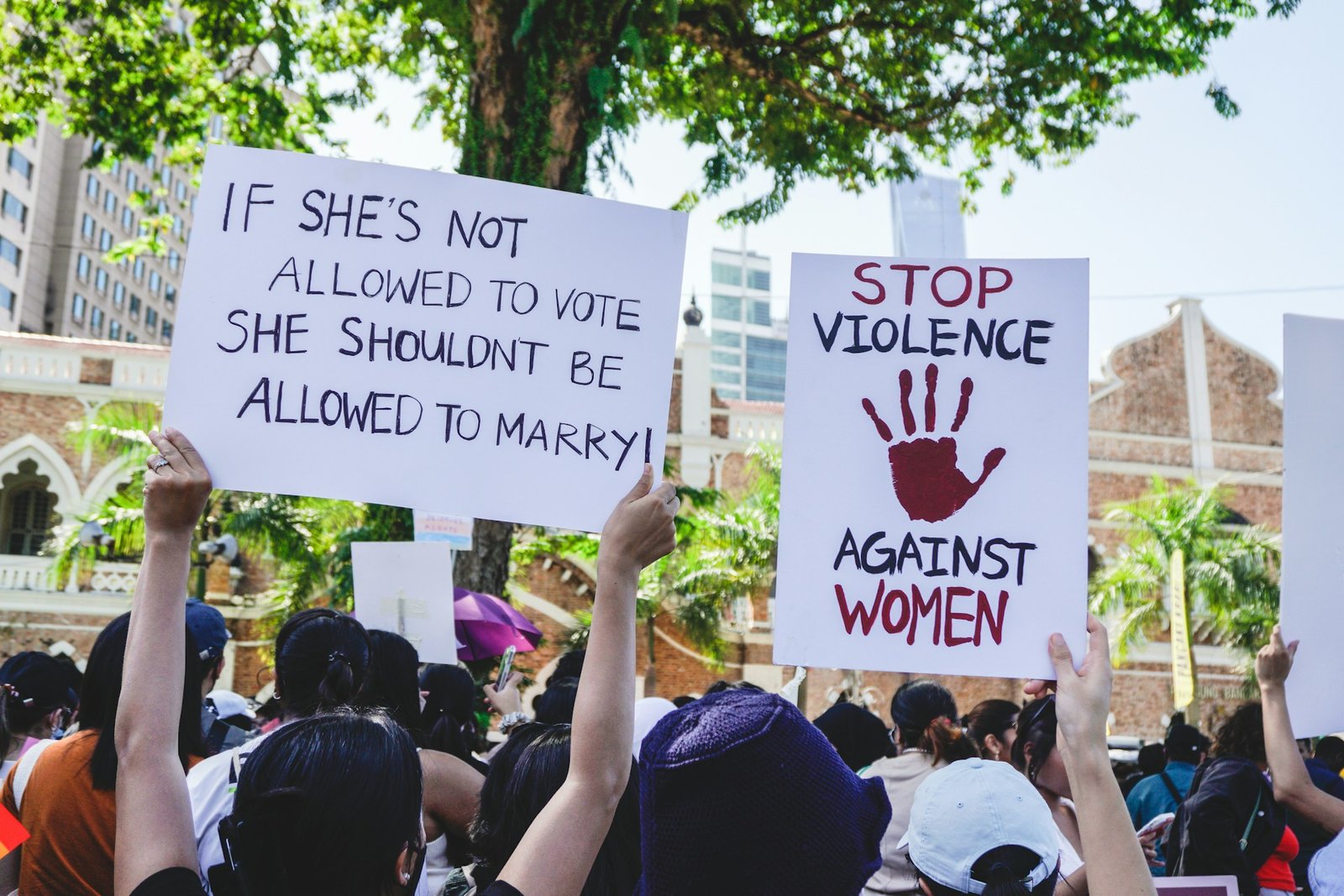
Human Rights Watch Warns of Rising Violence Against Women, Girls, and Minorities in Bangladesh Ahead of Elections
Human Rights Watch (HRW) has raised serious concerns about an increase in violence targeting women, girls, and religious minorities in Bangladesh ahead of the February 12 general elections — the country’s first since the August 2024 Monsoon revolution. In its report titled Bangladeshi Women, Girls, Minorities Face Rising Violence, Subhajit Saha, Senior Coordinator of HRW’s Women’s Rights Division, documents that gender-based violence rose between January and June 2025 compared with the same period in 2024, according to police data. The report highlights that religious hardline groups have intensified activity and rhetoric aimed at restricting women’s freedom and participation in society, contributing to a climate of harassment and abuse. According to HRW, women and girls have faced verbal, physical, and digital abuse, which has silenced many and increased fear. The rights watchdog also noted attacks on Hindu minorities — including the mob killing of a 27-year-old garment worker over alleged blasphemy — and at least 51 incidents of violence against Hindu communities, including 10 killings. Ethnic minorities in the Chittagong Hill Tracts have also continued to face abuse, the report states. Despite Bangladesh having two women prime ministers historically and strong female participation in the 2024 student movement, HRW expressed concern over limited political participation for women in the upcoming election — noting that 30 out of 51 registered political parties have no women candidates, and major parties like Jamaat-e-Islami have not nominated any women. HRW urged the Bangladeshi government to adopt recommended reforms, including increasing women’s parliamentary representation, implementing the United Nations Security Council’s Women, Peace, and Security agenda, and upholding international human rights obligations. Source: Human Rights Watch — “Bangladeshi Women, Girls, Minorities Face Rising Violence,” Subhajit Saha, Senior Coordinator, Women’s Rights Division, January 14, 2026. Original article: https://www.hrw.org/news/2026/01/14/bangladeshi-women-girls-minorities-face-rising-violence
Upcoming events
A high-level international seminar titled “Bangladesh at the Crossroads: Democratic Stability, Investment and Diaspora Safety” will be held on Wednesday, 28 January 2026, at the House of Lords, London, bringing together senior parliamentarians, legal experts, academics, policymakers, and representatives of the British Bangladeshi diaspora.The seminar is jointly hosted by Lord Rami Ranger FRSA, Politika News, the Northampton British Bangladeshi Business Chamber, and the Centre for Global Policy and Governance (CGPG). The event aims to provide a balanced parliamentary platform to examine Bangladesh’s current political trajectory, democratic governance, rule of law, investment confidence, minority protection, and the evolving role of the diaspora.The discussion will feature Members of the House of Lords and House of Commons, constitutional and legal experts, senior academics from leading UK universities, journalists, business leaders, representatives of human rights organisations, and prominent figures from the British Bangladeshi community.Key themes of the seminar include:Democratic legitimacy and constitutional governanceElectoral integrity and political participationJudicial accountability and international legal standardsDiaspora engagement, investment, and remittance growthStrengthening UK–Bangladesh long-term partnershipsA formal post-seminar publication and e-book will be produced, compiling expert contributions and policy recommendations arising from the discussions.The seminar reflects growing parliamentary and public interest in Bangladesh at a critical moment, particularly given the size and significance of the British Bangladeshi diaspora in the United Kingdom.Venue: Committee Room, House of LordsTime: 3:15 PMDate: Wednesday, 28 January 2026