
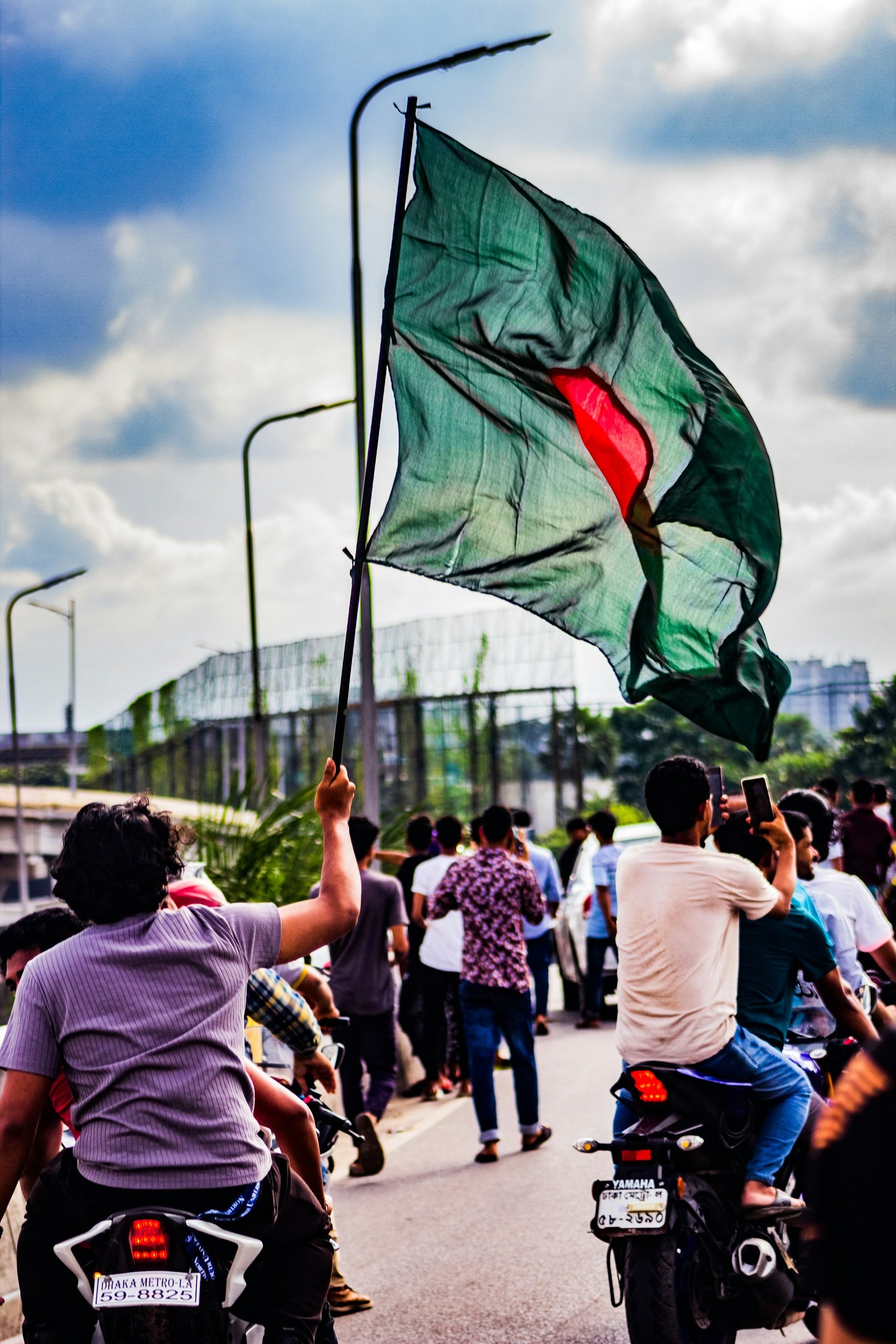
The July uprising has become a turning point in Bangladesh’s political journey. It has forced the country to confront uncomfortable questions about governance, inclusion and the relationship between the country and its citizens.
To understand the July uprising in Bangladesh, one must undertake an honest and critical assessment of the causes of such unimaginable, unprecedented unrest.
Although the uprising surfaced as a surprise but it did not just appear suddenly or without warning. It was in fact waiting to happen because we know that too much of everything is bad be it in politics, in society, in religion or in every sphere of life- it leads to collapse. Favouritism and Nepotism were at their peak. Money and power were in the hands of few elites. Banks were looted, money laundering was widespread, political opponents were routinely imprisoned, abducted and killed. Vote rigging was normal practice. Unemployment continued to rise sharply. These conditions generated frustrations and anger among students, unemployed youths and the people of every walk of life. By July, these pressures reached its breaking point turning dissatisfaction into an organised protests and processions.
It was largely youth-led, decentralised and focused on demands, rights rather than political ideologies. The protesters demanded fairness, accountability, dignity, not simply a change of faces at the top.
Following the success of this uprising and fall of the government, several ambitious youth leaders chose to form their own political parties. This was seen by many as a sign of political renewal. For the first time in history, there appeared to be a possibility of breaking the cycle of dominance by a small number of traditional political parties . The Generation Z showed their strength, their spirit, determination and mental attitudes to bring about positive changes. They showed their unity against inequality and injustice in the society.
However, it attracted criticism and questions about their ability, leadership, experience and their commitment to democratic norms. Critics argued that
If these new political parties are to play a constructive role in rebuilding the Nation, they must demonstrate that they can rise above protest politics and offer credible and inclusive solutions.
Election is just round the corner. Few young July leaders have merged with other political leaders and campaigning together. Whether this merge and historic election bring peace and stability in the country remains to be seen. Dr Prof Muhammad Yunus in the meantime is committed to a free, fair and credible election schedule for 12th February 2026. Since he became the Head of the interim Government, he is committed to bring July Charter in a referendum which will bring July uprising as a part of national history, curtail the power of the President, the Prime Minister and much more. He wants to see the July Charter as a multi-ethnic, inclusive society, with a formal recognition of diversity in language, culture, and communities in the constitution. For Bangladesh to move ahead, political leadership—both old and new—must demonstrate humility and learning. Old political parties need to acknowledge governance failures and open genuine space for youth participation. Youth-led parties must demonstrate leadership, commitment to democratic norms and institutional respect, maturity rather than moral superiority, cooperation rather than confrontation.
Bangladesh stands at a crossroads and the direction it takes today will define its future tomorrow. Ultimately the July uprising should not be seen as a red signal but
as a green signal.