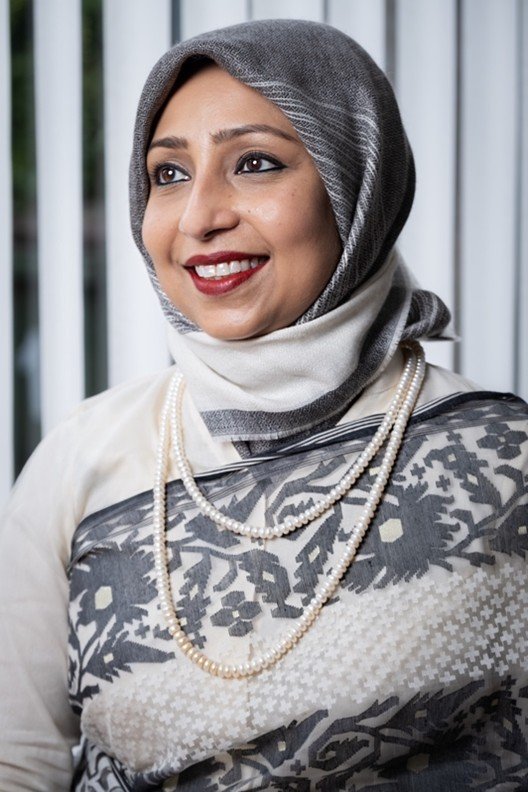
I am a British Bangladeshi woman, and I have lived in Britain throughout my adult life. I am a professional and have wroked in the field of data and analytics for twenty years. I am also a Muslim, a wife, and a mother. I navigate all these identities while maintaining a strong bond with Bangladesh. That connection with my motherland has lived primarily through creativity, art, literature, music, and cultural expression. It is through this connection that I became a writer. I write in Bangla and have published six novels, drawing on my lived experience as an immigrant and the complexity of holding multiple identities.
I deeply believe that creativity, in any form, whether music, art, dance, or literature, carries a positive power when its true essence is understood and nurtured. Creativity brings reflection, balance, and emotional wellbeing. As someone who is learning to sing in my forties, I know how deeply this practice has supported my emotional health. To attempt to stop or destroy creativity is, for me, heartbreaking. In Islam, there are clear warnings against grave moral wrongs such as backbiting, gossip, corruption, and causing harm to others. These are explicitly condemned. Yet it is troubling that anger is often directed at creative expression, while serious ethical violations that harm individuals and society are overlooked. I struggle to understand this, except that creativity allows people to think freely and reflect deeply, something that can feel threatening to those who wish to control thought and expression. The recent attacks on organisations such as Chhayanaut and Udichi Shilpigoshthi reflect this fear and hostility towards creativity.
As a woman writer, I have felt the pressure of self-censorship from the very beginning. We live in a patriarchal society where a woman’s voice can be easily dismissed or demeaned. While this has always existed, the pressure has intensified in recent times. I am not politically motivated, nor do I promote any political party, but I am politically, religiously, and socially curious, and these realities inevitably find their way into my writing. The growing culture of vindictiveness, where disagreement turns quickly into personal attack, has made writing feel increasingly constrained. What pains me most is seeing the religion I deeply believe in being used to justify hostility.
I do not believe this mindset emerged overnight or through a single political shift. It has existed for a long time, but the current environment has allowed it to surface openly. At the same time, my experience as a visible Muslim reminds me that hostility or negativity towards religious practices from certain people, consciously or subconsciously, also exists, and addressing one form of intolerance must not mean ignoring another. Any practice, whether religion or creativity, that breeds pride or a sense of superiority ultimately becomes harmful.
As Bangladesh approaches another election, I hope and pray that whoever forms the next government will take these issues seriously. Nurturing creativity, protecting cultural expression, and safeguarding women’s rights must not be sidelined if society is to move forward. Beyond governments and policies, this is also a collective responsibility. What matters is whether our beliefs and practices bring compassion, positivity, and humanity, or fear, negativity, and harm.