
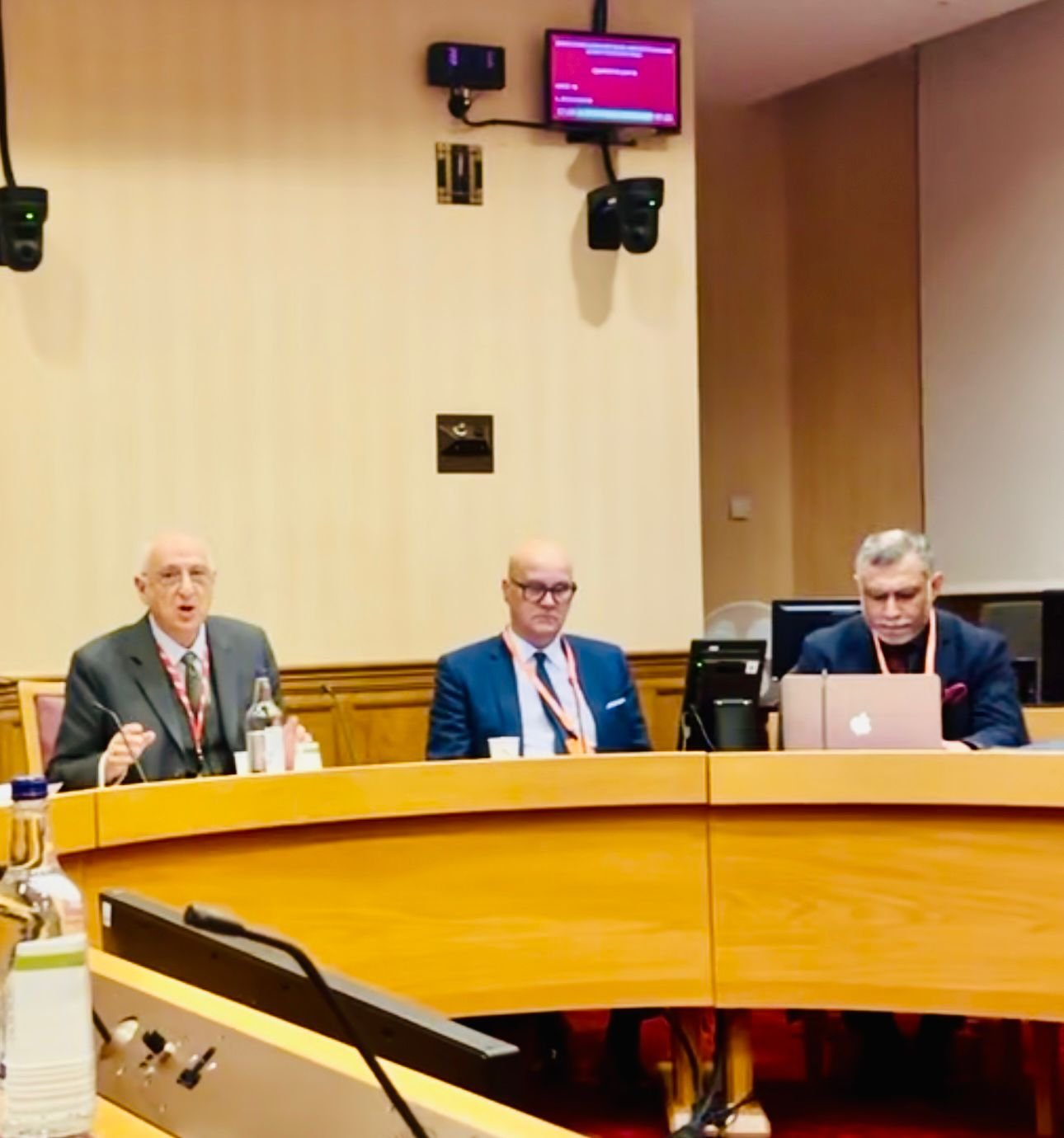
Bangladesh’s political future, economic direction, and international standing now hinge on whether the country can translate promises of reform into genuine rule of law, warned Lord Alex Carlile in a detailed and candid statement at the House of Lords on 25 November 2025.
Opening a meeting whose working title he described as “not snappy,” Lord Carlile suggested it could be more accurately summarised as “Bangladesh: Revive and Reform.” He stressed from the outset that the purpose of the discussion was not to attack Bangladesh, but to allow frank, even uncomfortable, criticism intended to be constructive.
Lord Carlile told the gathering that his engagement with Bangladesh spans more than two decades, beginning with his first visit in 2005. His involvement deepened during his tenure as the United Kingdom’s Independent Reviewer of Terrorism Legislation, when he was asked by the British government to examine how terrorism was defined in UK law. As part of that work, he commissioned extensive global research into counterterrorism legislation, identifying what appeared on paper to be some of the strongest legal systems in the world.
What he discovered, he said, was a recurring and dangerous gap between law and practice. Countries with exemplary “black letter” laws often applied them in the worst possible ways. He illustrated this with an experience in Pakistan, where he addressed a room full of judges. Every judge confirmed they had tried terrorism cases, yet not a single one had ever secured a conviction. The lesson, Lord Carlile argued, was clear: the quality of a law is meaningless unless it is applied properly and independently.
It was against this backdrop that he later encountered Bangladesh’s legal and political environment. He said he met many significant figures and saw a country with immense potential — a large population, a functioning university system, strong historical ties with the United Kingdom, and a capable legal profession, much of it trained in Britain’s Inns of Court. Despite political complexities, he said he initially felt optimistic about Bangladesh’s future.
That optimism faded over time. Reflecting on the past 20 years, Lord Carlile said Bangladesh had effectively been governed by two administrations, neither of which, in his view, would “win the Nobel Prize for good government.” Elections were routinely unfair, courts failed to operate according to international rule-of-law standards, and undocumented killings of a terrorist nature were carried out by state actors. Politics, he said, became dominated by vengeance between two dynastic parties, creating an atmosphere that left him deeply pessimistic about the country’s trajectory. Economic progress during this period, he added, was mixed, while political progress remained limited.
The student-led protests that eventually brought down the last government marked a turning point. Lord Carlile said he felt renewed optimism — not because of how the government fell, but because it represented a genuine, de facto change of power. He described interim leader Muhammad Yunus as a good choice, expressing his belief that Yunus was genuinely motivated to establish a government rooted in the rule of law. If achieved, Lord Carlile argued, such governance could trigger an economic surge capable of elevating Bangladesh into the ranks of Asia’s tiger economies.
He pointed to global manufacturing trends to illustrate what Bangladesh could become. Cars are now being built in China, he said, but there is no reason they should not be built in Bangladesh. Luxury clothing for global designer labels is manufactured in China, Romania, Albania, and other emerging economies — yet Bangladesh has not fully captured that opportunity, despite being well placed to do so.
Despite recognising the presence of well-intentioned politicians who share Yunus’s reformist aims, Lord Carlile warned that serious problems persist. Since the fall of the Awami League government, he said, there have been reports of extrajudicial killings. Prospective elections, if held as planned, risk being neither free nor fair. Most concerning, he argued, is the exclusion of a major political party from the political process. Regardless of that party’s past actions, banning it as an organisation — rather than disqualifying specific individuals through due process — is, in his view, a grave mistake.
Lord Carlile said Bangladesh missed a critical opportunity to establish a Truth and Reconciliation Commission, drawing comparisons with Northern Ireland, South Africa, and Rwanda. Such a mechanism, he argued, could have disqualified individuals unfit for public office while allowing legitimate candidates to contest elections. Without it, Bangladesh risks swinging back to the very political conditions it is trying to escape.
He expressed deep concern over the tribunal proceedings against former Prime Minister Sheikh Hasina. Even if she were guilty of every allegation against her, he said, she remains entitled to a fair trial. Denying her the right to appoint counsel, restricting her ability to appear, or failing to disclose evidence properly undermines justice itself. Lord Carlile warned that the manner in which this process is unfolding is dangerous not only for the accused, but for Bangladesh’s legal future.
Bangladesh’s international reputation, he added, is also at stake. Though a member of the Commonwealth, the country is increasingly viewed as an outlier — even a renegade — because of its failure to adhere to rule-of-law norms. Full re-engagement with the Commonwealth, he said, could provide vital support and legitimacy, emphasising that the organisation is no longer UK-centric but a collective of nations committed to mutual assistance.
If elections were conducted with international consultation or supervision, and reconciliation mechanisms were put in place, Lord Carlile said there would be a real chance of breaking Bangladesh’s dynastic political cycle. He was clear that both the Awami League and the BNP should evolve into genuine political parties rather than vehicles of personal power.
The stakes, he warned, are not merely political but economic. Governments that silence opposition and suppress dissent inevitably weaken themselves. Political exclusion drives instability, deters investment, and stalls growth. Economic stagnation deepens poverty, which in turn fuels further dissent — a spiral that can lead to national crisis.
Lord Carlile concluded by urging participants to take the message of the meeting back to their contacts in Dhaka. He warned that current actions fall short of the ambitions that led Muhammad Yunus to be called upon to save the country. “At the moment,” he said, “he looks like a tragedy, not a saviour — but he can still be a saviour.”
Source:
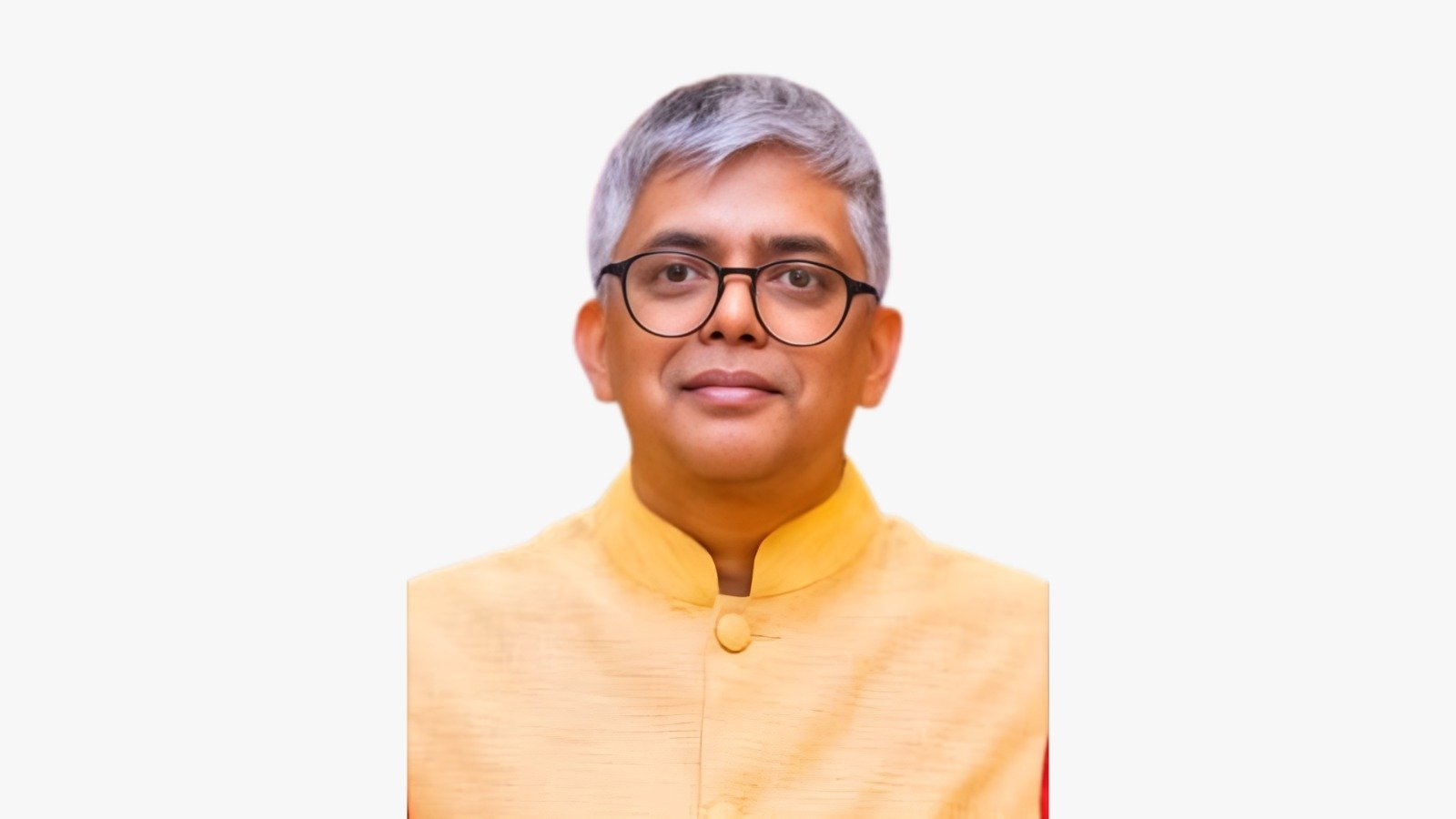
Lord Alex Carlile
Member of the House of Lords, United Kingdom
Statement at the House of Lords, 25 November 2025