
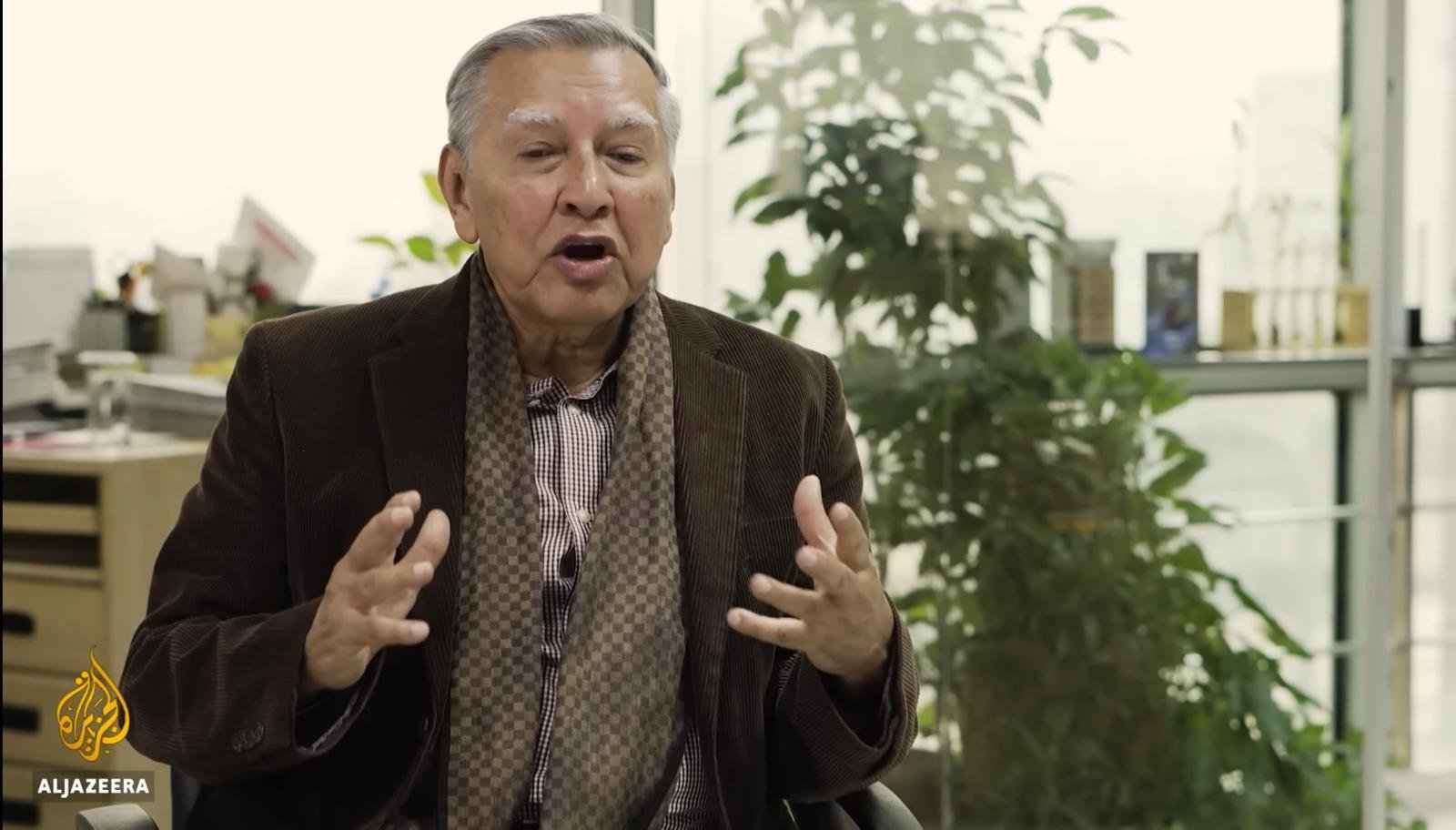
Mahfuz Anam, editor and publisher of The Daily Star, has said that an overriding sense of fear continues to shape journalism in Bangladesh, where even minor deviations from dominant narratives can trigger attacks and intimidation.
Speaking to The Listening Post on Al Jazeera, Anam said that although Bangladesh now has more investigative reporting and independent thinking than before, journalists still operate under constant pressure.
“Today, we have far more free mainstream media, more investigative stories. Independent thinking is definitely much more prominent than before,” he said. “But that overriding fear — that if I slightly deviate from the present popular narrative, I might be attacked — also exists.”
He added that journalists often second-guess their choice of words, a practice he described as being contrary to the culture of independent media. “We sometimes think very carefully, should I use this word or that word? This sort of thinking also exists now,” Anam said.
Attack on The Daily Star
Reflecting on the attack on The Daily Star office, Anam said those who carried out the arson were unlikely to be readers of the newspaper. He questioned their motivation, saying the attack appeared to be deliberate and organised.
“I think it was well planned. They had their political motivation, financial motivation, and there was also the idea of demolishing the tradition of liberal journalism — journalism that supports democracy, multiplicity of views and dissent,” he said.
“Our reporting, if it is flawed, somebody can say it. We can be criticised. But to burn us down, I think this is most unfortunate.”
He described the night of the attack as one of “absolute panic,” recounting how staff struggled to breathe amid the smoke and feared they might not survive.
“They were telling me, ‘Mahfuz Bhai, we may not meet again’. They were calling their parents, wives and friends, saying maybe they will never meet again,” he said.
Role of social media
Anam said while social media has expanded space for expression in Bangladesh, it has also fuelled the spread of fake news, hate speech and unsubstantiated allegations.
Using social media to discredit individuals or institutions has become common, he said, adding that some political parties have built dedicated “social media teams” to mobilise online attacks.
“If you say anything against a particular political party, suddenly hundreds of people will start abusing you. And if you say something nice, hundreds will start praising you,” he said. “The political use of social media is very much in vogue.”
He recalled that on the night of the attack, an influencer openly called for assaults on mainstream media outlets. “It was well known to anyone following social media that night that one influencer said, ‘Prothom Alo is down, now go to Daily Star and attack this’,” Anam said.
“They were trying to destroy us as an institution,” he added, noting that criticism against The Daily Star and Prothom Alo was often taken out of context and left unsubstantiated.
Politicisation of journalism
Anam said the growing politicisation of journalism has severely eroded public trust in the media. Over the years, journalists have increasingly aligned themselves openly with political parties, he said.
“When the public sees that a journalist who is supposed to tell the truth actually belongs to a political party, the credibility of that media outlet suffers greatly,” he said.
Elections, repression and hope for change
Referring to the upcoming election, Anam said the public — deprived of three credible elections — is entering a fourth with heightened expectations for a vote that genuinely reflects the people’s will.
He said the fall of former prime minister Sheikh Hasina was directly linked to her government’s oppressive approach, particularly its treatment of the media.
“The last 15 years of Sheikh Hasina’s governance is epitomised by one act — the Digital Security Act,” Anam said, describing it as a tool designed to silence dissent through fear.
He said the law included 20 punitive provisions, 14 of them non-bailable, creating what he described as a climate of enforced silence.
Anam also detailed personal and institutional harassment faced by journalists during that period, saying he alone had 83 cases filed against him. He added that Prothom Alo editor Matiur Rahman faced a murder case allegation, advertisements were halted, revenues fell by 40–45 percent, reporters were barred from covering prime ministerial events, and he himself was publicly attacked in parliament.
Despite the challenges, Anam expressed hope that these experiences would shape future governments and lead to a stronger commitment to press freedom in Bangladesh.
Broadcast information
The Listening Post episode featuring Mahfuz Anam will be *re-aired on Al Jazeera tonight at 8:30pm (Bangladesh time).
Source: Al Jazeera – The Listening Post
Media: The Daily Star