

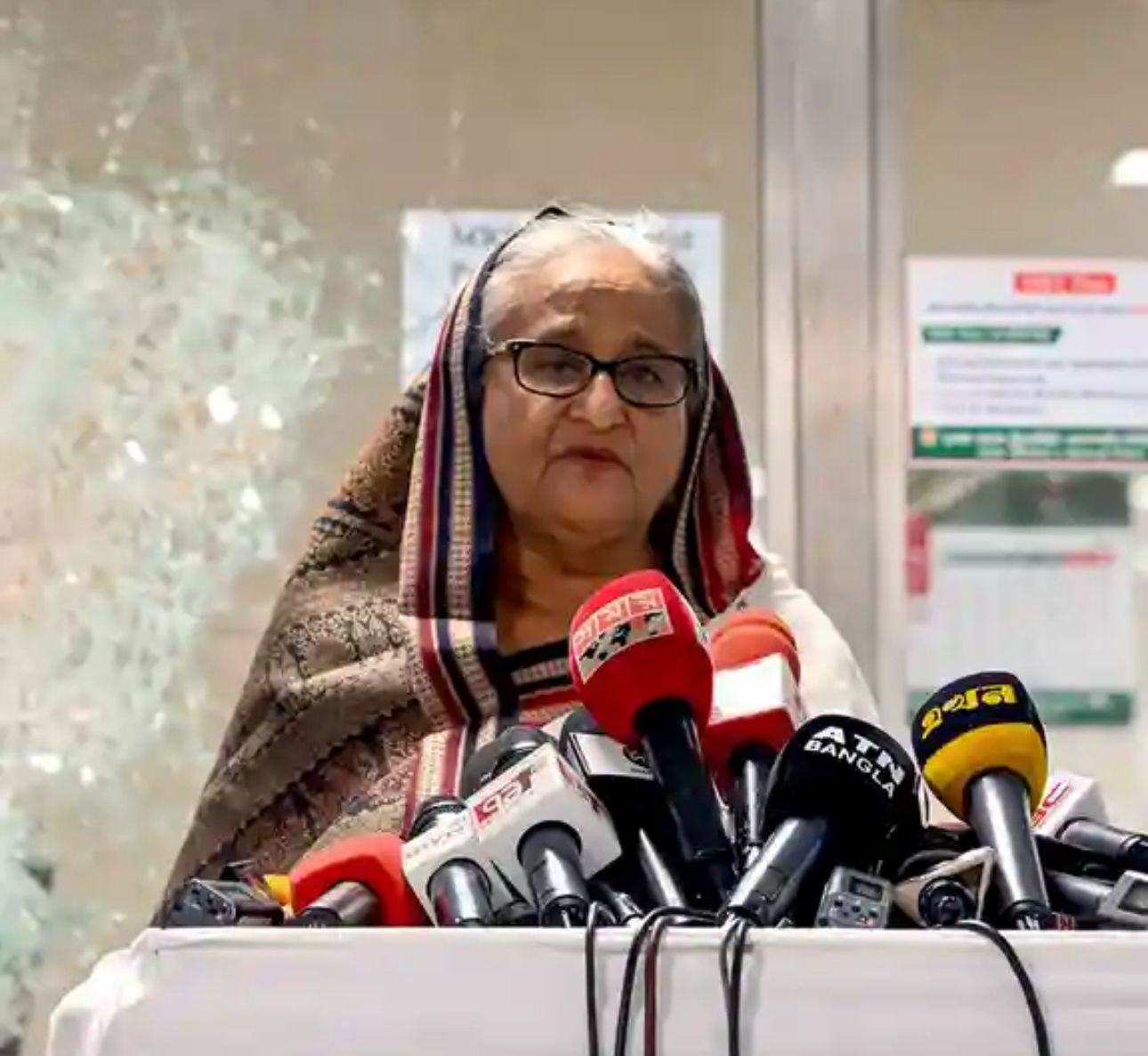
Apart from Bangladeshis’ understandable preoccupation with who will win the upcoming election—BNP or Jamaat-e-Islami—two further questions dominate discussion around the February 12 vote.
First, will there be manipulation of votes, as has occurred to varying degrees in every election in Bangladesh, or will the result genuinely reflect the will of the electorate? Second, a question few are willing to raise openly within the country but which is discussed more freely abroad: can an election be considered fair and legitimate in the absence of the Awami League?
This article is primarily concerned with the second question, though a brief comment on electoral manipulation is warranted. There is little doubt that nefarious actors exist—at both local and national levels—within all major party blocs, as well as within the administration and the security forces. If given the opportunity, such actors may seek to tilt the electoral process in favour of one side or another.
While the government insists this will be the cleanest election in the country’s history, it remains uncertain whether sufficient safeguards and scrutiny exist—within the Election Commission, among observers, or in the media—to prevent rigging. Ultimately, this can only be judged on polling day itself and through subsequent reporting. That said, it appears likely that any manipulation, should it occur, would be relatively limited in scope.
Even assuming there is no rigging, or no substantive rigging, the more fundamental question remains: can an election be described as “fair” or legitimate in the absence of the Awami League?
In principle, a genuinely fair election should allow the participation of all political parties. Throughout Bangladesh’s history, the Awami League has consistently been either the most popular or the second most popular party. Even now, were it permitted to contest the election, the party would almost certainly win a number of seats—though not enough to secure overall victory. Its participation would nonetheless have a decisive impact on the outcome, shaping which of the remaining parties emerged on top and potentially allowing the Awami League to hold the balance of power.
In short, an election that included the Awami League would look markedly different from the one scheduled to take place in just over a week’s time. This reasoning underpins the party’s claim that its exclusion is wholly unjustified and that any resulting government would lack legitimacy.
In advancing this argument, however, the Awami League largely ignores the context in which the decision to exclude it was taken. That context is the party’s role in supporting—and in key respects facilitating—the government’s response to the July 2024 protests. As documented by the International Truth and Justice Project, detailed mapping of the violence confirms that more than 800 individuals were killed by law enforcement authorities during this period.
This is not a peripheral matter. It is the central reason the party now finds itself outside the electoral process. Yet this context is not only downplayed by the Awami League itself; it is also frequently minimised or omitted by journalists and commentators sympathetic to the party’s current predicament.
The key question, then, is whether this context is sufficient to justify the Awami League’s exclusion.
One way to approach this is through a thought experiment: to consider how similar events would be viewed, and what political consequences would likely follow, if they occurred in another democratic country—however implausible that may seem.
Imagine, for example, that something similar happened in Britain.
The prime minister, Keir Starmer, orders the police and security forces to use lethal force against protesters. Over several weeks, hundreds are killed and thousands seriously injured. Almost all Labour ministers, MPs, and senior party figures either publicly support the policy, remain silent, or conspicuously fail to criticise it. Starmer and other senior figures actively encourage local Labour constituency organisations to mobilise in support of law enforcement. In some areas, Labour activists take to the streets backing the security forces; some even carry firearms and shoot at protesters.
When the UK army refuses to fire on civilians, Starmer and a significant portion of the Labour leadership flee the country, taking refuge in France. The United Nations dispatches a fact-finding mission, which later concludes that, in support of the government, “violent elements associated with” the Labour Party systematically engaged in serious human rights violations, including “hundreds of extrajudicial killings.”
Yet over the following year and a half, neither Starmer nor any senior Labour figure—whether abroad or at home—acknowledges the party’s or the government’s culpability. Leaked recordings even suggest that Starmer, who remains Labour leader, is encouraging party activists inside the UK to continue using violence.
If such events were to occur in Britain—or in any other liberal democratic country—it is extremely difficult to imagine that the political establishment would allow the Labour Party to contest the next general election. The party would almost certainly be regarded as having crossed fundamental democratic red lines and would be barred from participation. Only after a clear break in leadership and a credible process of accountability might re-entry into electoral politics be conceivable.
If such conduct would justify excluding a major party in the UK, it is difficult to argue that Bangladesh’s authorities are acting unreasonably in reaching a similar conclusion with respect to the Awami League. There are circumstances in which the exclusion of a major political party does not undermine an election’s legitimacy but instead represents a response to conduct that has placed that party, at least temporarily, outside the bounds of democratic acceptability. The Awami League’s response to the July uprising constitutes such a circumstance.
It is true that Bangladesh has no shortage of highly partisan opponents of the Awami League who, for their own political purposes, exaggerate the extent to which the entire party—at national, district, and local levels—was complicit in the July killings. This overreach is reflected in the criminalisation of party activities and in the arrest and imprisonment of hundreds, perhaps thousands, of party members without supporting evidence.
These excesses are real, troubling, and must be acknowledged. But one need not accept exaggerated claims or endorse abusive legal measures to recognise the force of the narrower argument: that the Awami League, in its current form, should not be permitted to contest this election. Even allowing for exaggeration and abuse by its opponents, the core justification for the party’s exclusion remains intact. On that basis, an election held without the Awami League cannot simply be dismissed as illegitimate.
That said, the party’s exclusion is not cost-free. It significantly distorts the electoral landscape. A substantial segment of the electorate—long-standing Awami League supporters—is effectively disenfranchised, forced either to vote for parties they do not support or to abstain altogether. This reality cannot be ignored. Even if the party’s exclusion is justified, its complete absence from the political arena is not healthy for Bangladesh’s democratic development.
For this reason, one need not support the Awami League to argue that serious efforts should be made in the coming years to enable the emergence of a renewed party: one grounded in its historic commitments to 1971, secularism, and social liberalism, but led by new leadership that has clearly and credibly broken with those directly responsible for the July killings. A return to normal democratic competition will require the party to undertake a genuine process of accountability, reckoning, and reform—and it must be both encouraged and pressured to do so.
If such a process is to be possible, the next elected government will have a crucial role to play. It must move away from some of the most damaging practices of the interim period, including the blanket banning of Awami League activities and the use of mass arrests and prolonged detention without evidence. Only prosecutions supported by credible and sufficient evidence should proceed; all others should be released. Those within the party who seek reform cannot begin that difficult work while a boot remains on the party’s neck.
David Bergman
X (formerly Twitter): @TheDavidBergman
The views expressed in this article are the author’s own.