
All News
UK Foreign, Commonwealth & Development Office Statement on Parliamentary Elections in Bangladesh
An FCDO spokesperson said:“We welcome the parliamentary elections in Bangladesh which took place on 12 February 2026. The peaceful electoral process delivered conclusive results. This represents an important step forward in Bangladesh’s ambitions and the aspirations of the people of Bangladesh. “We look forward to the new government advancing democratic, economic, and social reforms. We will work closely with Bangladesh on our shared priorities of economic growth, migration, climate and security, building on the strong connections between our people.”
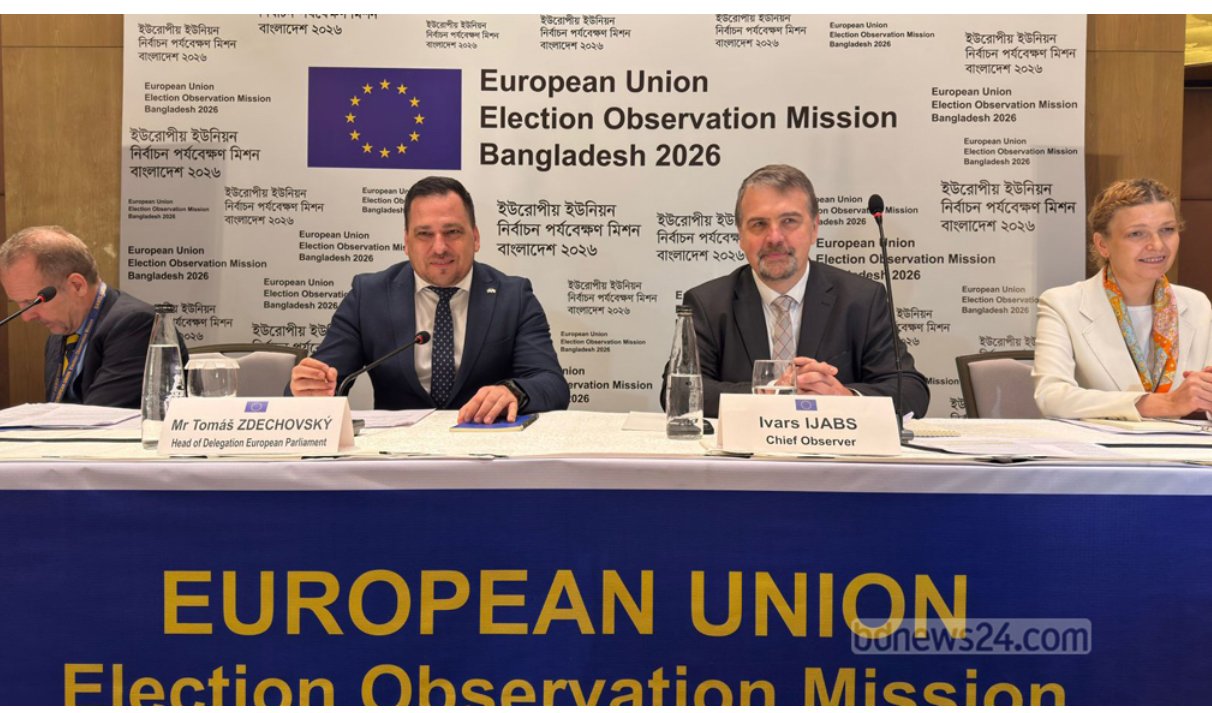
EU Observer Mission: Voter Turnout Alone Does Not Define a ‘Participatory’ Election
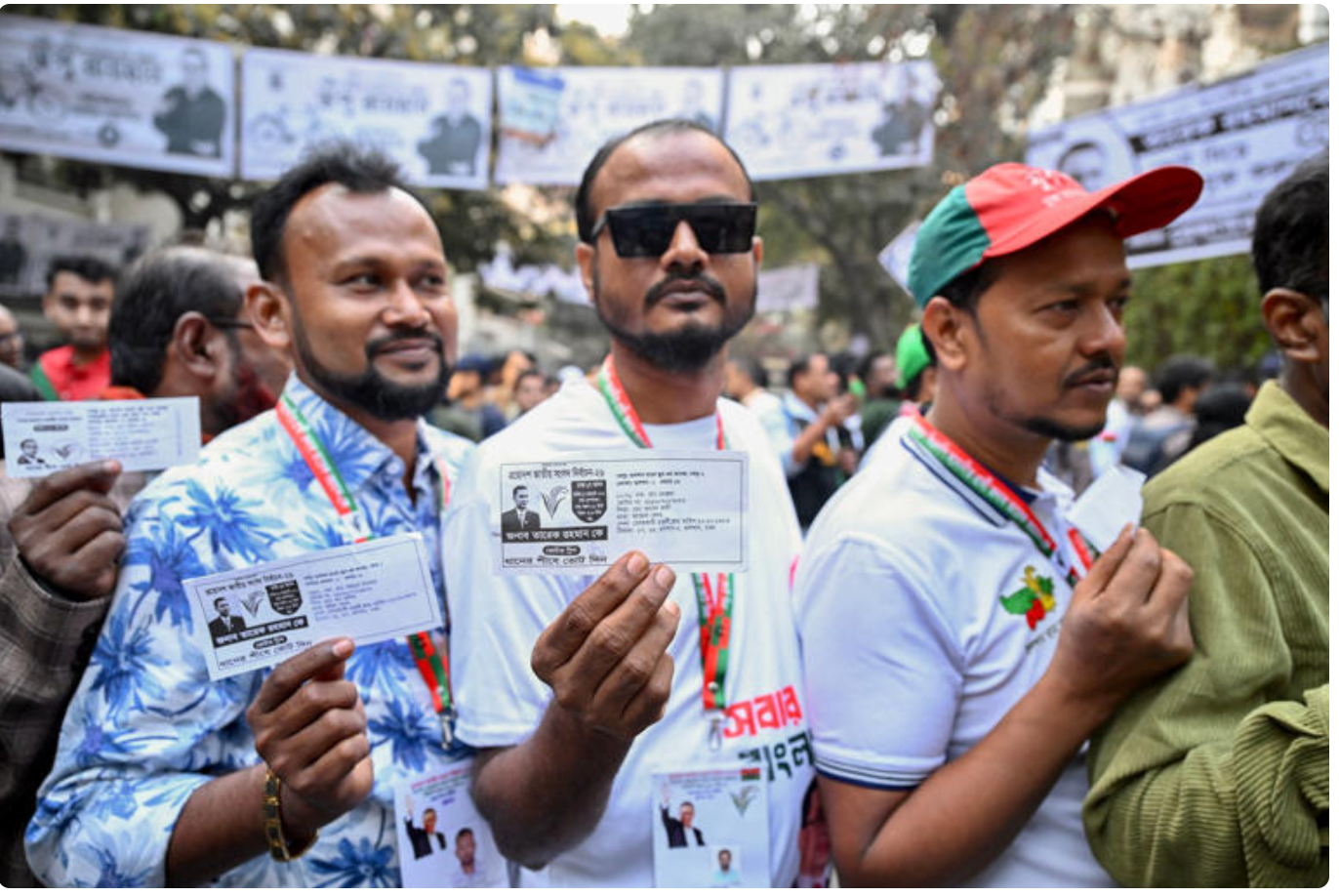
“Participatory means the inclusion of all political and social groups that wish to express their interests.”The European Union (EU) Election Observation Mission believes that an election cannot be defined as “participatory” based solely on voter turnout. According to the mission, the key element of a participatory election is the involvement of all representative groups within society. This position was outlined on Saturday at a hotel in Dhaka by the Head of Mission, Ivars Ijabs. Results for 297 seats were announced following Thursday’s election, with a voter turnout of 59.44 percent. Journalists asked the EU observation team how “participatory” the election could be considered, given that the Awami League was excluded from the process. Responding to the question, Ivars Ijabs said: “Regarding the question about excluding a specific political party from the political process, I can put it this way: we are here to observe the elections. Our interest lies in the electoral process. “Beyond that, ‘transitional justice’ is an extremely painful and sensitive issue for many countries, including several European nations. However, elections are, of course, a way forward. “What we have observed in this election is that it was ‘highly competitive,’ and with 2,000 candidates, voters had a broad choice among contestants. In that sense, I believe this election represents ‘a path of progress’ for Bangladeshi democracy.” Another journalist raised the issue of voter turnout, asking whether the percentage reflected participation from people of all views and backgrounds. In response, Ijabs said: “We all know that voter turnout in Bangladesh has historically fluctuated — sometimes higher, sometimes lower. In that sense, we see this particular result as somewhere in the middle range. We are not looking at participation purely in percentage terms. “As you know, voter turnout is declining in many democratic countries, including in Europe. This is a major concern for all democracies. So numbers alone do not tell the whole story. “The answer to your question lies in whether all relevant groups in society are taking part in the election and whether anyone is being excluded. As I said, participatory means including all political and social groups that wish to express their interests through the election. Therefore, when speaking about a participatory election, voter turnout alone is not the sole determining factor.” In this election, the Awami League did not participate due to restrictions on political activities, and its party symbol was also excluded from the ballot paper.
Bring Reconciliation of Awami League Through Rule of Law, Says Tarique Rahman
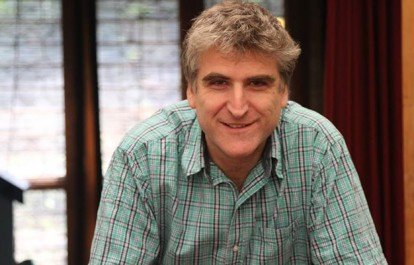
A London-based British investigative journalist and human rights activist — who has reported extensively for outlets including Al Jazeera, The Daily Telegraph, and Channel 4 News, focusing on Bangladesh, including war crimes and politics — has issued the following commentary after Tarique Rahman’s press conference today.At today's press conference Tarique Rahman, Bangladesh's new prime minister-in-waiting, was asked this question by a journalist:"Many people in Bangladesh remain supporters of the Awami League. What kind or types of reconciliation [should there be for them] in Bangladesh."He answered:"By ensuring rule of law".It was a short response, but potentially a significant one - as if the new BNP government follows through with that mindset, many of the problems in the last 18 months that have beset those Awami League activists or supporters - who were not complicit in July/August 2024 violence but have nonetheless been named or/and arrested in criminal cases - can be resolved.How could this be achieved?One possible mechanism would be the establishment of a national review committee composed of senior, independent, and widely respected lawyers, none of whom are affiliated with any political party. This body would be tasked with scrutinising each case and reviewing any evidence already collected by the police against every individual named. Where the evidence is absent or clearly insufficient, the committee could recommend removal from the FIR and appropriate legal relief.If subsequent investigations were to produce credible new evidence against any individual previously removed, that material could be referred back to the same committee for review and determination as to whether re-inclusion is justified.Implementing such a process would likely require legislative amendment. However, some structured mechanism of this kind appears necessary if arbitrary detention and harassment is to stop, and some kind of reconciliation is to be started.If the new government is serious about grounding reconciliation in the rule of law, then action — and swift action — is essential.
Bangladesh PM-in-Waiting Rahman Appeals for Unity as BNP Sweeps Polls
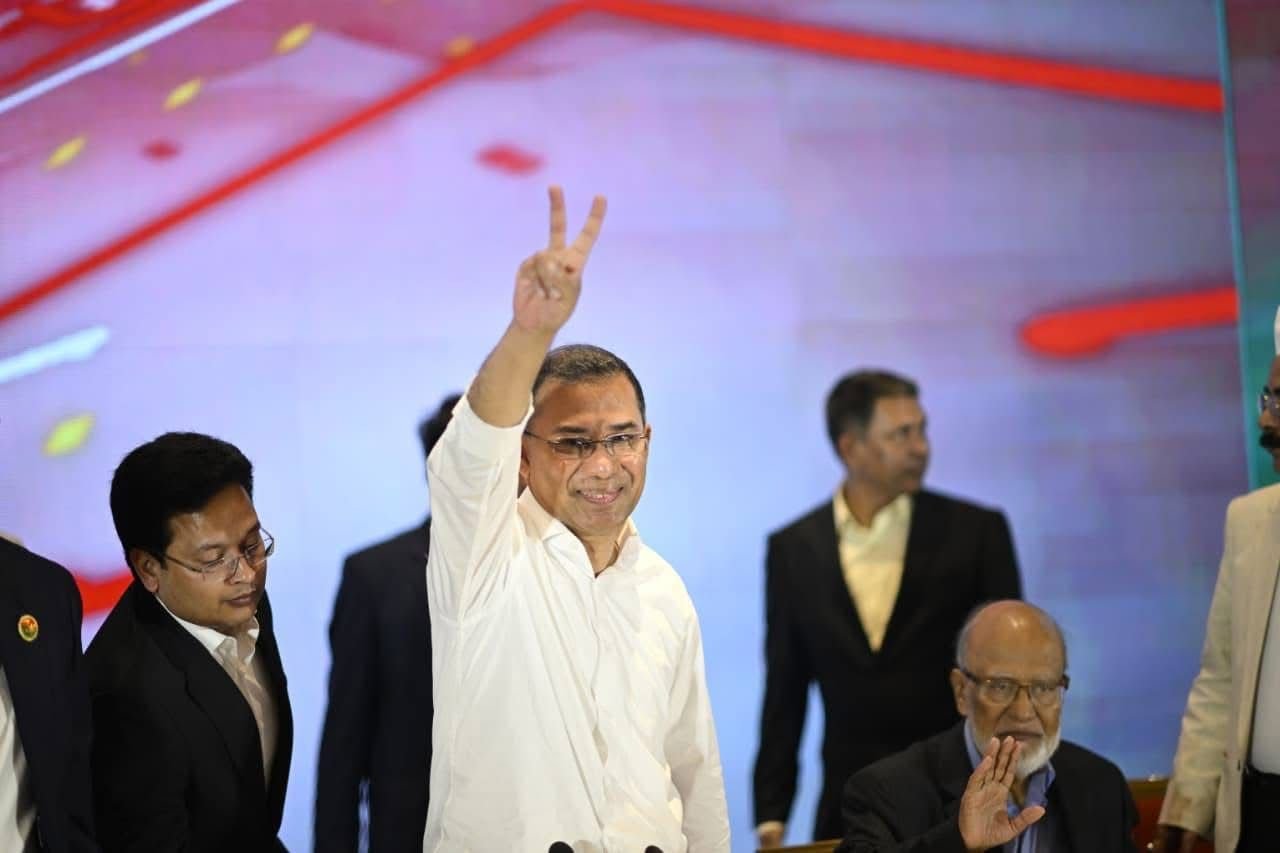
Dhaka | Bangladesh Election 2026Bangladesh’s prime minister-in-waiting, Tarique Rahman, has called for national unity after his Bangladesh Nationalist Party (BNP) secured a sweeping victory in the country’s parliamentary elections.Addressing supporters in his first speech since the vote, Rahman dedicated the victory to those who “sacrificed for democracy” and urged citizens to move forward together despite political differences.“Our paths and opinions may differ, but in the interest of the country, we must remain united,” Rahman said.“I firmly believe that national unity is a collective strength, while division is a weakness.”Landslide Victory ConfirmedThe Bangladesh Election Commission published an official gazette confirming the results of Thursday’s landmark election.According to the Electoral Commission:The BNP-led alliance won 212 of the 299 parliamentary seats.The Jamaat-e-Islami-led alliance secured 77 seats.The National Citizen Party, led by youth activists who played a role in toppling Sheikh Hasina and aligned with the Jamaat-led bloc, won just six of the 30 seats it contested. The result highlighted the difficulty of converting protest-driven political momentum into sustained electoral support.Hasina’s Awami League was barred from participating in the election.Yunus Congratulates RahmanBangladesh’s interim leader, Muhammad Yunus, congratulated Rahman on what he described as “the landslide victory of his party” as preparations began for the transfer of power to an elected government.The 85-year-old Nobel Peace Prize laureate expressed hope that Rahman would help guide the country toward “stability, inclusiveness, and development.”Jamaat Accepts OutcomeThe Jamaat-e-Islami also accepted the overall result despite earlier alleging irregularities in the vote count.Party chief Shafiqur Rahman acknowledged the outcome in a statement:“We recognise the overall outcome, and we respect the rule of law.”He had initially alleged “inconsistencies and fabrications” but later said the party would serve as a “vigilant, principled, and peaceful opposition.”International ReactionLate on Friday, United States Secretary of State Marco Rubio congratulated Rahman, the BNP, and “the people of Bangladesh” following the election.“The United States looks forward to working with the newly elected government to advance prosperity and the security of the region,” Rubio wrote on X.A Political ComebackRahman’s victory marks a dramatic political comeback. The 60-year-old returned to Bangladesh in December after 17 years in exile in the United Kingdom.He is the son of former President Ziaur Rahman, who was assassinated in 1981, and former Prime Minister Khaleda Zia, who served three terms in office.In his remarks, Rahman began speaking in English before switching to Bangla.“Freedom-loving pro-democracy people of the country have once again brought victory to the Bangladesh Nationalist Party,” he said.“This victory belongs to Bangladesh, belongs to democracy, this victory belongs to people who aspired to and have sacrificed for democracy.”
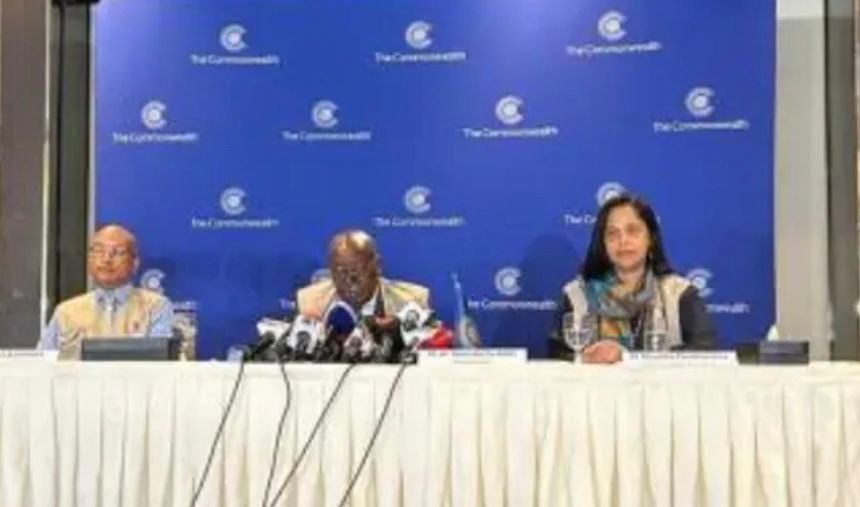
Commonwealth Endorsement and the Political Reset in Bangladesh
Interim Statement byHE Mr Nana Addo Akufo-AddoFormer President of GhanaChairperson of the Commonwealth Observer Group14 February 2026 | Dhaka, Bangladesh INTRODUCTION1. The people of Bangladesh, members of the media, fellow observers, members of the diplomatic corps, ladies and gentlemen; good afternoon to you all. Thank you for joining us at this Commonwealth Observer Group Press Conference.2. I am honoured to chair the Commonwealth Observer Group for the 13th parliamentary elections and the referendum on the July Charter, at a watershed moment in Bangladesh’s history. Our presence here reaffirms the Commonwealth’s support to the people and Government of the People’s Republic of Bangladesh and its democratic process.3. Let me at the outset commend the people of Bangladesh, the Bangladesh Election Commission including the election officials, law enforcement agencies, and the interim Govermment, for the peaceful and orderly manner in which the parliamentary elections and the referendum were conducted.4. This Commonwealth Observer Group is an independent body that will make recommendations to the Commonwealth Secretary-General. Our mandate is to offer an informed and impartial assessment of the entire electoral process according to standards for democratic elections, as set out in the Declaration of Principles for International Election Observation, and in the 2018 Revised Guidelines on Commonwealth Election Observation.5. The Commonwealth is honoured to have been invited by the Chief Election Commissioner of the Bangladesh Election Commission. I take this opportunity to express our appreciation to the interim Government of Bangladesh and the Bangladesh Election Commission for all the arrangements that have been made to facilitate the work of the Commonwealth Observer Group, which was constituted by the Commonwealth Secretary-General, the Honourable Shirley Botchwey. It comprises myself and twelve experts drawn from the fields of politics, law, media, gender, and election administration from several Commonwealth regions.6. The Commonwealth Secretariat announced the deployment of the Group on 21 January 2026. We arrived in Dhaka on 4 February, having been preceded by a Commonwealth Secretariat staff team that has been in the country since 30 January.7. The Group notes the long history of Commonwealth engagement with Bangladesh. The Commonwealth admitted Bangladesh as its 34th member on 18 April 1972, after its independence in December 1971. This is the fourth time that a Commonwealth Observer Group has been deployed. BACKGROUND8. I will now present the preliminary findings of the Group. The final report, setting out our full findings on the electoral process and our recommendations in greater detail, will be submitted to the Commonwealth Secretary-General and shared with the Government of Bangladesh, the Bangladesh Election Commission, and other key national stakeholders, and will be made publicly available to all.9. On 10 February, we deployed in teams across the eight divisions of Bangladesh, in Barisal, Chattogram, Dhaka, Khulna, Mymensingh, Rajshahi, Rangpur and Sylhet, to observe pre-election activities and Election Day. THE PRE-ELECTION ENVIRONMENTStakeholder engagement10. Prior to our deployment, we met with a range of stakeholders in Dhaka, including Chief Adviser Professor Muhammad Yunus and other members of the interim Government of Bangladesh, the Chief Justice, the Chief Election Commissioner and other members of the Bangladesh Election Commission, the Chief of Army Staff, and Inspector-General of Police. We were also briefed by political parties, media representatives, online monitoring and fact-checking groups, civil society organisations including women and youth groups and representatives of persons with disabilities (PWDs), as well as Commonwealth High Commissioners and international organisations. In addition, we met with other international observer missions and local citizen observer groups. Context of the elections11. The electoral process took place against the backdrop of significant political developments following the July Uprising of 2024. Under the interim Government of Bangladesh, the political environment has been shaped by key decisions, including consultative dialogue on political reforms, which culminated in the July Charter and the associated referendum process, as well as decisions affecting the participation of some political parties, including the barring of the Awami League. It is within this transitional context that the elections and referendum were conducted. Participation and InclusionWomen12. Women: We were encouraged by the number of women who turned out to exercise their franchise. However, these elections also showed that more needs to be done to encourage the inclusion of women, given the low percentage (4%) of women candidates and only seven women elected in these elections.13. Accordingly, we will make recommendations to garner support for women’s increased participation in future electoral processes in Bangladesh. Our meetings with various stakeholders, including civil society and youth groups, indicated that there is room for improvement in fielding women in the election process due to the prevailing environment, including online harassment and bullying. Youth14. Youth: The Group acknowledges the increasingly visible role of youth in political mobilisation and public discourse, with many interlocutors pointing to heightened levels of political awareness and activism among younger citizens. At the same time, several stakeholders conveyed that this energy does not always translate into influence within formal party hierarchies or decision-making structures, thereby raising questions about whether youth participation is being institutionally embedded or remains largely consultative or episodic. We encourage the new Government to continue efforts towards greater youth participation and empowerment in governance. Political participation15. Political participation: Stakeholders conveyed to the Group differing perspectives on the breadth of political representation in Bangladesh, not just in these elections, but during other periods of her political history. The Commonwealth will continue to highlight its shared values in all member countries, to advocate for each voter to be enfranchised and a level playing field of all political parties, to enshrine democratic culture and support long-term political stability. Referendum on July Charter16. The proposed referendum on the July Charter featured prominently in discussions with stakeholders. The Group recognises the Charter as a response to multiple and urgent demands for reform. At the same time, some stakeholders expressed concerns about whether the referendum process was sufficiently consultative, and clearly communicated. Security17. The Group received consistent assurances from law enforcement and security agencies regarding their coordination to ensure a stable and enabling environment throughout the electoral period. We commend this coordination and the specific arrangements to ensure the safety for voters and all Bangladeshis. In addition, we express our appreciation to the security forces for facilitating the freedom of movement of citizen and international observers. Postal Ballots18. The extension of a postal ballot mechanism to out of country voters and inmates in this electoral cycle represents a laudable development to enfranchise a greater number of citizens. We recognise this step as a bold and positive measure towards greater inclusivity, while also supporting further efforts to enhance the efficacy, transparency, and public confidence in the logistics of its implementation. Media19. The Bangladeshi media is vibrant and active, and the Group commends it for the depth and breadth of its coverage of these elections. Broadcast, online and print media provided extensive reporting on a range of election-related issues and broader political developments, contributing to public engagement. This enhanced media freedom strengthened the quality of political discourse.20. Although the Constitution guarantees press freedom, some stakeholders reported harassment, threats and violence, including arson attacks on the offices of Prothom Alo and The Daily Star, the biggest Bangla and English language newspapers. Despite these concerns, mainstream media played a dynamic role in reporting on a wide range of issues and competing positions of parties.21. Stakeholders conveyed that social media was a major factor in shaping these elections. Social media platforms have been used to conduct campaigns and reach voters with minimal restrictions. While this has facilitated engagement, the proliferation of false information, hate speech, misogyny, and cyberbullying is of considerable concern. The emergence of AI-generated content poses a risk of misleading voters and distorting public debate.22. In this context, the introduction of fact-checking columns by news organisations, along with fact-checking efforts by civil society, is commendable. We welcome further efforts to address the scale of digital threats and false information circulating online. We will, therefore, be recommending more proactive measures to address such concerns.The Campaign23. We note that the Bangladesh Election Commission introduced a Code of Conduct with clear guidelines on campaigning, social media use, political parties and candidates’ campaign materials, which were designed to ensure that the elections were conducted in a neutral, orderly and peaceful political environment. The Group notes that, aside from isolated incidents, the campaign environment was generally vibrant, festive, and well attended by party supporters. The Code of Conduct only allowed the use of portrait or party symbols on campaign materials in black and white, except for billboards, and we observed that – for the most part – this was largely respected. ELECTION DAY24. The Group noted a peaceful atmosphere prior to the opening of the polls. Pre-Poll Procedures25. In all instances observed by our Group, ballot materials were distributed to polling stations in advance of the opening of polls. Polling staff followed pre-poll procedures in accordance with prescribed guidelines. Opening and Conduct of Poll26. Polling stations opened on time. Opening procedures were implemented in a professional manner. Voting was conducted in a peaceful manner, with procedures largely followed. While a few isolated incidents were reported, these did not appear to affect the overall conduct of voting in a systemic manner.27. In all polling stations visited, relevant information for voters in relation to the location of their voting stations was clearly displayed. We observed that polling stations had separate queues for men and women. Most polling stations were divided into two or more streams which aided queue management. Overall, the polling officials conducted their duties with professionalism and diligence. Postal Ballot28. The Group was able to observe postal ballot counting in some locations, and notes that prescribed procedures were followed. Polling Agents29. Polling agents were observed in all polling stations. In general, they conducted themselves professionally throughout the voting process. Citizen and International Observers30. Our observers interacted with the Alliance for Fair Election and Democracy (AFED), Asian Network for Free Elections (ANFREL), European Union (EU) observers, and others. Secrecy of the Ballot31. The layout at polling stations ensured the secrecy of the ballot. Most polling stations were at schools. Participation and Inclusion32. We note the participation of women as polling officials and security personnel, and commend the large numbers of women voters. However, we noted that Presiding Officers were predominately men, suggesting room for advancing women into senior electoral roles.33. The Group observed that election and security officials assisted PWDs and the elderly to vote. However, polling stations in general were inaccessible to persons with physical challenges, especially on the upper floors, a situation that needs to be addressed. The Group also observed that there were no accommodations for other forms of disability. We will reflect on this issue and offer recommendations in our final report. Security34. We observed the presence of police and other security officials in all polling stations. They were professional, and enabled an orderly and peaceful atmosphere. We observed the introduction of CCTV at polling stations, and body cameras on security personnel. These measures enhanced security, without compromising the integrity of the process. Close of Polls and Tabulation35. At the close of polls at 4:30 PM, most polling stations we observed had no queues. We observed that polls generally closed on time and polling officials adhered to procedures. Our observers followed the results process, from polling stations to Returning Officers’ locations, in various constituencies. We observed the transparent nature of the count at polling stations, as well as the counting of postal ballots. CONCLUSION AND POST-ELECTION PERIOD36. While the Group has noted isolated reports of post-election tensions, we encourage all stakeholders to continue to promote calm and peaceful conduct during the post-election period, and to resolve any disputes through the relevant legal channels.37. Looking ahead to the next election cycle, we encourage the Bangladesh Election Commission to conduct a post-election review, including of all observer recommendations, as is consistent with good practice. We urge it to consider establishing an appropriate domestic mechanism to implement recommendations of our final report. We also call on the Commonwealth Secretariat and other international partners to remain ready to support Bangladesh in this regard.38. The people of Bangladesh have exercised their democratic rights to seek the fulfilment of their aspirations. We encourage them to be magnanimous and united in their shared democratic future.
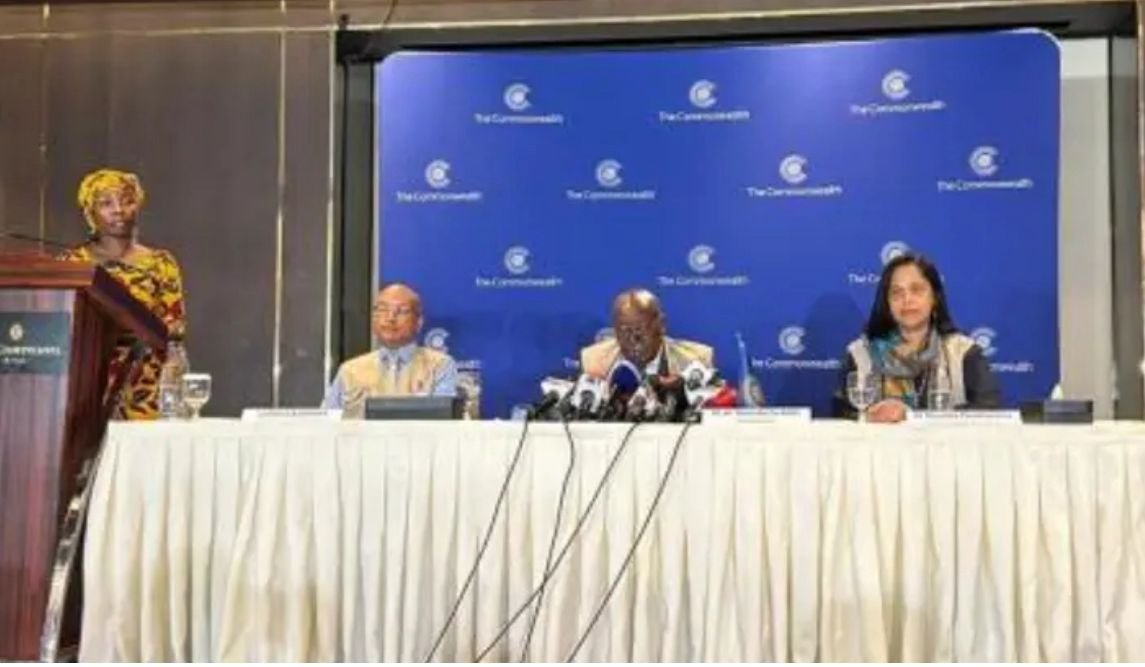
Commonwealth Observers praise peaceful Bangladesh polls, call for greater inclusion
The Commonwealth Observer Group has commended the peaceful conduct of Bangladesh’s parliamentary elections and the July Charter referendum, while highlighting areas where further progress on inclusion and accessibility could strengthen the democratic process.Addressing a press conference in Dhaka, the Chairperson, H.E. Nana Akufo-Addo, former President of Ghana, delivered a statement on behalf of the Group. In his statement, he acknowledged the context in which the elections were conducted, including political developments following the July uprising of 2024 and the decision to bar a political party.He said:“The people of Bangladesh have exercised their democratic rights in pursuit of the fulfilment of their aspirations. We encourage them to be magnanimous and united in their shared democratic future.”The Observer Group praised the vibrant media coverage, noting its important role in informing citizens and encouraging political debate. At the same time, it raised concerns about online misinformation, cyber harassment and hate speech, which continue to affect public discourse.The Group noted that officials assisted elderly voters and persons with disabilities. However, many polling stations remained inaccessible, particularly on upper floors, and lacked provisions for other forms of disability.Women’s and youth participation emerged as key concerns in the electoral process. Women made up just 4 per cent of candidates, with only seven securing seats, underscoring the persistent gender gap in political representation. Meanwhile, although young people were visibly active throughout the process, it did not consistently translate into meaningful participation within formal political party structures.According to the Group’s statement, despite some pre- and post-election tensions, polling officials, security personnel and election agents generally carried out their duties with professionalism.On the referendum, the Group said, “it recognises the Charter as a response to multiple and urgent demands for reform”.The Group encouraged all stakeholders to maintain calm during the post-election period and consider the recommendations that will be outlined in its forthcoming final report.The final report, which will set out the full findings on the process and recommendations in greater detail, will be submitted to the Commonwealth Secretary-General, the Hon. Shirley Botchwey, and thereafter shared with the Government of Bangladesh, the Bangladesh Election Commission, political parties, and other key stakeholders.

EU Backs Bangladesh’s Peaceful Polls, Calls Vote Credible and Competently Managed
14 February 2026Brussels, BelgiumEEAS Press TeamThe European Union welcomes the holding of genuinely competitive parliamentary elections and referendum in Bangladesh in a peaceful atmosphere.The people of Bangladesh have exercised their democratic rights in large numbers.The EU deployed an Election Observation Mission, which presented its preliminary findings in a press conference on 14 February. The Mission noted that the elections were credible and competently managed, marking a pivotal step towards restoring democratic governance and the rule of law. The Mission’s final report will be published later this year.The European Union calls on all stakeholders to work together to deliver on the constitutional, judicial and other important reforms for which popular support has been expressed in the referendum. The EU notes the vital role of the new Parliament in this regard.The EU looks forward to working with the new government of Bangladesh to intensify relations and stands ready to support reforms that are underpinned by respect for democratic principles, human rights and the rule of law.
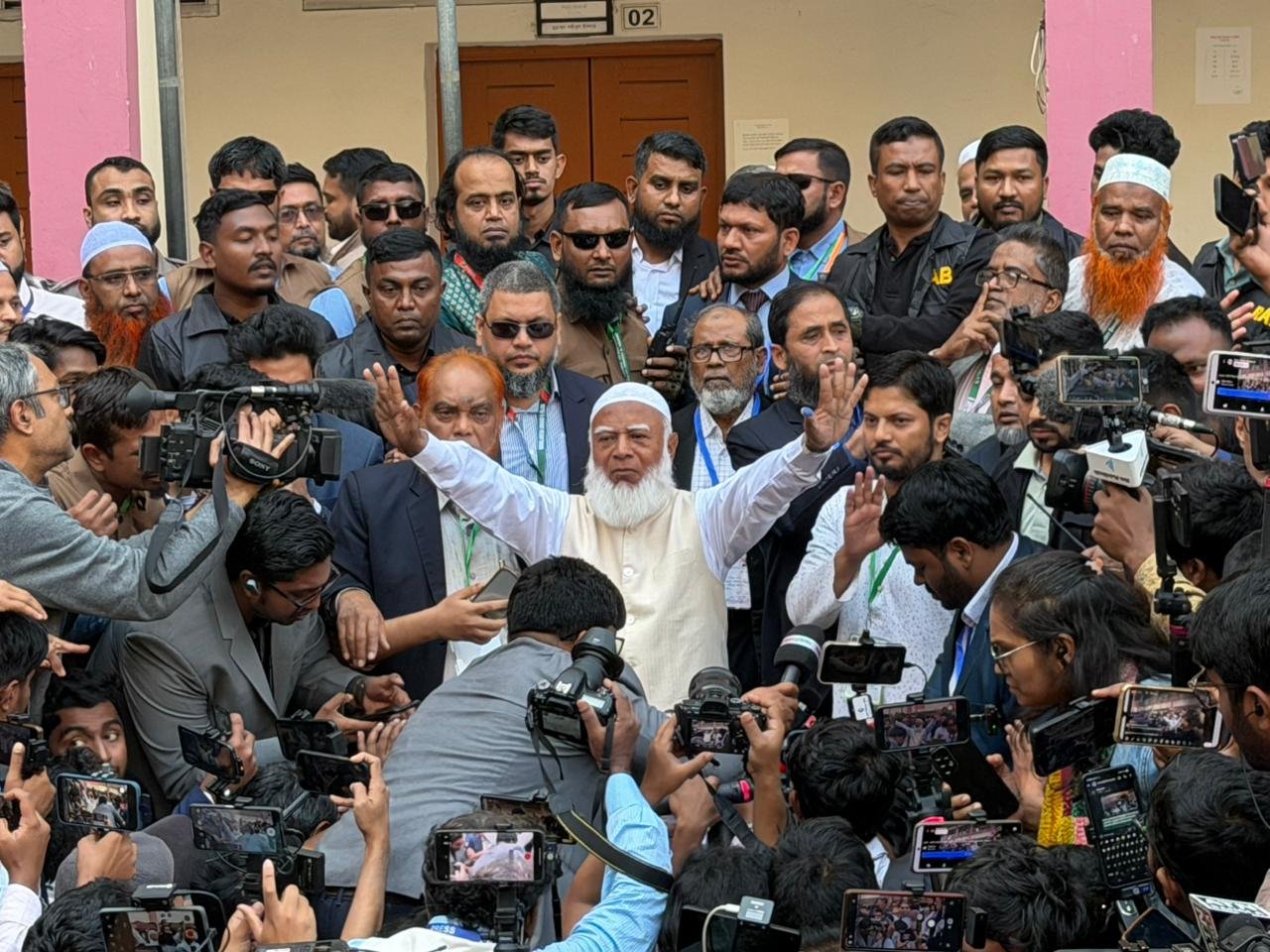
Bangladesh Election 2026: Could Jamaat-e-Islami Become the Main Opposition? Taslima Nasreen Warns of Secular Shift
February 12, 2026As Bangladesh counts votes in its pivotal 2026 general election, exiled author and activist Taslima Nasreen has raised alarm over what she sees as a potential turning point in the country’s political identity.With early trends suggesting that the Bangladesh Nationalist Party (BNP) may form the next government — and the Awami League remaining banned — Nasreen warns that Jamaat-e-Islami could emerge as the country’s main opposition party for the first time in history.She argues that such a development would fundamentally challenge Bangladesh’s secular democratic foundations.A Defining Election MomentThe 2026 election is the first national vote since the 2024 student-led uprising that led to the resignation of former Prime Minister Sheikh Hasina. The political landscape has since shifted dramatically, with previously banned parties returning to electoral politics and new alliances reshaping the field.Vote counting is now underway across the country, with the BNP reportedly gaining strong momentum in several regions.If the Awami League remains barred from contesting parliamentary politics, analysts suggest Jamaat-e-Islami — currently contesting as part of an 11-party coalition — could assume the role of official opposition.Taslima Nasreen’s WarningNasreen, a prominent secular voice living in exile, expressed concern that sidelining secular parties could strengthen religion-based political forces.Writing on social media, she stated:“This happens only because the Awami League has been banned.”She further argued that in a secular state, religion-based parties should not serve as the primary political counterweight.“In a truly secular state, no political party should be built on religion. If any party must be banned on principle, it should be Jamaat-e-Islami, not secular parties.”Her comments reflect longstanding concerns among secular activists about the role of religion in governance and policymaking.Jamaat’s Re-Entry into Mainstream PoliticsJamaat-e-Islami’s return to active political participation marks a significant shift. The party had previously faced restrictions but is now operating openly within a broader coalition framework.Its expanded presence during this election cycle has altered voter dynamics in several constituencies. Political observers note that if Jamaat becomes the primary opposition, it would represent an unprecedented institutional role for the Islamist party.This potential outcome has intensified debate over Bangladesh’s constitutional identity as a secular republic.Women’s Representation and Democratic ConcernsThe election also highlights ongoing structural challenges in representation.A record 78 women candidates are contesting among more than 1,900 total candidates. However, many are relatives of established male politicians, raising questions about substantive gender empowerment in politics.Nasreen linked the issue of secular leadership to broader democratic principles, including:Protection of women’s rightsUniversal educationUniversal healthcareFreedom of expressionMinority protectionShe argues that a democratic system must safeguard these pillars to remain inclusive and progressive.What Lies Ahead?As counting continues, the focus is shifting from who will form the government to what kind of opposition Bangladesh will have.Nasreen has called for the reinstatement of the Awami League to ensure ideological balance within parliament and prevent a religion-based party from becoming the dominant opposition force.The 2026 election may therefore define not only Bangladesh’s next administration but also the future character of its parliamentary politics.At stake is a broader question: Will secular political forces retain institutional influence, or will religion-based parties consolidate a new position of power within the democratic system?The answer may shape Bangladesh’s political direction for years to come.
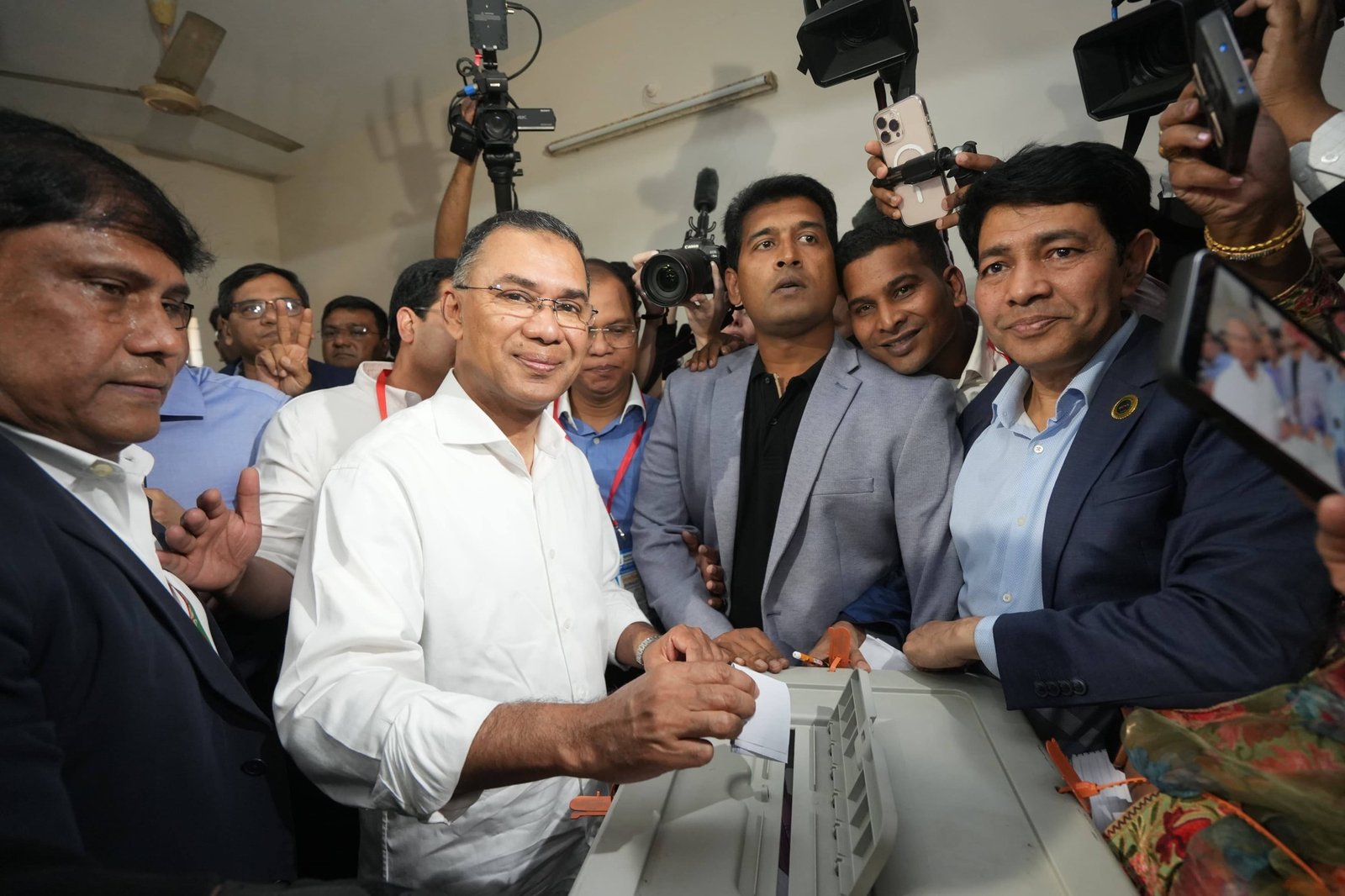
Tarique Rahman Vows Clean Governance as Bangladesh Holds First Post-Hasina Election
Jailed, exiled and now returned, BNP leader positions himself as frontrunner in landmark voteBangladesh began voting today in its first widely regarded free and competitive election in nearly two decades, with Bangladesh Nationalist Party (BNP) leader Tarique Rahman pledging a decisive break from what he described as years of institutionalised corruption.Speaking ahead of polling, Rahman promised a “top-down zero-tolerance” policy toward graft if his party secures power. Opinion surveys suggest the BNP is likely to secure a significant majority, ahead of Jamaat-e-Islami and its Islamist allies.Rahman, 60, described the election as taking place at a “critical and challenging” juncture for the country.“Corruption became embedded under the previous administration,” he said. “Restoring accountability across every level of government will take time, but firm action and clear messaging can begin to rebuild trust.”A Pivotal Vote After Political UpheavalThis election follows the dramatic fall of Sheikh Hasina in mid-2024 after a student-led uprising and subsequent state crackdown that, according to UN estimates, left approximately 1,400 people dead.Hasina, now in exile in India, was later convicted in absentia of crimes against humanity linked to the final period of her administration.Her Awami League government had overseen three consecutive elections widely criticised by opposition parties and international observers for irregularities and suppression of dissent. Thousands of BNP leaders and activists were detained during that period.Since August 2024, an interim administration led by Nobel laureate Muhammad Yunus has overseen preparations for the vote, aiming to restore democratic credibility. Despite ongoing economic and security challenges, observers say a peaceful poll would mark a significant democratic reset.More than 127 million voters are registered, with extensive security deployment nationwide.Rahman’s Return After 17 YearsRahman returned to Bangladesh in December 2025 after 17 years in London, where he had been living following his release from detention in 2008. He assumed leadership of the BNP from his mother, former prime minister Khaleda Zia, who passed away shortly after his return.Though he held no formal government post during the BNP administration from 2001 to 2006, critics long alleged he exercised significant political influence during that period. Allegations of corruption and political interference have followed him for years, which he continues to reject.His convictions under Hasina’s government were overturned after the 2024 political transition, clearing the way for his return.“If there had been evidence, it would have stood the test of time,” Rahman said. “It has been nearly two decades.”Rahman has acknowledged past governance shortcomings under BNP rule, stating that lessons have been learned and reforms are necessary.Dynastic Politics and Islamist ResurgenceRahman’s candidacy also revives debate over dynastic leadership in Bangladesh. With both his parents having served as prime minister, critics argue that the country risks continuing a political culture dominated by established families.Meanwhile, Jamaat-e-Islami — previously restricted under Hasina — has re-emerged as a significant force and is expected to secure its strongest electoral performance to date. Its platform includes proposals aligned with greater Islamic legal influence in governance.Human rights groups have recently expressed concern over incidents of moral policing and growing conservative activism in parts of the country.Rahman dismissed suggestions that Islamist gains pose a systemic threat, arguing that economic opportunity and democratic participation would mitigate extremism.“When people have jobs, stability and a voice, they move away from radicalism,” he said.Recalibrating Relations with IndiaA future BNP government would also face the challenge of redefining Bangladesh’s relationship with India. Under Hasina, Dhaka maintained close ties with New Delhi. Relations have cooled significantly since her removal, particularly as India continues to host her in exile.Rahman said any future engagement must be based on “mutual respect and understanding,” declining to elaborate on how tensions might be resolved while former Awami League figures remain in India.
Sheikh Hasina’s Son Admits Government “Completely Mishandled” 2024 Gen Z Uprising
The son of Bangladesh’s ousted prime minister Sheikh Hasina has made a rare admission that her government “completely mishandled” the volatile protests led by Generation Z in 2024 — a movement that ultimately brought down the Awami League’s long-standing rule.Speaking to The Independent, Sajeeb Wazed acknowledged serious failures in handling the youth-led uprising, describing both “a failure of communication and a failure of judgement.”“Our government did not sit down with the protesters,” Wazed said. “And then you had Islamists taking advantage of the protests, militants jumping in… armed attacks… taking this as an opportunity to try and overthrow the government.”He conceded that the state response was excessive.“At that point, our government completely mishandled it. Law enforcement used excessive force. We let it get completely out of hand. It should never have gone that far. It’s regrettable.” A Turbulent ElectionMore than 128 million voters are set to cast their ballots on Thursday in what authorities describe as a vote to restore democratic governance after 18 months of political and economic turbulence.However, Wazed — who is currently barred from contesting — has urged Awami League loyalists to boycott what he calls a “completely manipulated election.”“This is designed in particular to give Jamaat-e-Islami a much greater proportion of seats in parliament than they would ever get in a fair election,” he alleged in a phone interview from Washington.He further claimed that there is a de facto ban on “all progressive and non-Islamic parties” in Bangladesh.The interim government, led by Nobel laureate Muhammad Yunus, has banned the Awami League from political activities, citing national security concerns and the need to protect witnesses in ongoing criminal trials. Fallout from the CrackdownA UN report estimated that up to 1,400 people were killed during the government’s crackdown on protesters. In November, a Bangladeshi tribunal sentenced Sheikh Hasina to death in absentia for crimes against humanity — an unprecedented ruling that drew sharp international criticism.Hasina fled to India in mid-2024 after mass protests escalated into a nationwide uprising. She currently resides in New Delhi under full security protection.According to Wazed, Hasina had met with families of victims and formed a judicial inquiry committee to investigate the violence — a body he claims was later dissolved by the Yunus administration.“Yes, what happened is regrettable,” he said. “But what happened after is definitely not justice. It’s a mockery of justice.” Internal Party FailuresWhile acknowledging the government’s errors, Wazed stopped short of blaming his mother directly, instead attributing responsibility to senior party officials.“Because the party was in power for so long, you had people in key positions for far too long,” he said. “They became far too authoritarian. And people such as myself — we weren’t happy with it at all.”He claimed he had advised leadership changes, but his recommendations were ignored.“The whole party got blamed.” Claims of RepressionWazed alleges that since the uprising, more than 500 Awami League members have been killed and thousands arrested. He claimed that “Operation Devil Hunts” led to mass arrests of party activists and that tens of thousands of leaders remain detained without due process.He also warned of rising influence by the once-outlawed Jamaat-e-Islami, expressing concern over what he described as the “Islamisation” of Bangladesh and targeted violence against minorities.These claims have not been independently verified. Legacy and Uncertain ReturnSheikh Hasina, Bangladesh’s longest-serving prime minister, is credited with overseeing rapid economic growth, a boom in garment exports, and a balancing act between India and China. However, her tenure was also marked by accusations of authoritarianism, suppression of dissent, and controversial elections.Wazed insists the Awami League retains deep roots tied to Bangladesh’s independence history.“It is not a matter of if but when about the Awami League’s return to active politics in Bangladesh,” he said.With nearly a third of voters belonging to Generation Z — the very demographic that spearheaded the 2024 uprising — Wazed believes their anger will fade.“Half of those youths regret what happened,” he claimed, citing youth polling, and arguing that economic decline and deteriorating law and order under the interim administration have shifted sentiment. Hasina in ExileAccording to Wazed, his mother is in “good health” in India and is being treated “as a head of state.”“She is actually in the safest place in the world that she could be,” he said. “She is healthy and perfectly safe.”
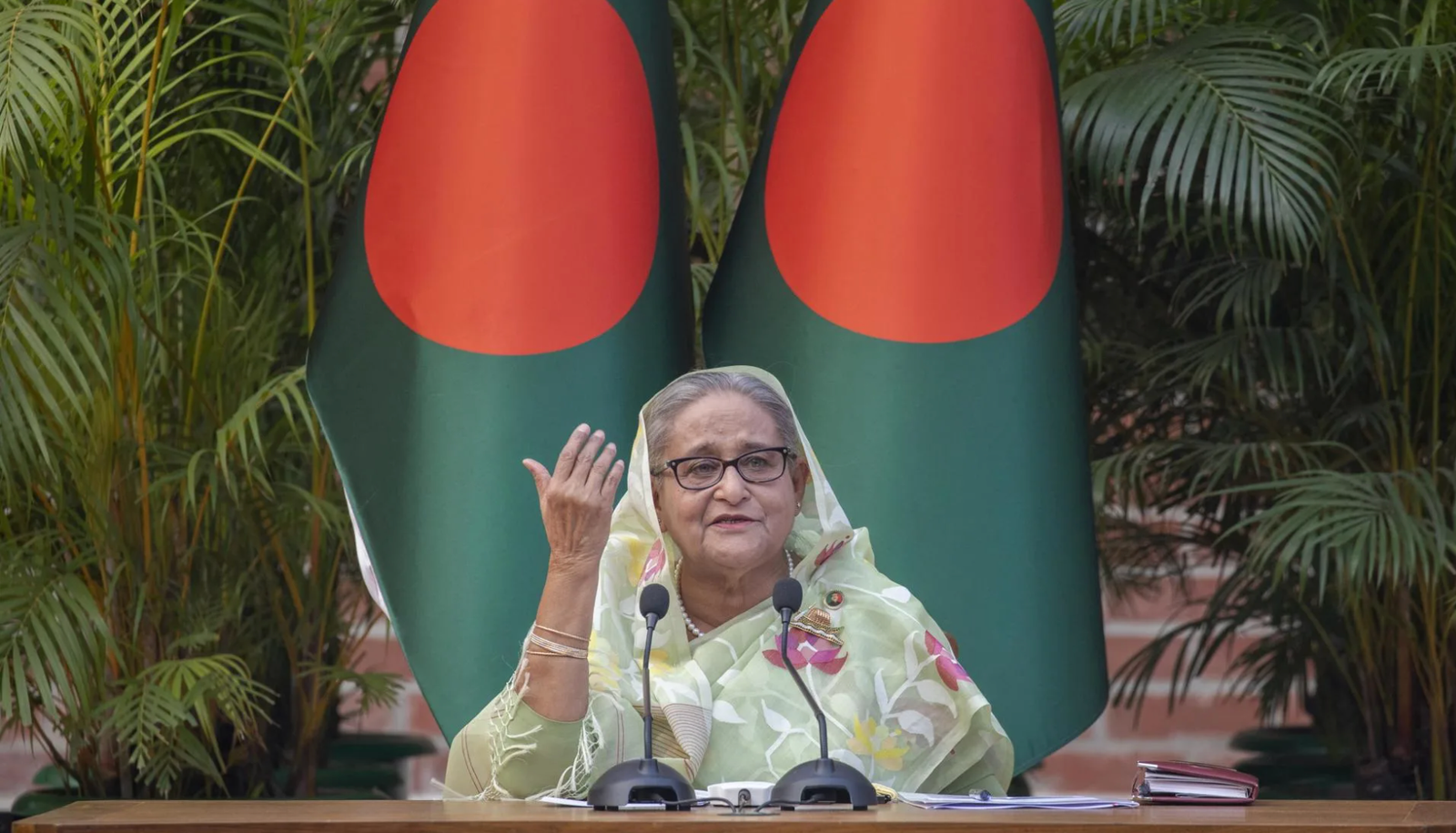
“I Never Issued Orders to Kill Anyone”: Sheikh Hasina
New Delhi (EFE) — Former Prime Minister of Bangladesh Sheikh Hasina has defended her innocence over allegations linked to the deaths of 1,400 people during the 2024 protests, speaking just hours before a general election that could definitively end her political career.In written responses to questions from EFE sent from an undisclosed location, Hasina — who ruled Bangladesh for 15 years and is currently living in exile in India — described the interim government led by Nobel Peace Prize laureate Muhammad Yunus as an “illegal” regime allied with “terrorists.”Hasina, daughter of Sheikh Mujibur Rahman, Bangladesh’s founding leader, faces a death sentence handed down in absentia by the International Crimes Tribunal in Dhaka, along with an extradition order. She maintains that her removal from power was the result of a conspiracy aimed at dismantling what she describes as the secular and economic legacy of her administration. On Her Leadership and LegacyAsked what she believes is the biggest misunderstanding about her leadership, Hasina said:“You need only look at the lies peddled by the interim government to see how misunderstood our time in government was. Bangladesh today offers the clearest possible demonstration of what we were protecting the country from.”She defended her record, citing economic growth, poverty reduction, expanded food production, women’s empowerment, and counterterrorism efforts.“These were not my achievements alone; they belonged to the Bangladeshi people who trusted us repeatedly with their votes,” she said.Hasina argued that the country’s economic and social stability has deteriorated under the interim administration, alleging persecution of minorities, harassment of journalists, and politically motivated prosecutions. On Democracy and Political SpaceResponding to criticism that democratic space shrank during her tenure, Hasina acknowledged imperfections.“No government is without flaws. Democracy requires constant attention and humility,” she said.However, she rejected comparisons between her government and the current administration, stating:“There is a fundamental difference between imperfect democracy and the wholesale elimination of political choice.”She denied banning opposition parties or dismantling constitutional structures, and accused the interim government of scapegoating the Awami League, which has since been suspended from political activity. On Her Conviction and Death SentenceOn her conviction in absentia for crimes against humanity on November 17, 2025, Hasina rejected the verdict outright.“This was not a trial seeking justice, but one designed to eliminate a political opponent,” she said.She alleged judicial bias, denial of due process, and unreliable evidence.“To be absolutely clear: I have never killed anyone, nor did I issue orders to do so.”Hasina claimed she established an inquiry into the protest-related deaths and invited the United Nations to observe developments. She accused the interim government of dissolving the inquiry and relying on what she called an “unverified” UN figure of 1,400 deaths.She further challenged authorities to refer the case to the International Criminal Court (ICC) in The Hague. On Alleged Foreign InvolvementHasina reiterated claims that the uprising that forced her from power may have involved external actors, though she stopped short of providing direct evidence.She said the protests began as legitimate student demonstrations over civil service quotas, but later evolved into coordinated violence targeting state infrastructure.“Police stations were systematically burned, communications infrastructure destroyed, and officers lynched,” she said.While acknowledging uncertainty about foreign involvement, she argued that the release of convicted extremists and their alleged elevation to government positions suggested premeditated planning. On Calls to “Overthrow” the Interim GovernmentAddressing a January 23 broadcast in which she said the interim government should be removed “at any cost,” Hasina clarified that she was advocating lawful and peaceful means.“I will always encourage my supporters to act with dignity and within the law — through peaceful protest, legal advocacy and international pressure.”She outlined five demands:Removal of the interim government and restoration of democracyRestoration of rule of lawProtection of minorities and womenWithdrawal of politically motivated casesA UN-led international investigation into protest-related deaths On Awami League MembersHasina claimed that more than 152,000 Awami League members and supporters are currently detained, including over 120 former Members of Parliament. She alleged mistreatment in custody and politically motivated prosecutions.“Political affiliation should never be punishable by imprisonment,” she said.She urged supporters to remain peaceful and patient. On Conditions for Her ReturnHasina said she would only consider returning to Bangladesh once constitutional governance is restored.She listed the lifting of the ban on the Awami League, release of political prisoners, and free and fair elections as prerequisites.“Once democracy is restored and the rule of law re-established, then I will be able to return,” she said.She described the current environment as unsafe, citing her death sentence and what she called a lack of judicial independence. Source: EFE
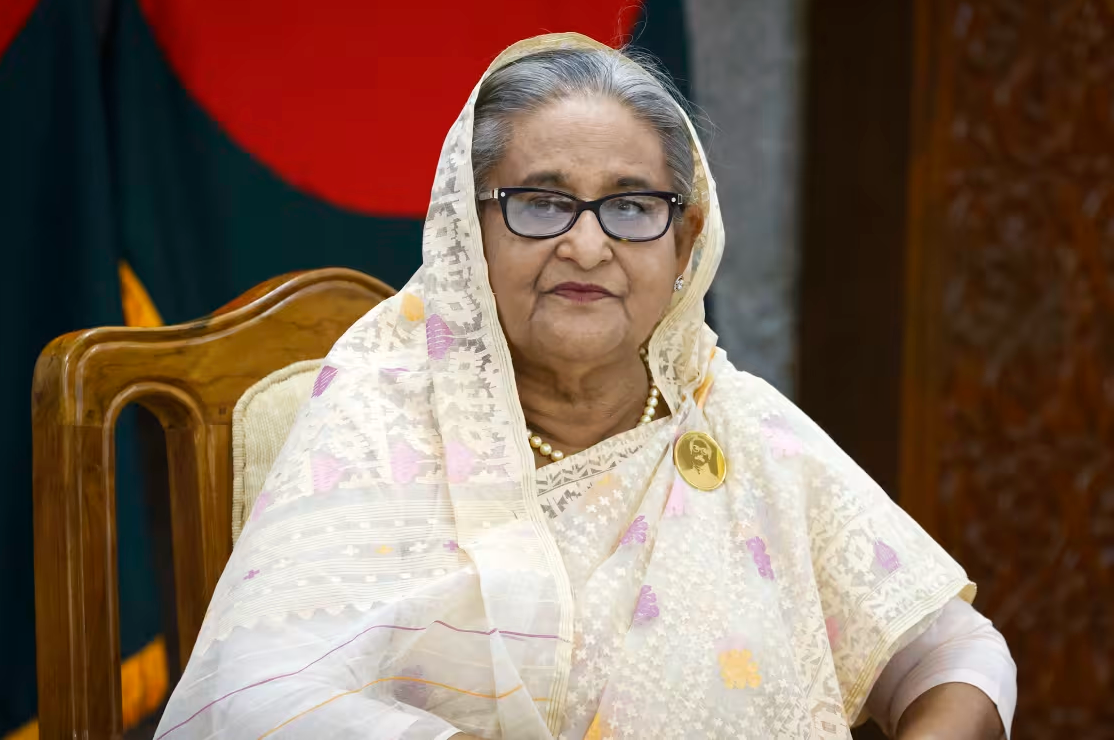
Sheikh Hasina’s Statement Following the Election
Sheikh Hasina has expressed her sincere thanks and gratitude to the people of Bangladesh — including mothers, sisters, and members of minority communities — for rejecting what she described as a “sham election” staged by Muhammad Yunus, whom she accused of seizing power illegally and unconstitutionally.In her statement, she alleged that the election held on 12 February was a “carefully orchestrated farce,” claiming it disregarded citizens’ voting rights, democratic norms, and the constitutional spirit of the country. She argued that the process was conducted without the participation of the Awami League and lacked genuine voter engagement.According to the statement, irregularities began on the evening of 11 February, including alleged occupation of polling centres, incidents of gunfire, vote-buying, ballot stamping, and the forced signing of result sheets by polling agents. She further claimed that voter turnout remained extremely low throughout the country from the morning of election day, with many polling stations in Dhaka and other regions reportedly remaining empty.Citing figures from the Election Commission’s briefing, the statement noted that voter turnout until 11:00 a.m. — approximately three and a half hours after voting began — stood at 14.96 percent. Sheikh Hasina interpreted this as evidence that the public had boycotted the election due to the absence of the Awami League.The statement also alleged that in the days leading up to the election, Awami League voters, supporters, well-wishers, and members of minority communities faced attacks, arrests, intimidation, and a climate of fear. Despite this, she claimed, many chose to boycott what she described as a fraudulent process.Additionally, concerns were raised about what was described as an “abnormal” and questionable increase in the number of registered voters, particularly in Dhaka.In conclusion, Sheikh Hasina called for:The cancellation of what she termed a “voterless, illegal, and unconstitutional” electionThe resignation of Muhammad YunusThe withdrawal of what she described as false casesThe release of political prisoners, teachers, journalists, intellectuals, and professionalsThe removal of the suspension on Awami League activitiesThe restoration of voting rights through a free, fair, and inclusive election under a neutral caretaker government
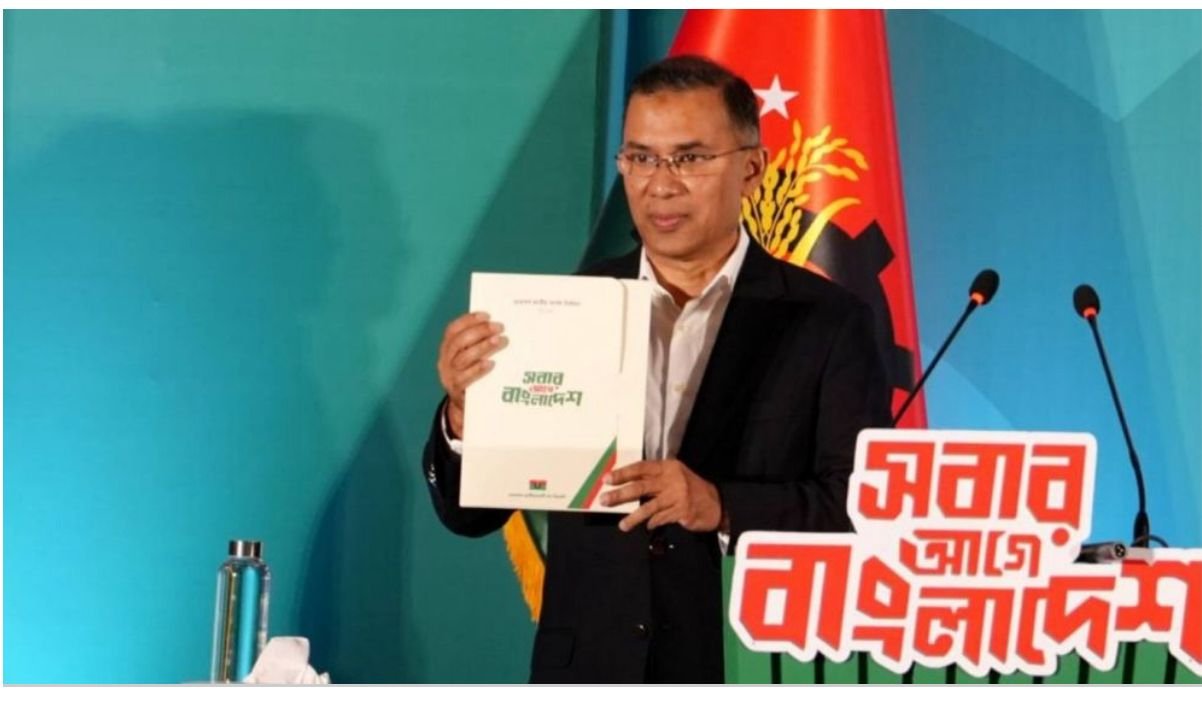
Trillion-dollar economy by 2034: BNP unveils sweeping reform agenda in election manifesto
The Bangladesh Nationalist Party (BNP) on Thursday unveiled its election manifesto, pledging to transform Bangladesh into a modern, democratic, upper-middle-income country with a trillion-dollar GDP by 2034, while restoring what it called the “dignity of the vote” and ensuring that no one remains above the law.The manifesto was formally launched by BNP Acting Chairman Tarique Rahman at a ceremony at the Sonargaon Hotel in Dhaka. The event, presided over by Secretary General Mirza Fakhrul Islam Alamgir, was attended by foreign diplomats, senior journalists, and members of civil society.Framed around the slogan “Bangladesh Before All,” the manifesto outlines wide-ranging political, economic, and institutional reforms aimed at establishing an accountable and citizen-centric government.With “complete faith in Almighty Allah” and inspired by the governance ideals of Prophet Hazrat Muhammad (PBUH), the BNP said justice (insaf) would be the guiding principle of the state. The party pledged to pursue governance based on fairness, humanity, and the rule of law.Political and constitutional reformsKey political pledges include the restoration of a neutral caretaker government during elections, constitutional and electoral reforms, and a ten-year cap on holding the office of prime minister, regardless of the number of terms served. The manifesto also allows a serving prime minister to simultaneously hold the position of party chief.The BNP committed to strict anti-corruption measures and enhanced law-and-order enforcement, alongside the formation of an independent inquiry commission to investigate allegations of state terror, vote rigging, and corruption.Economic vision and social protectionThe party set an ambitious target to raise the tax-to-GDP ratio to 15% by 2035, up from less than 7% in the 2024-25 fiscal year, without increasing the tax burden on citizens.Under its social protection agenda, the BNP pledged to introduce a “Family Card” providing Tk 2,500 per month in cash or essential commodities to low-income households. A “Farmer’s Card” will ensure fair crop prices, subsidies, affordable loans, insurance, and state-managed markets. Similar support schemes will be extended to fish farmers, livestock farmers, and small entrepreneurs.Jobs, education, and healthcareTo tackle unemployment, especially among the youth, the BNP aims to create one million new jobs in the ICT sector, develop technical and language skills, support start-ups, integrate businesses with global e-commerce platforms, and ensure merit-based recruitment in government jobs.Healthcare reforms include the recruitment of 100,000 health workers nationwide and upgrading medical services at district and metropolitan levels. In education, the party pledged a skills- and values-based curriculum, technology support for teachers and students, and the introduction of a midday meal programme in schools.Infrastructure, energy, and environmentBy 2030, BNP plans to raise power generation capacity to 35,000 megawatts and expand transmission lines to 25,000 circuit kilometres.Environmental commitments include the excavation and re-excavation of 20,000 kilometres of rivers and canals, planting 250 million trees within five years, and implementing modern waste-management systems through public-private partnerships. A nationwide “Three R” (reduce, reuse, recycle) policy aims to cut plastic waste by 30% within five years.Digital, creative economy and sportsThe BNP pledged to expand the digital economy by introducing international payment systems such as PayPal, establishing regional e-commerce hubs, and boosting exports of “Made in Bangladesh” products.In the creative economy, the party set a target of contributing 1.5% of GDP and creating 500,000 jobs by 2035, focusing on film, music, theatre, animation, VFX, gaming, and digital content creation.Sports will be developed as a professional career path through expanded infrastructure and training facilities at district and upazila levels.Foreign policyOn foreign relations, the BNP pledged to treat other nations as “friends, not masters,” prioritising sovereignty, national security, and the welfare of Bangladeshi citizens. Bilateral and multilateral ties, it said, would be based on equality, pragmatism, and mutual interest.“This manifesto is not merely an electoral pledge; it is a declaration of a new social and state contract with the citizens of Bangladesh,” the document states, adding that BNP believes in “justice and humanity, not revenge.”“If entrusted with responsibility by the people’s mandate, BNP will build a Bangladesh where the dignity of the vote is upheld, no one is above the law, and every citizen can proudly say — Bangladesh before all.”
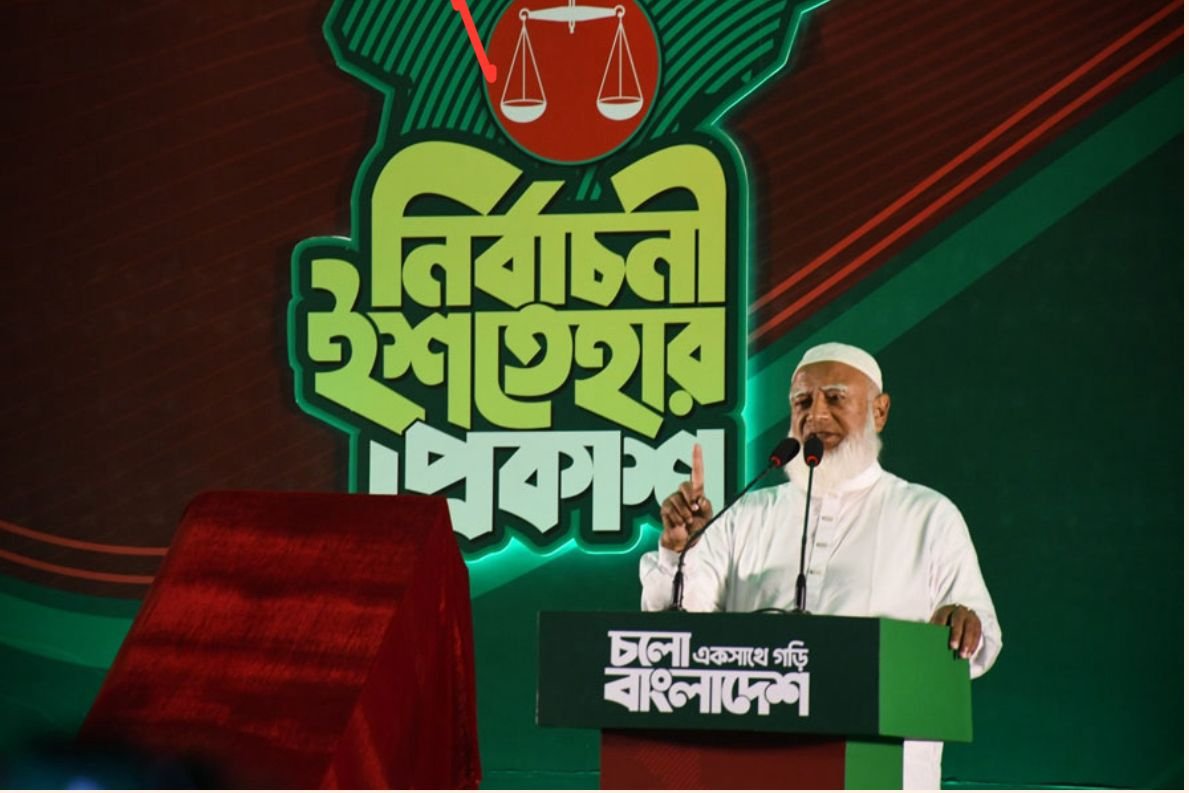
A 36-page dream: Jamaat promises prosperity, but the math doesn’t add up
Jamaat-e-Islami may be accused of many things, but a lack of ambition is not one of them—at least not if its election manifesto is taken at face value. Spanning 36 pages and more than 14,000 words, the document reads less like a governing roadmap and more like an encyclopaedia of promises, gesturing towards a happily-ever-after Bangladesh while leaving the harder questions of feasibility and execution largely unanswered.A substantial portion of the manifesto mirrors provisions and recommendations from the July Charter, which Jamaat had previously signed. Beyond that overlap, however, several pledges merit closer scrutiny. The document touches nearly every imaginable aspect of public life—from regulating freight truck movement in Dhaka between 11:00pm and 6:00am to the far more ambitious goal of expanding Bangladesh’s economy almost fourfold into a $2-trillion economy by 2040.That prosperity, Jamaat suggests, will be driven by a sustained 7% annual GDP growth rate. The arithmetic, however, tells a different story. At that pace, Bangladesh would reach roughly $1.3 trillion by 2040. Achieving the $2-trillion mark would require near double-digit growth for at least 15 consecutive years—a feat that few economies in the world have managed, and none without massive structural transformation. The manifesto does not explain how this leap would be achieved.This pattern repeats throughout the document. Whether discussing economic growth, education stipends, or expanded healthcare coverage, Jamaat offers little clarity on how such commitments would be delivered within a single five-year governing term. Targets are presented with a matter-of-fact certainty: $15 billion in foreign direct investment by 2030, Tk 10,000 loans for 100,000 meritorious students for up to five years, and a phased tripling of the health budget. These pledges are listed with the same level of detail as traffic regulations—ambitious, but thin on implementation.Notably absent from the manifesto is any serious engagement with economic inequality, a defining challenge for Bangladesh. Instead, Jamaat layers promise upon promise: $5 billion in exports and two million ICT jobs by 2030, another five million jobs through government initiatives, 500 international-standard athletes in five years, 1.5 million freelancers through upazila-level e-hubs, and half a million new entrepreneurs within five years. The scale is impressive; the delivery mechanism is not.While the manifesto stops short of explicitly pledging a theocratic state, it clearly elevates religious edicts in economic governance. Jamaat promises support for the expansion of Islamic banking and insurance, new laws to strengthen Islamic financial institutions, and shariah-compliant financing mechanisms in agriculture. These are not marginal reforms but structural shifts in financial policy, yet their broader economic implications remain unexplored.Shariah principles are also set to play a stronger role in personal law and family courts, which Jamaat pledges to reform and preserve “in light of religion.” In education, the party proposes reorganising secondary schooling into four streams—Islamic, science, general, and technical—after class eight, alongside expanded funding and institutional support for Islamic scholarship.The foreign policy section is revealing not only for what it includes, but for what it omits. Jamaat promises peaceful and cooperative relations with neighbouring and nearby countries—India, Bhutan, Nepal, Myanmar, Sri Lanka, Maldives, and Thailand—but makes no mention of Pakistan. This omission is immediately followed by a pledge to prioritise relations with the “Muslim world,” a juxtaposition that reads less like strategic clarity and more like a compensatory afterthought.On labour and employment, Jamaat addresses the controversial five-hour workday that has repeatedly followed its leadership. The manifesto clarifies that reduced working hours would apply to women during maternity, and only with the mother’s consent. While this clarification may soften earlier remarks, it does little to dispel broader concerns about gender roles within the party.Indeed, a striking contradiction emerges on women’s political representation. Jamaat leader Shafiqur Rahman has publicly stated that a woman could never lead the party due to Bangladesh’s “social reality.” Yet the manifesto pledges “significant representation” of women, ethnic minorities, and religious minorities in the cabinet. This promise sits uneasily with the fact that Jamaat has nominated no women and only one Hindu candidate in the current election.The manifesto reiterates commitments to women’s safety, declaring that “women will move without fear.” The proposed measures—dedicated bus services, CCTV cameras, separate compartments on double-decker buses, and emergency helplines—suggest a tendency towards segregation framed as protection, rather than empowerment through equality. Alongside this are pledges for religious awareness campaigns to ensure women’s inheritance rights and VAT exemptions on children’s food products.Finally, Jamaat’s treatment of the Liberation War demands attention. Given the party’s controversial role during 1971, its pledge to “firmly establish the ideals and objectives of the Great Liberation War—equality, human dignity, and social justice—within state and national life” warrants careful scrutiny. Another promise—that “the accurate history of the Liberation War will be presented to students”—implicitly suggests that existing narratives are flawed and may require revision under a Jamaat-led government.Taken together, Jamaat’s manifesto is undeniably expansive and rhetorically ambitious. But ambition without arithmetic, and ideals without implementation, risk turning governance into wish-listing. For voters, the central question remains unanswered: not what Jamaat wants to achieve, but how it realistically plans to do so.
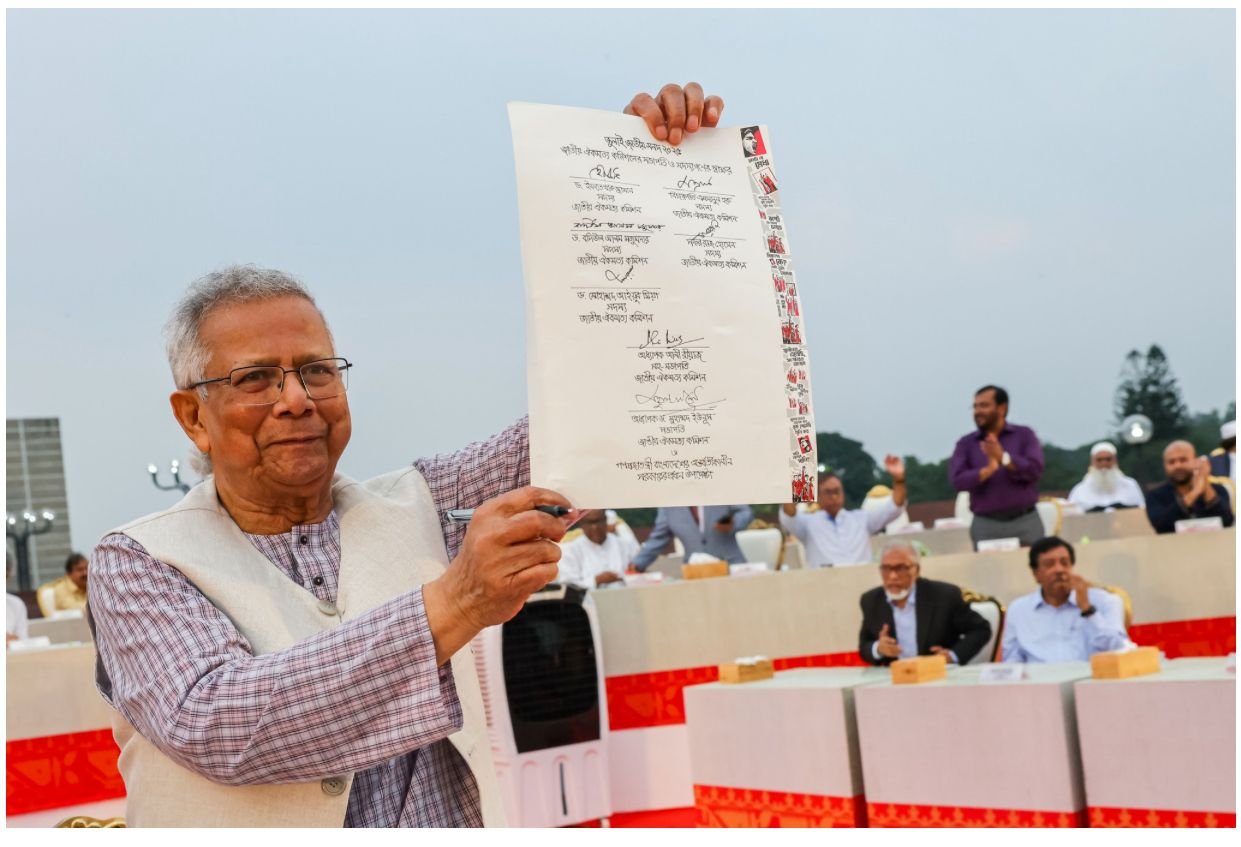
Referendum or Constitutional Reset? Bangladesh at a Legal Crossroads
Bangladesh stands at a defining constitutional moment. On February 12, as an estimated 127 million citizens cast their votes in a parliamentary election, they will also be asked to decide—through a nationwide referendum—whether to approve the so-called July Charter. What appears, at first glance, to be a democratic exercise may, in fact, represent something far more consequential: a fundamental challenge to the constitutional order itself.The referendum presents voters with a single, binary choice—yes or no—on 84 proposed reforms, at least 47 of which would directly amend the Constitution. In practical terms, this would require the electorate to approve sweeping constitutional changes in one stroke, effectively endorsing a structural reconfiguration of the state.A Legal Grey ZoneThe constitutional legitimacy of this referendum remains deeply contested. The interim government led by Professor Muhammad Yunus, installed following the removal of Prime Minister Sheikh Hasina on August 5, 2024, has defended the process by invoking the doctrine of popular sovereignty and the concept of primary constituent power. The administration argues that since the people are the ultimate source of authority, they may alter even entrenched constitutional provisions through a direct plebiscite.While such reasoning carries democratic appeal, it also produces a profound legal paradox. If the referendum operates outside the existing constitutional framework, it cannot be considered a lawful amendment. Instead, it becomes an act of constitutional refounding—the creation of a new legal order without formally abandoning the old one.This contradiction is stark. The interim administration claims legitimacy from the Constitution, governs under its authority, and is conducting elections pursuant to it—yet simultaneously seeks to override that very constitutional structure. An authority cannot draw legitimacy from a document while undermining its supremacy.Popular Sovereignty Has LimitsBangladesh’s Constitution firmly anchors popular sovereignty, but it does so within defined legal boundaries. Article 7(1) declares that all power belongs to the people, but explicitly states that such power must be exercised “only under, and by the authority of, this Constitution.” This clause is critical: it rejects the notion that the people may exercise binding sovereign power at any time, in any manner, simply through mass voting.Constitutional democracies do not reject popular will; they organize it. Part X of the Constitution establishes the exclusive procedure for constitutional amendment, ensuring continuity, predictability, and legal stability. Any attempt to exercise constituent power outside this framework threatens constitutional coherence.Article 7(2) reinforces this structure by nullifying any law or action inconsistent with the Constitution. A referendum implemented through executive ordinance or statute—if it contradicts the amendment process outlined in Part X or bypasses entrenched provisions—would collide directly with this supremacy clause.Consent Must Be InformedBeyond legality, constitutional legitimacy requires informed consent. Democratic participation is meaningful only when voters clearly understand what they are being asked to approve or reject. Yet widespread public confusion surrounds the July Charter and its long-term implications.This problem is compounded by the referendum’s design. Voters are forced to accept or reject dozens of unrelated reforms as a single package—compelling them to endorse unwanted changes in order to secure desired ones, or to sacrifice beneficial reforms to block objectionable provisions.Concerns about procedural fairness have also been raised. The Election Commission has clarified that active campaigning by the interim government would breach its duty of neutrality. Despite this, Professor Yunus publicly urged citizens to vote “yes,” framing the referendum as a pathway to liberation from discrimination and oppression, without clearly explaining the mechanisms involved. A subsequent rule even allowed government officials to campaign for approval—further eroding the deliberative integrity of the process.Article 7B: The Constitutional FirewallThe most formidable legal obstacle to the referendum lies in Article 7B, introduced through the Fifteenth Amendment in 2011. This provision explicitly declares certain constitutional elements unamendable, stating that they may not be altered “by insertion, modification, substitution, repeal, or by any other means.”This language is deliberate. It is designed to prevent circumvention of constitutional entrenchment through alternative mechanisms, including referendums.Bangladesh’s codification of the basic structure doctrine is unusual in global constitutional practice. Unlike India—where the doctrine is judicially derived—Bangladesh embeds it directly in the constitutional text. Article 7B protects the Preamble, Parts I, II, and III of the Constitution, and other foundational principles forming the basic structure.Although portions of the Fifteenth Amendment have been questioned by the Supreme Court, Article 7B remains legally operative until formally altered through constitutionally prescribed means.Direct Conflicts with the July CharterSeveral provisions of the July Charter appear to clash directly with Article 7B’s protected domains:Binding reform mandates: The Charter requires the next elected parliament to implement 30 reforms deemed mandatory, limiting parliamentary autonomy under Article 65 and undermining representative democracy.Bicameral legislature proposal: The introduction of a 100-member upper house elected through proportional representation would fundamentally alter the structure of Parliament, implicating core principles of democratic governance and separation of powers.Restoration of the caretaker government system: Reversing its abolition affects executive authority and governance arrangements protected as part of the constitutional basic structure.A Dangerous PrecedentThe implications extend far beyond a single referendum. Approving the July Charter through a binding plebiscite risks normalizing constitutional disregard during political crises. Once constitutional constraints are bypassed in the name of expediency, future governments may do the same—pushing the country into cycles of legal uncertainty and institutional instability.In a constitutional democracy, majority rule does not eclipse constitutional supremacy. When plebiscites override entrenched legal safeguards, the Constitution ceases to function as the supreme law, and popular rule risks becoming arbitrary.Defending constitutional integrity is not resistance to reform. It is an insistence that reform occur through the Constitution, not against it. Attribution & CreditThis article is an original rewrite based on ideas and arguments presented in:Arafat Hosen Khan & Sangita F. Gazi, “Plebiscite or Refounding? The Constitutional Limits of the Referendum in Bangladesh”, The Diplomat, February 6, 2026.All analytical credit for the underlying legal arguments belongs to the original authors.
Bangladesh Under the Interim Government: Human Rights Trends and Challenges (2024–2026)
Following the collapse of Sheikh Hasina’s Awami League government in 2024, Bangladesh entered a transitional phase under an interim administration led by Muhammad Yunus. While the new authorities pledged to restore democratic norms, strengthen accountability, and reform institutions weakened during Hasina’s 15-year rule, progress has been uneven. General elections are scheduled for February 2026, but the country continues to face serious human rights challenges.Governance and SecurityThe interim government struggled to establish effective control over law and order or to fully implement promised human rights reforms. Although some of the most extreme abuses associated with the previous government—such as widespread enforced disappearances—appeared to decline, repression did not end.Authorities arbitrarily detained large numbers of individuals perceived to be political opponents, and in May 2025 formally banned the Awami League. On November 17, Bangladesh’s International Crimes Tribunal (ICT) sentenced former Prime Minister Sheikh Hasina to death for crimes against humanity linked to the violent suppression of protests in 2024.At the same time, Bangladesh experienced a sharp increase in mob violence, involving political groups and non-state actors, including religious extremists hostile to women’s rights and to lesbian, gay, bisexual, and transgender (LGBT) people. According to the human rights organization Ain O Salish Kendra, at least 124 people were killed in mob attacks between June and August 2025 alone. Accountability for Past AbusesIn February 2025, a United Nations investigation concluded that police, border guards, the Rapid Action Battalion (RAB), and intelligence agencies committed grave violations during the 2024 protests, resulting in approximately 1,400 deaths. Despite these findings, accountability efforts remained limited. By July, police officials acknowledged that only 60 officers had been arrested in connection with protest-related abuses.The interim government chose to prosecute alleged crimes committed during the Awami League era through the International Crimes Tribunal, a domestic court originally created to address atrocities from Bangladesh’s 1971 war of independence. In November, the ICT sentenced Hasina and former Home Minister Asaduzzaman Khan Kamal to death following trials conducted in absentia. A former police chief who testified for the prosecution was later sentenced to five years’ imprisonment.While the government introduced amendments to the ICT law aimed at improving procedures, the tribunal continued to fall short of international fair trial standards and retained the death penalty, contrary to international human rights norms. The tribunal was also granted expanded authority to prosecute and dismantle political organizations, raising concerns over due process and political misuse.Separately, the interim government established a commission to investigate allegations of enforced disappearances and extrajudicial killings during the Awami League’s rule. By August 2025, the commission had received more than 1,850 complaints. Commissioners reported that security force members obstructed investigations by destroying evidence and refusing cooperation. In October, prosecutors filed charges against 28 individuals linked to enforced disappearances. Reform Efforts and Political DeadlockYears of authoritarian governance had weakened key institutions, including the judiciary, police, and electoral system. After assuming office, the interim government created multiple reform commissions addressing areas such as judicial independence, electoral reform, women’s rights, labor rights, policing, and constitutional governance.A Consensus Commission, chaired by Yunus, was tasked with consolidating these proposals. However, political divisions and lack of agreement among stakeholders stalled implementation. Few reforms were enacted.On August 5, Yunus announced the July Declaration, followed by a more detailed July Charter in October. In November, he proposed holding a referendum on constitutional reforms alongside the general election, a move that would bind the next government to implementing selected provisions of the Charter. The proposal has sparked significant legal and constitutional controversy. Arbitrary Detentions and Deaths in CustodyPolitically motivated detentions—a hallmark of the Awami League era—continued under the interim administration. Law enforcement authorities regularly filed criminal complaints listing hundreds of unnamed suspects. Hundreds of Awami League leaders, activists, and supporters were detained as murder suspects without trial and routinely denied bail. Those arrested included lawyers, artists, performers, and civil society figures.Following clashes between Awami League supporters and student demonstrators on February 8, authorities launched “Operation Devil Hunt,” resulting in at least 8,600 arrests. Additional detentions were reported under the Special Powers Act and the Anti-Terrorism Act—laws long criticized for facilitating abuse.On July 16, violence involving security forces and supporters of the banned Awami League in Gopalganj left five people dead after a rally organized by the student-led National Citizen Party. Police subsequently detained hundreds and filed 10 murder cases naming more than 8,400 individuals, most of them unidentified. Authorities denied conducting mass arrests.According to the human rights organization Odhikar, at least 40 people were killed by law enforcement after the interim government took office, including 14 deaths allegedly resulting from torture. Political violence injured nearly 8,000 people and killed at least 81 others. Women’s and Girls’ RightsSexual and gender-based violence remained widespread, with limited access to justice for survivors. Although women played a prominent role in the 2024 uprising, they were underrepresented in the interim government.In April, a government-appointed commission recommended reforms including criminalizing marital rape, ensuring equal parental rights, reforming inheritance laws, and increasing women’s representation in parliament. These proposals triggered backlash from conservative groups. In response, nearly 20,000 supporters of the Islamist organization Hefazat-e-Islam rallied in Dhaka to oppose the reforms. Rohingya RefugeesSince early 2024, more than 100,000 Rohingya refugees fled to Bangladesh from Myanmar amid renewed fighting and abuses. Authorities continued to press for repatriation of over one million Rohingya refugees, despite the absence of conditions for safe, voluntary, and dignified returns.Rohingya refugees in camps faced escalating violence from armed groups and criminal networks, including sexual abuse, forced recruitment, extortion, and abductions. Access to protection, healthcare, and legal assistance remained extremely limited.Cuts to international aid and the arrival of new refugees forced closures of health clinics and early education programs, while food and fuel assistance was reduced. Humanitarian agencies warned of rising malnutrition, disease outbreaks, trafficking, and gang violence. Attacks on MinoritiesIn July, mobs attacked Hindu households in Rangpur district, damaging at least 14 homes. Minority communities in the Chittagong Hill Tracts also continued to face abuses, including sexual violence. Economic and Social RightsThe 2024 uprising was fueled by economic inequality and youth unemployment. In 2024, unemployment among people aged 15–24 exceeded 30 percent, with women disproportionately affected. Inflation eased but remained high, worsening living costs for low-income households.The World Bank projected slower economic growth in 2025, warning that extreme poverty could rise to 9.3 percent, pushing an additional three million people into poverty.The garment industry—employing millions, mostly women—remained the backbone of the economy. While a September agreement between employers and the government promised improved wages and benefits for some workers, nearly 90 percent of informal-sector workers would remain excluded. In January, a garment worker was beaten to death inside a factory, allegedly by senior staff. Freedom of Expression and AssociationIn May, authorities imposed a “temporary” ban on the Awami League using new powers under the amended Anti-Terrorism Act, prohibiting meetings, publications, and online expression linked to the party.Journalists faced frequent attacks in 2025, often by political actors or mobs. Police and courts also pursued cases against writers accused of “hurting religious sentiment.”Although the interim government amended the Cyber Security Act (CSA) in March to remove several abusive provisions, the law continues to allow excessive restrictions on free expression and fails to fully meet international standards. Sexual Orientation and Gender IdentityConsensual same-sex relations remain criminalized, with penalties ranging from 10 years’ imprisonment to life sentences. There are no legal protections against discrimination based on sexual orientation or gender identity. LGBT people and advocates reported increased threats, harassment, and hate speech, including from political figures. Attribution and CreditThis article is an original rewrite based on publicly available human rights reporting, including analysis by Human Rights Watch and other international and Bangladeshi rights organizations.All underlying factual findings and themes are credited to the original human rights documentation.
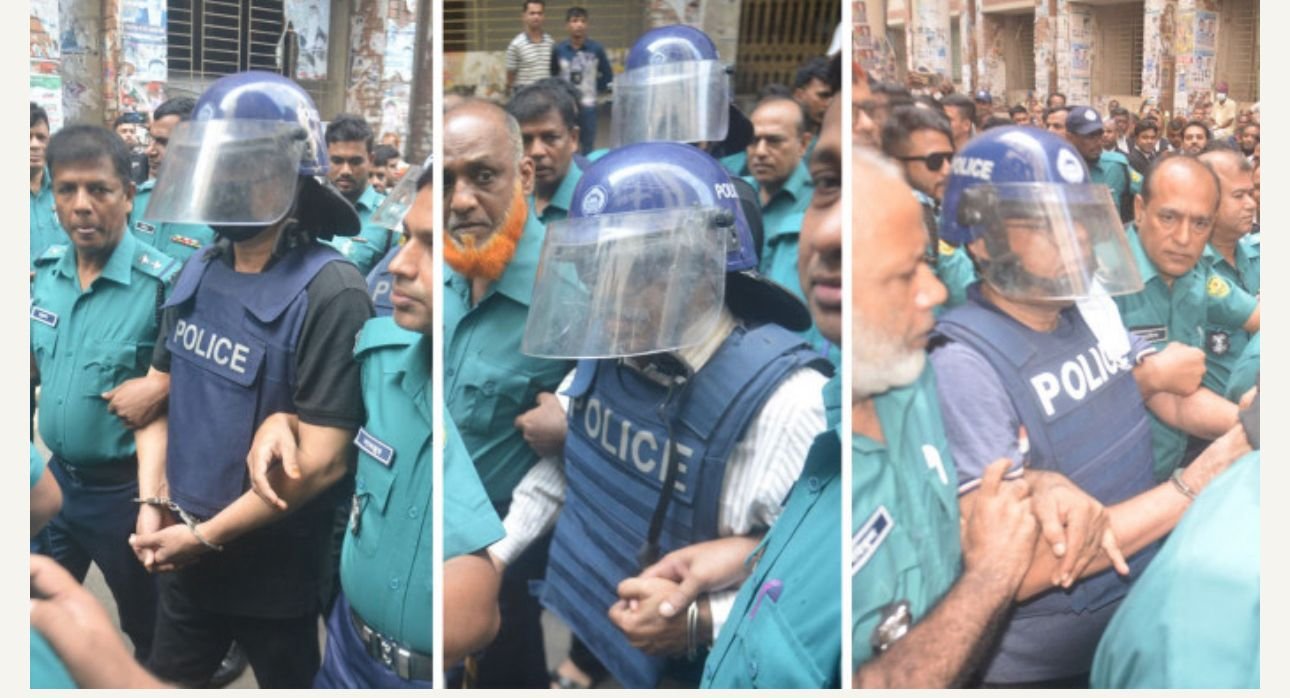
A Journalist in Chains: The Continuing Ordeal of Shyamal Dutta
Shyamal Dutta is not a fugitive. He is not an accused caught at a crime scene. He is a journalist—one who has spent his life documenting events, not committing them. Yet since September 2024, this senior Bangladeshi journalist and Editor of Bhorer Kagoj has lived behind prison walls, deprived of liberty, dignity, and life-sustaining medical care, under accusations unsupported by evidence.His arrest is tied to a murder case arising from unrest in Dhaka on 5 August 2024, in which a man named Fazlu lost his life. The pain of that death is undeniable. But justice demands truth, not convenience. The complaint in this case names 165 individuals and an additional 150 to 200 unidentified persons, asserting collective responsibility based not on actions, but on perceived political affiliation. The case file fails to identify the shooters. It offers no eyewitness testimony, no forensic link, no evidence placing Shyamal Dutta at the scene. At the time of the incident, he was not even in Dhaka—he was in another state, with his family, far from the violence that later engulfed the capital.A Climate of FearThe days following the political transition were marked by chaos and terror for Bangladesh’s media community. Newsrooms were attacked. Journalists were threatened, hunted, and silenced. Shyamal Dutta’s workplace was vandalized. He received multiple death threats—warnings not whispered, but screamed into the void.On 15 September 2024, in Mymensingh, that fear became physical reality. Shyamal Dutta and several other journalists were abducted by unidentified assailants, beaten, and robbed. When police finally intervened, the victims expected protection. Instead, they were detained—arrested under Section 54 of the Criminal Procedure Code, a provision long criticised for enabling arbitrary detention.When attempts to justify that detention failed, police searched existing case records. Only then was Shyamal Dutta shown arrested in the earlier murder case—an allegation disconnected from both evidence and logic.Court proceedings that followed offered no relief. Rather than careful examination of facts, the hearings were marked by hostility and unrelated accusations. No evidence was presented demonstrating his involvement in the alleged crime. Yet remand was granted. He was transferred to prison, where he remains today. Since then, additional murder and attempted murder cases have been filed—none properly investigated, none brought to trial. Bail has been denied repeatedly, prolonging incarceration without adjudication.A Body Breaking in CaptivityBehind the legal cruelty lies a quieter, more terrifying reality: Shyamal Dutta’s body is failing.For years, he has suffered from obstructive sleep apnea, a serious condition that requires nightly use of a CPAP machine simply to breathe safely during sleep. For months after his incarceration, he was denied access to this device altogether. Though later permitted, the machine requires regular medical calibration—care that has not been provided. In its current state, it is largely ineffective.He also suffers from coronary heart disease, including arterial blockages that demand constant cardiological monitoring. No such evaluations have taken place during his detention. The relentless stress of imprisonment—combined with harsh conditions, uncertainty, and fear—has worsened his diabetes, elevated his blood pressure, and eroded his overall health.Each night in custody carries risk. Each untreated condition compounds another. The danger he faces is not abstract or distant—it is immediate and potentially fatal.A Family Punished Without TrialThe suffering does not end with him. Shortly after his arrest, his family’s bank accounts were frozen without notice, plunging them into sudden financial hardship. His legal representatives have faced intimidation. The environment surrounding the case is defined not by transparency or due process, but by fear.This is punishment without conviction. A sentence imposed before a verdict.A Question That Cannot Be IgnoredThe case against Shyamal Dutta rests on mass accusations without individualized evidence, arbitrary arrest, prolonged detention without trial, and denial of essential medical care. His continued imprisonment—despite the absence of credible proof and the serious deterioration of his health—raises urgent humanitarian and legal concerns.Justice is not measured by how many names are written into a case file. It is measured by truth, evidence, and humanity.As days turn into months, and months into years, the question grows heavier: how long can a society look away while a journalist is slowly broken behind bars—not for what he did, but for who he is?History will remember this moment. And it will ask who chose silence, and who chose compassion.
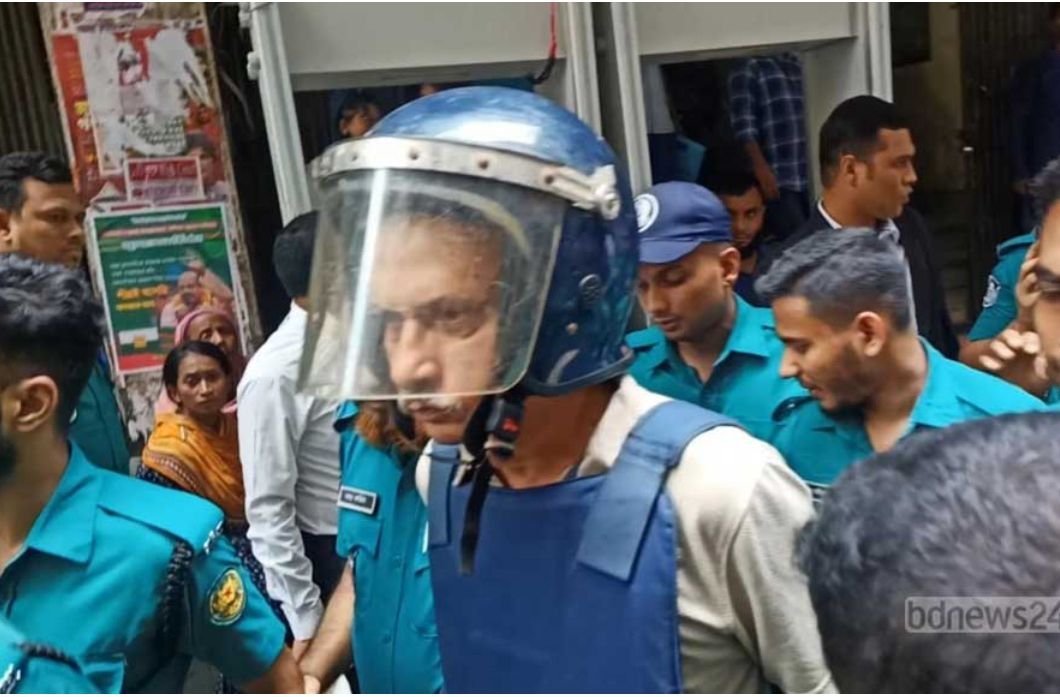
A Life in Custody: The Prolonged Detention of Journalist Mozammel Haque
Mr. Mozammel Haque is 61 years old. For more than sixteen months, he has woken each morning not to the newsroom he once led, but to the iron bars of a prison cell. A respected journalist and one of Bangladesh’s most recognised media professionals, he now endures prolonged incarceration—cut off from his family, his profession, and critically, from the medical care that may determine whether he lives or dies.Before his arrest on 16 September 2024, Mr. Haque served as Editor-in-Chief and Managing Director of Ekattor Television, a privately owned news channel and one of the country’s leading broadcasters. Throughout a long professional career, he neither held a government position nor occupied any official role within a political party. His work was rooted in journalism—asking questions, holding microphones, telling stories—never wielding power.Today, his family lives under relentless emotional and financial strain. Their anguish is deepened by a cruel reality: Mr. Haque is a cancer patient suffering from multiple life-threatening medical conditions, now confined in an environment wholly unequipped to preserve his health, dignity, or life.An Arrest in the DarkIn the early hours of 16 September 2024, Mr. Haque was detained. The arrest came without warning, linked to a murder case allegedly connected to the July–August 2024 mass uprising—a case neither he nor his family had ever heard of. By the following day, he was brought before a Dhaka court. There, in open court, he was subjected to verbal harassment, an experience that stripped him not only of personal dignity but also cast a shadow over the sanctity of judicial decorum.A seven-day police remand was granted. Afterward, he was transferred to Dhaka Central Jail in Keraniganj, where his prolonged detention continues.The arrest rests on a First Information Report (FIR) that names more than 200 individuals. Its allegations are broad, vague, and generalized, yet among the charges is Section 302 of the Bangladesh Penal Code—murder—a charge that carries the ultimate punishments of death or life imprisonment. Despite the severity of these accusations, no credible or individualized evidence has ever been presented to link Mr. Haque to the alleged crime.What followed compounded the injustice. After his initial arrest, Mr. Haque was implicated in multiple additional murder cases. Each case bears the same troubling features: sweeping allegations, an absence of evidence, and no demonstrable connection to his actions. These repeated filings have served one purpose—to prolong pre-trial detention—while multiplying legal peril and inflicting crushing emotional and financial hardship upon his family.A Silenced Press, A Chilling PatternMr. Haque’s case does not stand alone. As of May 2025, at least 266 journalists across Bangladesh have been charged under similarly unsubstantiated cases. This reflects a broader and deeply troubling pattern: systematic intimidation of independent media, enforced not through overt censorship alone, but through legal harassment, prolonged detention, and financial ruin. The message to journalists is clear—and chilling.A Body Failing Behind BarsBeyond the courtroom, another crisis unfolds quietly and relentlessly inside Mr. Haque’s body.In late 2023, he was diagnosed with prostate cancer and underwent a radical prostatectomy—an invasive, life-altering surgery. Even after such treatment, the danger does not pass. The early years following surgery are critical; the risk of biochemical recurrence remains high, and survival depends on strict, regular cancer surveillance.Since his detention, Mr. Haque has been entirely deprived of this essential follow-up care. A scheduled cancer screening on 8 November 2024 was missed. The prison healthcare system lacks the capacity for specialised oncology monitoring. Any delay in detecting recurrence could allow the cancer to metastasise, spread systemically, and become terminal. Continued detention under these conditions effectively denies him his fundamental right to health—and to life itself.This danger is further intensified by his uncontrolled diabetes, hypertension, and elevated triglyceride levels. These conditions are not isolated; they interact, worsen cancer outcomes, and demand constant monitoring and precise medical management. Overcrowded, under-resourced prison medical facilities are categorically incapable of managing such complex, intersecting health needs, particularly for an elderly cancer survivor.A Question of ConscienceTaken together—the absence of substantiated evidence, the repeated filing of generalized and overlapping murder charges, and the immediate threat to Mr. Haque’s life—raise grave and unavoidable concerns. His continued detention risks amounting to arbitrary deprivation of liberty and exposes him to irreparable harm.This is no longer merely a legal matter. It is a humanitarian one.Immediate measures to secure Mr. Mozammel Haque’s release on medical and humanitarian grounds are essential—not as an act of charity, but as a duty to uphold life, dignity, and the fundamental principles of human rights. Each passing day in custody is not just another day lost; it is a step closer to irreversible tragedy.History will remember not only what was done to this journalist—but who chose to remain silent, and who chose to act.CGPG Report/ Dhaka05 February 2026
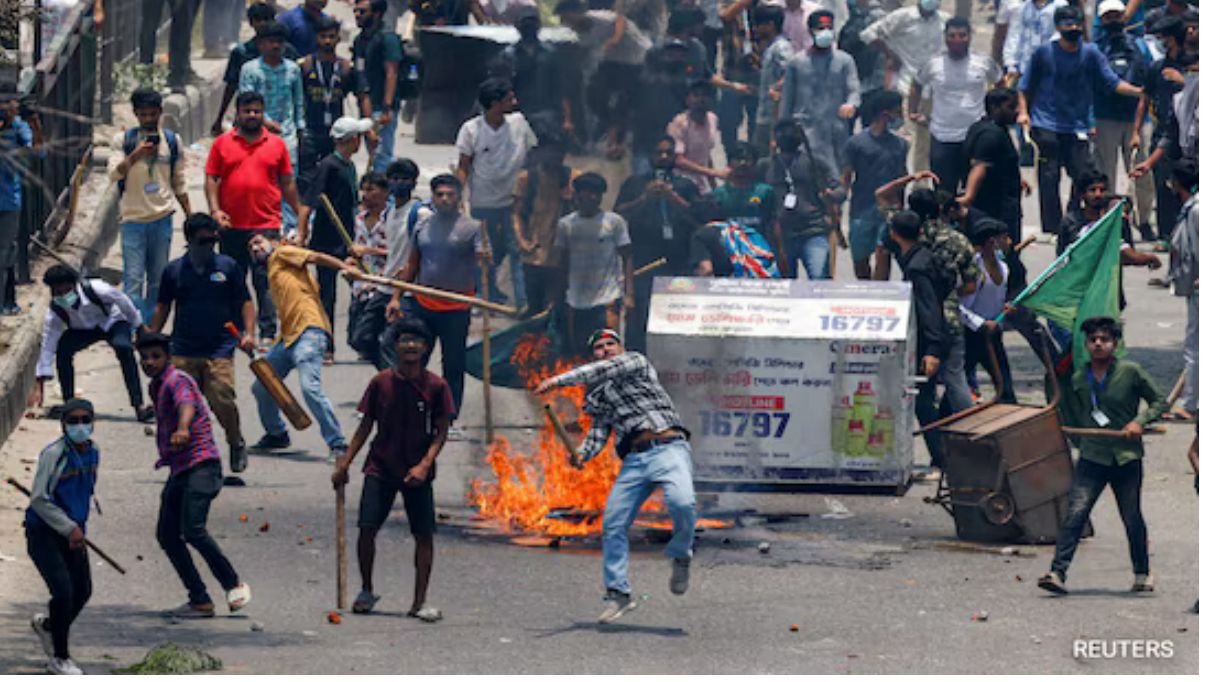
91.7% of Post–5 August Political Violence Linked to BNP: TIB Study
As many as 91.7 percent of incidents of political violence that occurred after 5 August are linked to the Bangladesh Nationalist Party (BNP), according to a new study by Transparency International Bangladesh (TIB).The study, released on Sunday (2 February), found that BNP leaders or activists were involved in 550 incidents, while Awami League members were linked to 124 cases. The report also identified the involvement of Jamaat-e-Islami in 7.7 percent of incidents and the National Citizen Party (NCP) in 1.2 percent.The findings were presented at TIB’s conference room as part of a research report titled “One and a Half Years after the Fall of Authoritarianism: Expectations and Outcomes.”According to the study, political violence and factional conflicts among parties have continued unabated since the change in government. Between August 2024 and December 2025, a period of 17 months, a total of 600 incidents of political violence were recorded across the country.These incidents resulted in the deaths of 158 political activists and left 7,082 others injured, the report said.Of the total incidents documented, 550 involved BNP leaders or activists, while Awami League members were linked to 124 cases. The study also recorded 46 incidents involving Jamaat-e-Islami during the same period.TIB noted that following the fall of the government, clashes and violence erupted over attempts to seize control of institutions and economic activities previously dominated by the Awami League. These included extortion at transport terminals and stands, illegal extraction of stones from quarries and rivers in Sylhet, and disputes over control of leases of bridges, markets, ghats, sand quarries and water bodies.The study further observed that internal control mechanisms within political parties were largely ineffective, and that parties failed to take effective action against their own leaders and activists involved in violence and illegal activities. Source: Transparency International Bangladesh (TIB)Published: 2 February 2026Reporter: Staff Correspondent
UK Expels Russian Diplomat in Tit-for-Tat Move Over Espionage Claims
Britain has expelled a Russian diplomat after summoning Russia’s ambassador in London, describing the move as a reciprocal response to Moscow’s expulsion of a British diplomat last month on allegations of espionage.The British government said on Monday (2 February) that the decision followed Russia’s earlier move to expel a UK diplomat, whom Moscow accused of being an undeclared spy.A spokesperson for the UK’s Foreign, Commonwealth and Development Office (FCDO) said Russia’s accusations were “baseless” and described the expulsion of the British diplomat as “unprovoked and unjustified.”“Summoning the Russian ambassador, a senior FCDO official made it clear that the UK will not stand for intimidation of British embassy staff,” the spokesperson said in a statement. “We are therefore taking reciprocal action today by revoking the accreditation of a Russian diplomat.”Britain also warned Moscow against continuing what it described as hostile actions towards its diplomatic staff.“Any further action taken by Russia will be considered an escalation and responded to accordingly,” the spokesperson added.The diplomatic row comes amid the ongoing war in Ukraine, during which Russia and Western countries have repeatedly accused each other of running espionage operations of an intensity not seen since the Cold War. Western diplomats stationed in Moscow have reported being subjected to intrusive surveillance and harassment.The Russian embassy in London did not immediately respond to a request for comment from Reuters. Source: ReutersPublished: 2 February 2026Reporter: Reuters
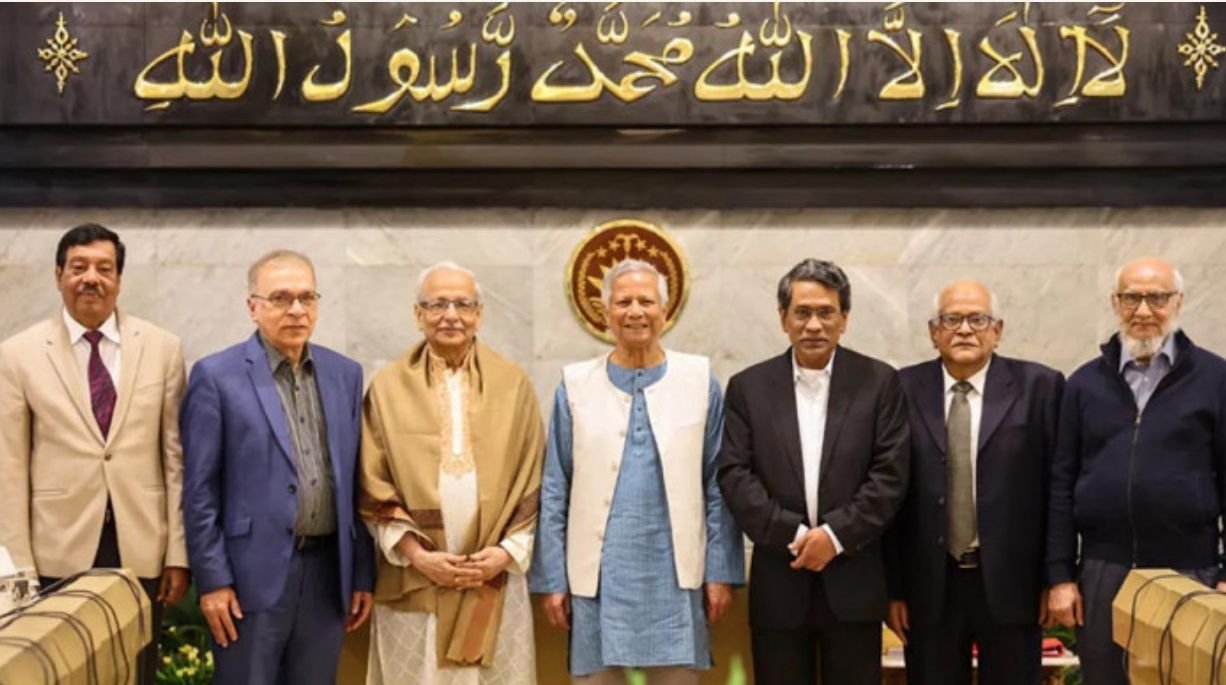
Even After 18 Months, Reform Pledges Remain Distant Reality: TIB
More than a year and a half after the fall of Bangladesh’s authoritarian regime, most promised legal, judicial, political, administrative and institutional reforms remain largely unimplemented, according to a new assessment released by Transparency International Bangladesh (TIB) on Sunday (2 February).The report, titled “One and a Half Years After the Fall of Authoritarianism: Expectations and Outcomes,” found that while reform agendas were widely discussed and several commissions were formed, progress has remained mostly limited to announcements rather than concrete implementation — creating a widening gap between public expectations and realities on the ground.The study reviewed reform initiatives undertaken by the interim government and other stakeholders between 5 August 2024 and 31 January 2026, covering key areas including justice, state reform, elections, anti-corruption, democracy and good governance.According to TIB, the assessment was based on government circulars, ordinances and regulations (both draft and final), media reports, opinion pieces, expert analyses, interviews with political actors, journalists, researchers, students and civil society representatives, as well as official and non-government sources.Local government reforms stalledThe report said structural reforms in crucial areas such as constitutional governance, the judiciary, law enforcement, election administration and local government have seen little tangible progress.Local government reform was identified as one of the most neglected sectors. TIB noted that none of the 180 recommendations made by the Local Government Reform Commission has been implemented so far.“The absence of elected representatives at the local level continues to undermine service delivery and public accountability,” the report said.Limited progress on anti-corruptionThe study found only limited advancement in anti-corruption reforms. Despite repeated commitments to strengthen the Anti-Corruption Commission (ACC), concerns persist over its independence and effectiveness.While investigations into some high-profile corruption cases have begun, visible outcomes remain scarce, reinforcing public perceptions of selective enforcement, TIB said.Governance analysts cited in the report warned that reform fatigue and political hesitation risk eroding public trust. Without legally binding timelines, institutional safeguards and inclusive political consensus, reform efforts are unlikely to bring meaningful change, the report argued.Warning over election violenceSpeaking at the report’s release event, TIB Executive Director Iftekharuzzaman said politicians and the bureaucracy had failed to learn lessons from the July Uprising.“If mob culture is not properly controlled, violence may occur in the upcoming election, as seen in previous polls,” he said, urging the government to take firm action to prevent such incidents.He warned that the risk of violence could persist even after polling day, adding that the government was aware of the situation and had both the authority and capacity to respond.Referring to cases linked to the July Uprising, Iftekharuzzaman said journalists had been detained in numerous instances, raising concerns over whether justice was being served or retaliation was taking place. He stressed that accountability must ensure fair trials for those involved in killings, human rights violations, corruption, money laundering and tax evasion.He also criticised the broadcasting and media commission ordinances, saying the media sector remains neglected and vulnerable, and questioned the interim government’s commitment to ensuring a free and safe press.Public administration reforms lagAccording to the report, the government identified 18 “urgent” recommendations out of 208 proposed by the Public Administration Reform Commission, but progress has been made on only three — renovation of toilets, passport issuance without verification, and holding public hearings.TIB alleged that the Ministry of Public Administration and the Cabinet Division ignored key reform proposals and instead added measures aimed at protecting bureaucratic interests.The study further found that promotions continue to be influenced by political loyalty rather than merit, experience or skill. Some officials promoted allegedly have records of corruption or disciplinary action, while others have been overlooked. Despite pledges to end contractual appointments, retired officials continue to be prioritised, causing frustration among serving officers awaiting promotion.Bi-party dominance, anti-corruption gapsThe report said the interim government has failed to depoliticise the administration, arguing that the monopoly of the previous era has been replaced by a “bi-party dominance.”It also warned that excessive dominance of the administration cadre has led to grade-based and inter-cadre discrimination, while chaos and indecisiveness within public administration are negatively affecting development activities.On anti-corruption efforts, TIB said investigations into 249 high-profile individuals have shown little progress, while initiatives to recover laundered funds and curb widespread graft remain ineffective.Although disclosure of assets by advisory council members was promised, no information has been made public. Asset declarations of government officials, though recorded, have not been verified, the report added.Health sector reforms lag behindTIB found that of more than 400 recommendations made by the Health Reform Commission, 33 were marked as urgent, but only six have been implemented so far.The report highlighted persistent issues such as rising medical costs, corruption in procurement, and alleged influence of physician groups over postings, transfers and recruitment. It also said the government has failed to ensure proper treatment for those injured during the anti-discrimination movement.Some progress was noted, including plans to promote around 7,000 doctors through incentives in specific cases, a 30 percent increase in trainee allowances, and proposals to establish a nationwide pharmacy network at government hospitals. Source: Transparency International Bangladesh (TIB)Published: 2 February 2026
Fear Still Shapes Journalism in Bangladesh Despite Greater Media Space: Mahfuz Anam
Mahfuz Anam, editor and publisher of The Daily Star, has said that an overriding sense of fear continues to shape journalism in Bangladesh, where even minor deviations from dominant narratives can trigger attacks and intimidation.Speaking to The Listening Post on Al Jazeera, Anam said that although Bangladesh now has more investigative reporting and independent thinking than before, journalists still operate under constant pressure.“Today, we have far more free mainstream media, more investigative stories. Independent thinking is definitely much more prominent than before,” he said. “But that overriding fear — that if I slightly deviate from the present popular narrative, I might be attacked — also exists.”He added that journalists often second-guess their choice of words, a practice he described as being contrary to the culture of independent media. “We sometimes think very carefully, should I use this word or that word? This sort of thinking also exists now,” Anam said.Attack on The Daily StarReflecting on the attack on The Daily Star office, Anam said those who carried out the arson were unlikely to be readers of the newspaper. He questioned their motivation, saying the attack appeared to be deliberate and organised.“I think it was well planned. They had their political motivation, financial motivation, and there was also the idea of demolishing the tradition of liberal journalism — journalism that supports democracy, multiplicity of views and dissent,” he said.“Our reporting, if it is flawed, somebody can say it. We can be criticised. But to burn us down, I think this is most unfortunate.”He described the night of the attack as one of “absolute panic,” recounting how staff struggled to breathe amid the smoke and feared they might not survive.“They were telling me, ‘Mahfuz Bhai, we may not meet again’. They were calling their parents, wives and friends, saying maybe they will never meet again,” he said.Role of social mediaAnam said while social media has expanded space for expression in Bangladesh, it has also fuelled the spread of fake news, hate speech and unsubstantiated allegations.Using social media to discredit individuals or institutions has become common, he said, adding that some political parties have built dedicated “social media teams” to mobilise online attacks.“If you say anything against a particular political party, suddenly hundreds of people will start abusing you. And if you say something nice, hundreds will start praising you,” he said. “The political use of social media is very much in vogue.”He recalled that on the night of the attack, an influencer openly called for assaults on mainstream media outlets. “It was well known to anyone following social media that night that one influencer said, ‘Prothom Alo is down, now go to Daily Star and attack this’,” Anam said.“They were trying to destroy us as an institution,” he added, noting that criticism against The Daily Star and Prothom Alo was often taken out of context and left unsubstantiated.Politicisation of journalismAnam said the growing politicisation of journalism has severely eroded public trust in the media. Over the years, journalists have increasingly aligned themselves openly with political parties, he said.“When the public sees that a journalist who is supposed to tell the truth actually belongs to a political party, the credibility of that media outlet suffers greatly,” he said.Elections, repression and hope for changeReferring to the upcoming election, Anam said the public — deprived of three credible elections — is entering a fourth with heightened expectations for a vote that genuinely reflects the people’s will.He said the fall of former prime minister Sheikh Hasina was directly linked to her government’s oppressive approach, particularly its treatment of the media.“The last 15 years of Sheikh Hasina’s governance is epitomised by one act — the Digital Security Act,” Anam said, describing it as a tool designed to silence dissent through fear.He said the law included 20 punitive provisions, 14 of them non-bailable, creating what he described as a climate of enforced silence.Anam also detailed personal and institutional harassment faced by journalists during that period, saying he alone had 83 cases filed against him. He added that Prothom Alo editor Matiur Rahman faced a murder case allegation, advertisements were halted, revenues fell by 40–45 percent, reporters were barred from covering prime ministerial events, and he himself was publicly attacked in parliament.Despite the challenges, Anam expressed hope that these experiences would shape future governments and lead to a stronger commitment to press freedom in Bangladesh.Broadcast informationThe Listening Post episode featuring Mahfuz Anam will be *re-aired on Al Jazeera tonight at 8:30pm (Bangladesh time). Source: Al Jazeera – The Listening PostMedia: The Daily Star
We Want Nothing, Only to Live Safely - Chapainawabganj, Bangladesh
On one side lies Chapainawabganj town and on the other Bargharia, separated by the Mahananda River and connected by the Bir Sreshtha Captain Mohiuddin Jahangir Bridge, popularly known as the Mahananda Bridge. At the Bargharia end of the bridge, Notun Bazar village has grown along the riverbank, where around 140 to 150 families currently live.Among them, approximately 25 families are potters, while the rest depend mainly on fishing for their livelihood. Except for one or two households, nearly all residents belong to marginalised, impoverished Hindu families. As the national election approaches, the villagers say they have no political demands — their only wish is to live safely and peacefully.Residents said leaders and activists from BNP and Jamaat-e-Islami have recently visited the area, assuring villagers that there is nothing to fear and promising support. However, these assurances have done little to reduce the prevailing fear, anxiety and uncertainty among the community.Several villagers, including Bakul Halder (56), Furti Halder (67), Sanjay Halder (43), Subrata Halder (43) and Lalon Halder (51), shared their concerns while sitting on folded fishing nets laid out in an open space in front of the village temple. Under the mild winter sun, they discussed the election and their everyday struggles.Bakul Halder said they neither expect much nor believe that any assistance will reach them. “We want nothing except to live safely,” he said, adding that no one would arrange food or clothing for them and that survival depends on working in others’ homes. Furti Halder echoed the same sentiment, with others in agreement.The villagers also referred to recent incidents across the country, including the burning to death of Dipu Das and attacks on Hindu homes in various areas. Some recalled the memories of 1971, when villagers had fled to India during the Liberation War. A deep sense of anguish was evident as they spoke about the uncertainty over when the country would see a stable and secure environment.Residents said neighbouring villages in Bargharia union — including Halderpara, Palpara and Mondolpara — are also predominantly Hindu, and people there share similar fears and concerns.According to Bakul Halder, the political situation has changed over time. “Earlier, being Hindu meant being a ‘boat voter’,” he said, referring to the Awami League’s election symbol. “Now the boat symbol is no longer there, and both sides are trying to pull voters towards them.” He added that Awami League supporters and Hindu voters have now become a factor in local politics, leading to the current political tug-of-war.Village resident Mina Halder (58) said her husband, Kanan Halder (65), has been bedridden due to illness. Although Tk 20,000 saved for his treatment has already been spent, he has not recovered. The family includes their speech-impaired daughter Mala (35) and son Dukhu Halder (24).Dukhu is the sole earner of the family. He works as a kamla (daily wage labourer), pulling nets in ponds owned by fish farmers, and earns some money in the afternoons by ferrying people across the Mahananda River on a small dinghy. He said he used to fish in the river with his father during childhood, but fish stocks have sharply declined and fishing alone can no longer sustain any household.Anxiety is particularly high among the women of the village. Deepali Halder, Laboni Halder, Rekha Halder, Sumati Halder and several others said women feel the most vulnerable during election periods, especially regarding security. Source: Prothom Alo EnglishPublished: 02 February 2026, 10:54Reporter: Staff Correspondent, Chapainawabganj
Politicians, Bureaucracy Failed to Learn from July Uprising: TIB
Politicians and the bureaucracy have failed to learn lessons from the July Uprising, Transparency International Bangladesh (TIB) Executive Director Iftekharuzzaman said on Sunday (2 February), stressing the urgent need to depoliticise state institutions to ensure democratic reforms.Speaking at the TIB office in Dhaka during the release of the organisation’s research report titled “One and a Half Years After the Fall of Authoritarianism: Expectations and Outcomes,” he warned that failure to control mob violence could lead to unrest during the upcoming 12 February election.“If mob culture is not properly controlled, violence may occur in the upcoming election, as seen in previous polls,” he said, urging the government to act firmly to prevent such incidents.Iftekharuzzaman cautioned that the risk of violence could continue even after polling day, adding that the government is aware of the situation and possesses both the authority and capacity to respond effectively.Referring to cases linked to the July Uprising, he said journalists have been detained in numerous instances, raising serious concerns about whether justice is being served or whether retaliation is taking place.He emphasised that genuine accountability requires fair trials for those responsible for killings, human rights violations, corruption, money laundering and tax evasion.The TIB chief also criticised the broadcasting and media commission ordinances, saying the media sector remains neglected and vulnerable, and questioned whether the interim government is genuinely committed to ensuring a free and safe press.On proposed reforms such as an independent secretariat for the Supreme Court, he said their effectiveness would ultimately depend on the next government, warning that politicisation within the judiciary remains a major challenge. Source: Transparency International Bangladesh (TIB)Published: 2 February 2026
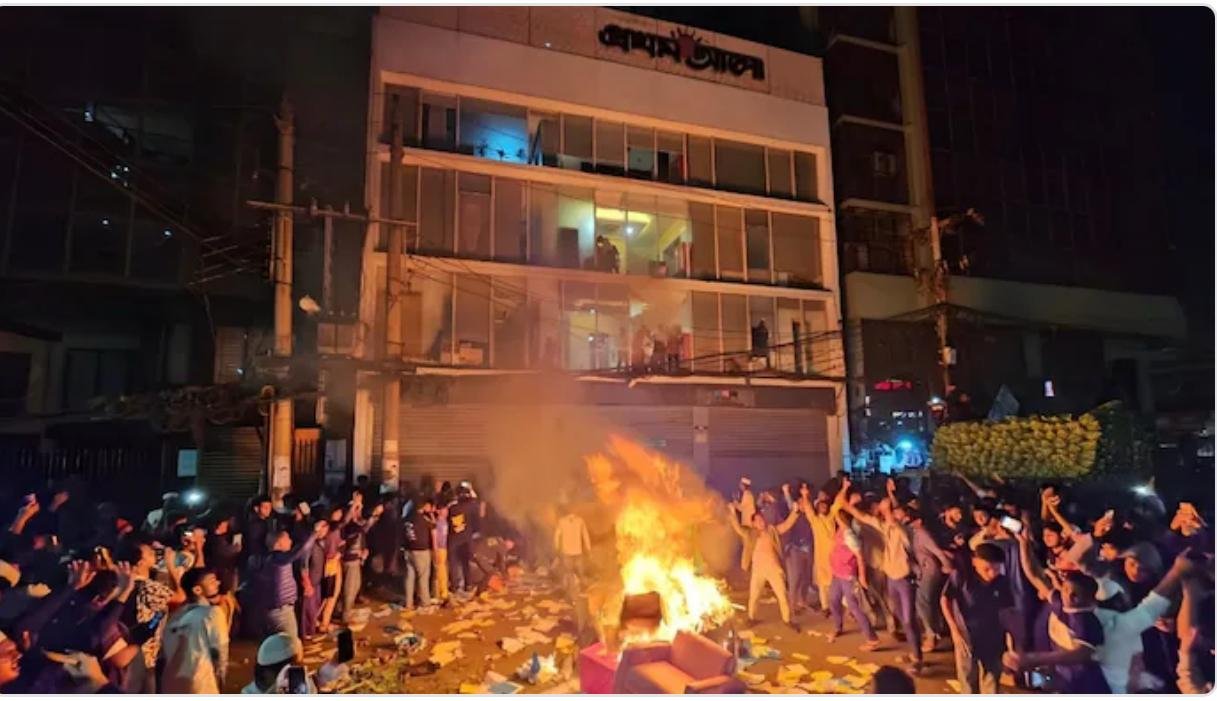
Mob Killings Double in January Compared to December: MSF Report
Dhaka | January — Incidents of mob violence in Bangladesh rose sharply in January, with deaths from mob beatings more than doubling compared to the previous month, while fatalities in custody also increased significantly, according to a new monitoring report by the Manabadhikar Shongskriti Foundation (MSF).The rights organisation recorded 21 deaths caused by mob beatings in January, compared to 10 deaths in December 2025, marking a steep month-on-month increase. The findings were published today in MSF’s monthly human rights monitoring report, which described the situation during the month as “alarmingly violent and complex.”MSF, chaired by prominent rights activist Sultana Kamal, expressed deep concern over the growing prevalence of mob justice, warning that the lack of visible state action against such violence has contributed to a sense of impunity.“The absence of effective measures against extrajudicial and mob-related killings has emboldened perpetrators,” the report stated, adding that the trend reflects a declining public confidence in the rule of law.Rise in Unidentified Bodies and Custodial DeathsThe report also documented an increase in the recovery of unidentified bodies. In January, 57 unidentified bodies were found, up from 48 in December, further highlighting concerns over public safety and accountability.Deaths in custody emerged as another major area of concern. According to MSF, 15 people died in prison custody in January, a sharp rise from nine deaths recorded the previous month. In addition, two individuals died while in the custody of law enforcement agencies during the same period.MSF attributed the rise in custodial deaths primarily to medical negligence, inhumane treatment, and administrative failures within the prison system, calling for urgent reforms to ensure detainee safety.Election-Related Violence IntensifiesWith the 13th national parliamentary election approaching, the report noted a noticeable escalation in political violence. In January alone, four people were killed and 509 others injured in election-related clashes. By comparison, only one death was recorded in such incidents in December.The organisation warned that unchecked political violence could further destabilise the country during the pre-election period.Concerns Over Mass Arrest TacticsThe report also highlighted a sharp increase in the use of “unnamed accused” in police cases linked to political activities. The number of unidentified individuals named in such cases surged from 110 in December to 320 in January.Human rights defenders argue that this practice enables indiscriminate arrests, allowing law enforcement agencies to detain individuals without clear evidence and fostering fear among political activists and the general public.Women, Children, and Minorities at RiskMSF described the situation facing women and children as a “severe human rights crisis.” In January, the organisation recorded 257 incidents of violence against women and children, including 34 cases of rape and 11 incidents of gang rape.Attacks targeting religious minority communities also increased significantly. The report noted 21 incidents involving theft, vandalism, or damage to temples and idols in January, up from just six incidents in December.Call for Immediate ActionMSF urged the authorities to launch immediate, impartial, and transparent investigations into all reported violations. The organisation stressed that protecting citizens’ lives and rights is essential to restoring public trust in the justice system.Without decisive intervention, the report warned, rising mob violence, custodial deaths, and political repression could further erode democratic norms and the rule of law in the run-up to the national election.
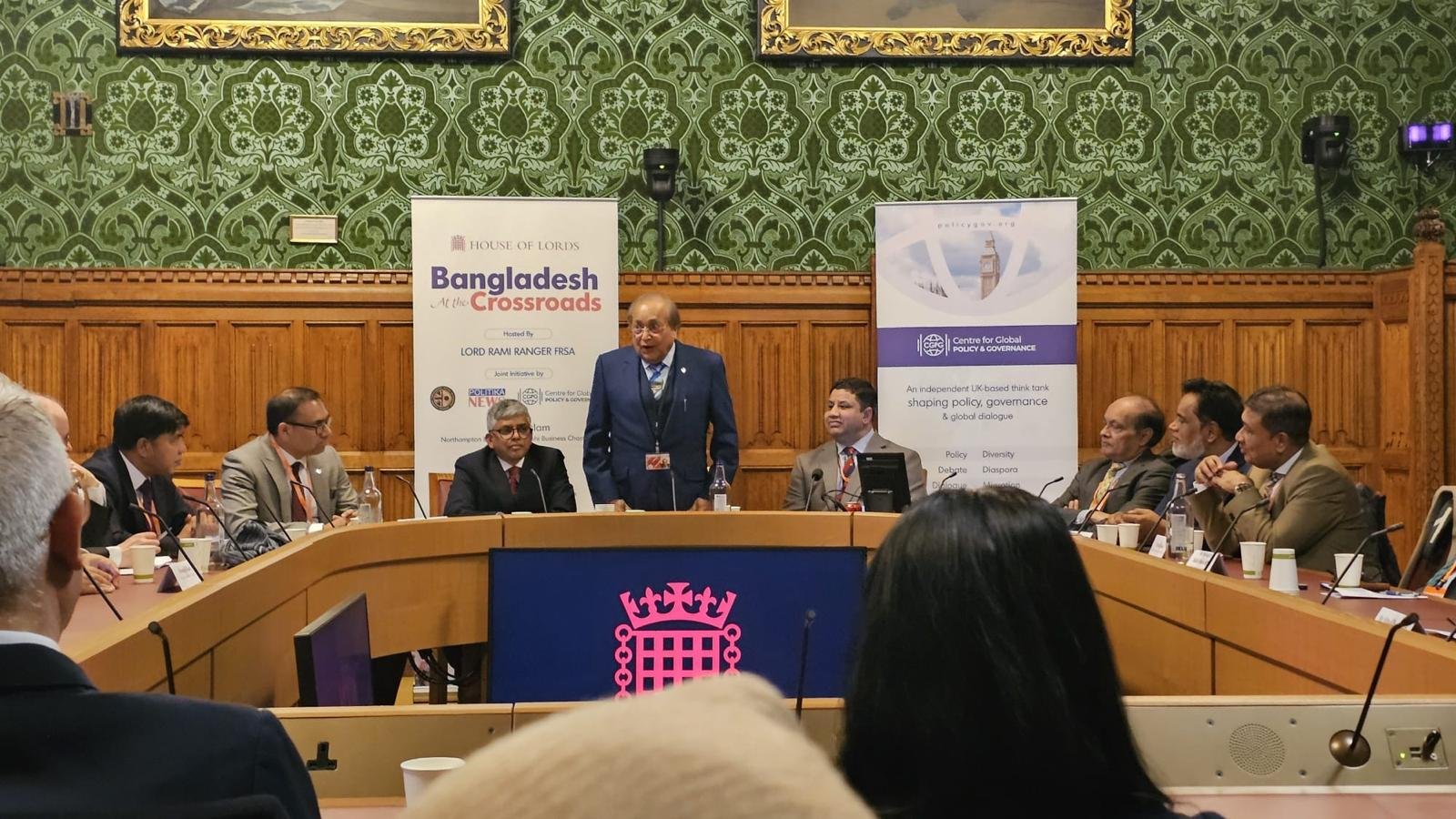
No Superpower Will Save Bangladesh - Only Its People Can, Says Lord Rami Ranger
The “Bangladesh at the Crossroads” seminar was held in Committee Room 3 of the House of Lords on Wednesday, 28 January 2026. The event was hosted by Lord Rami Ranger and jointly organised by Politika News, the Centre for Global Policy and Governance, and the Northampton British Bangladeshi Business Chamber. The meeting was formally welcomed by Councillor Naz Islam of Northampton Town Council and presided over by Lord Rami Ranger. A cross-party discussion and interactive Q&A session followed, moderated by Tanvir Ahmed, Editor-in-Chief of Politika News. The keynote address was delivered by Barrister Sonjoy Kumar Roy, Co-Founder of the Centre for Global Policy and Governance.Lord Rami Ranger’s Address Delivering a deeply personal and wide-ranging speech, Lord Rami Ranger urged Bangladesh to pursue a future grounded in secular democracy, tolerance, respect for diversity, and the rule of law, warning against political division, religious misuse, and reliance on external powers.“No superpower will save a nation from within,” Lord Ranger said.“Only its people, its values, and its vision can.”He praised the Bangladeshi diaspora in the United Kingdom for its resilience, hard work, and contribution to British society, highlighting how visibility, education, and leadership within the community inspire future generations. Referring to Britain’s success as a multicultural society, Lord Ranger said progress was built on respect for faith, equality before the law, and protection of minorities. Drawing on his own life experiences, he cautioned against the politicisation of religion, arguing that faith should remain a personal matter rather than a mechanism of control. He stressed that national development cannot be achieved without empowering citizens, particularly women, through education, opportunity, and good governance. Lord Ranger also warned that global powers act out of strategic interest rather than loyalty, urging Bangladesh to rely on internal unity and democratic values rather than external alliances. He expressed sorrow over the erosion of respect for Bangladesh’s historical legacy and appealed to community leaders and the diaspora to engage constructively in safeguarding the country’s democratic foundations. Remarks by Bob Blackman CBE MPRobert John Blackman CBE MP, Member of Parliament for Harrow East, attended the seminar as a Special Guest and reflected on the deep historical relationship between the United Kingdom and Bangladesh. Recalling Britain’s support during Bangladesh’s 1971 War of Independence under Prime Minister Edward Heath, he noted that Bangladesh’s founding leader made one of his earliest international visits to the UK, underscoring the longstanding ties between the two nations. Addressing Bangladesh’s current political situation, Mr Blackman said that while international attention had focused on protests and the tragic loss of student lives during the previous government’s tenure, developments following the change in government had raised serious concerns about democratic stability and the rule of law. “The credibility of any election depends on participation, inclusivity, and public confidence,” he said, adding that opinion polling suggested a significant proportion of the Bangladeshi population continues to support political parties currently unable to participate freely in the electoral process. “If political parties are prevented from standing in elections, democracy itself is placed under question,” Mr Blackman warned, noting that bans, boycotts, or exclusions ultimately weaken representative governance. He also expressed concern over reports of a proposed referendum that could fundamentally alter Bangladesh’s constitutional direction, cautioning that any attempt to influence voters through intimidation or coercion would be incompatible with democratic norms and could have lasting consequences for the country’s stability. Turning to human rights, Mr Blackman said documented attacks against religious and minority communities—including Hindus, Christians, and minority Muslim groups—were matters of serious concern. “These are not social media fabrications,” he said. “They are documented cases involving real victims, including killings, arson, and the destruction of homes and places of worship.” He urged members of the Bangladeshi diaspora in the UK to engage actively with their local Members of Parliament and called for stronger scrutiny and a more proactive response from the Foreign, Commonwealth & Development Office. Mr Blackman concluded by reaffirming his commitment to raising these issues in Parliament before departing due to parliamentary duties. Panellists and ContributorsThe seminar featured contributions and participation from Anwar Choudhury, former British diplomat and senior foreign service figure; Shahagir Bakth Faruk MSc, Adviser Emeritus of the British Bangladeshi Chamber of Commerce & Industry; Osama Khan, Vice-Chancellor of the University of South Wales; Nadira Naznin Rakhi, DPhil student at the University of Oxford and Lecturer at the University of Dhaka; MA Rouf, Trustee of the Northampton Bangladeshi Association; Dr Zaki Rezwana Anwar, Mother and Child Health Specialist; Mitu Choudhury, Secretary General of the Bangladesh Caterers Association (UK); Bashir Ahmed BEM, Chairman of Prospect Gaze Limited and former President of the British Bangladeshi Chamber of Commerce & Industry; Professor Dr Sanawar Choudhury, CEO of RCI Accountancy; Professor Dr Habib-e-Millat, President of the Global Centre for Democratic Governance; Aminul Haque, former diplomat and intelligence officer of Bangladesh; Md Razib Parvez, Founder of the Governance Policy Explore Centre; Haradhan Bhowmik, former President of the Sarbojanin Baba Lokenath Association (UK); Moinul Islam Monju, Michael Murphy, and Syed Ali Ziru, Barristers and Human Rights Lawyers; Ameena Tabassum, Author and Data Professional; Harmuz Ali, President of the Bangladesh Welfare Association; Ansar Ahmed Ullah, Journalist at The Daily Star; Shofa Miah, Director of Newham Voices and Ashok’s Vision; Md Zakir Hussain, Director of Community Careline Medway Ltd; and Adity Roy, Choreographer and Dancer and Syed Ali Ziru, Barrister and Human Rights Lawyer.
Bangladesh Referendum Risks Creating an Islamic State – Warns British MP Bob Blackman
Robert John Blackman CBE MP, a senior British parliamentarian and Member of Parliament for Harrow East since 2010, attended and addressed the high-level seminar titled “Bangladesh at the Crossroads” held at the House of Lords. Mr Blackman currently serves as Chair of the 1922 Committee and Chair of the Backbench Business Committee; positions he has held since 2024.The seminar took place in Committee Room 3 of the House of Lords and was hosted by Lord Rami Ranger. The event was jointly organised by Politika News, the Centre for Global Policy and Governance, and the Northampton British Bangladeshi Business Chamber.The meeting was formally welcomed by Councillor Naz Islam of Northampton Town Hall and presided over by Lord Rami Ranger. A cross-party debate and interactive Q&A session followed, moderated by Tanvir Ahmed, Editor-in-Chief of Politika News. The keynote address was delivered by Barrister Sonjoy Kumar Roy, Co-Founder of the Centre for Global Policy and Governance. Key Messages Emphasised by Bob Blackman CBE MPBangladesh referendum risks creating an Islamic stateElection credibility depends on participation, inclusivity, and public confidenceBanning political parties undermines democracyElections held without inclusivity cannot represent the Bangladeshi peopleIntimidation, coercion, or armed influence at polling stations is not democracyMinority persecution in Bangladesh is real, documented, and ongoingThe UK government must not ignore Bangladesh’s human rights crisisDiaspora communities must engage MPs and demand accountability Remarks by Bob Blackman CBE MPLord Rami Ranger is your host this afternoon. I have been to Bangladesh on several occasions. The United Kingdom has had a longstanding friendship with Bangladesh. When Bangladesh fought for independence in 1971, under Prime Minister Edward Heath, the UK supported Bangladesh’s independence, even when others were blocking it. Indeed, the founding father of democracy in Bangladesh, Sheikh Mujibur Rahman, made his first visit after independence to the UK, meeting Prime Minister Heath. That is the historical context of our relationship. Since the coup took place and a caretaker leadership emerged, many of us were initially in two minds. There were, of course, serious concerns about demonstrations and the killing of students during Sheikh Hasina’s premiership. However, the fact that she was forced out, followed by tribunals meeting and sentencing her to death in her absence, and the targeting of other Awami League figures, is deeply concerning.On my visits to Bangladesh, I have always sought to meet leaders of all political parties. We want to be friends with everyone, and we want to see Bangladesh on a stable and sound footing. My concern is that with elections scheduled next month, they cannot currently be described as free, fair, and inclusive. The Awami League may be unpopular with some, yet polling suggests at least 30 percent of the population still supports it.Let me be clear: I do not support any political party in Bangladesh. But if you start banning political parties from standing in elections, you have a serious problem. On one of my previous visits, I told BNP leaders not to boycott elections, because if you do not stand, you cannot win. If you participate and believe cheating has occurred, that is the time to complain. Boycotts leave you without representation and do not help democracy. Unfortunately, boycotts have happened, and that is not helpful.If, in this country, we banned a political party simply because we did not like them, that would be unacceptable. The same principle applies in Bangladesh. Elections conducted under these conditions will not be representative of the Bangladeshi people, and that will not improve the situation in any way. There is also a push for a referendum ahead of elections. If people wish to pursue constitutional change through a referendum, that is a matter for the country. However, the direction of this proposed referendum is extremely serious. It would effectively create an Islamic state, which I do not believe the people of Bangladesh want. Worse still are reports of attempts to force people to vote in favour through intimidation, including armed individuals at polling stations. That is not democracy. If that happens, it would be disastrous for Bangladesh’s future. Another concern is support from some quarters for closer alignment with Pakistan. Men, women, and children died for Bangladesh to be free from Pakistan. I do not believe the people of Bangladesh want reunification in any form, particularly with a country where military rule dominates and democracy is effectively dead. I have been raising human rights concerns in Bangladesh for weeks and months in the House of Commons. Minority communities—Hindus, Christians, and minority Muslim sects—are being relentlessly targeted. People are being killed in the streets, places of worship are being burned, and homes are being ransacked. This is not about inclusivity; it is about exclusivity and the removal of minorities.These are not fabricated stories or social media misinformation. I have been shown documented evidence, names, and details of people who have been killed and why. These are real murders. We must continue to call this out.My advice to all of you is simple: contact your local MPs. We discuss foreign policy constantly, yet Bangladesh is often ignored. There has, in my view, been a lacklustre response from the Foreign, Commonwealth & Development Office. They appear content to let the caretaker leadership continue without sufficient scrutiny. I urge you to engage MPs of all parties. Email them, visit their surgeries, and explain the problem. I will continue to speak out, even if only a small number of us do. A video released last week reached half a million views, showing that people care. Despite claims of fake news, the reality is that people are dying because of who they are, their religion, and their political affiliation. That is absolutely unacceptable. It is a pleasure to open this conference on behalf of Lord Ranger. I regret that I must leave shortly due to another parliamentary commitment, but I wish you a productive and meaningful conference. Thank you. Participants and ContributorsThe seminar featured contributions and participation from Anwar Choudhury, former British High Commissioner to Bangladesh; Osama Khan, Vice-Chancellor of the University of South Wales; Nadira Naznin Rakhi, DPhil student at the University of Oxford and lecturer at the University of Dhaka; Shahagir Bakth Faruk MSc, Adviser Emeritus, British Bangladeshi Chamber of Commerce & Industry; Dr Zaki Rezwana Anwar, Mother and Child Health Specialist; Mitu Choudhury, Secretary General of the Bangladesh Caterers Association (UK); Bashir Ahmed BEM, former President of the British Bangladeshi Chamber of Commerce & Industry; Professor Dr Sanawar Choudhury, CEO of RCI Accountancy; Professor Dr Habib-e-Millat, President of the Global Centre for Democratic Governance; Aminul Haque, former diplomat and intelligence officer of Bangladesh; Md Razib Parvez, Founder of the Governance Policy Explore Centre; Haradhan Bhowmik, former President of the Sarbojanin Baba Lokenath Association (UK); Moinul Islam Monju, barrister and human rights lawyer; Michael Murphy, barrister and human rights lawyer; Ameena Tabassum, author and data professional; Harmuz Ali, President of the Bangladesh Welfare Association; Ansar Ahmed Ullah, journalist at The Daily Star; Shofa Miah, Director of Newham Voices; Md Zakir Hussain, Director of Community Careline Medway Ltd; Adity Roy, choreographer and dancer; and Syed Ali Ziru, barrister and human rights lawyer. Representatives from British Bangladeshi civil society were also present and shared their perspectives.
High-Level Bangladesh Seminar to Be Held at the House of Lords
A high-level international seminar examining Bangladesh’s political and democratic trajectory is set to take place at the House of Lords on Wednesday, 28 January, bringing together senior UK parliamentarians, legal experts, academics, policymakers, and representatives of the British Bangladeshi diaspora.Titled “Bangladesh at the Crossroads: Democratic Stability, Investment and Diaspora Safety,” the seminar will be hosted in a Committee Room of the House of Lords and aims to provide a balanced parliamentary platform for discussion on Bangladesh’s governance, rule of law, investment climate, minority protection, and the evolving role of the diaspora in the country’s future.The event is jointly organised by Lord Rami Ranger FRSA, Politika News, the Northampton British Bangladeshi Business Chamber, and the Centre for Global Policy and Governance (CGPG). Organisers say the seminar reflects growing interest within the UK Parliament and wider policy community in Bangladesh at a critical moment for its democratic institutions and international relationships.The discussion will feature members of both the House of Lords and the House of Commons, alongside constitutional and legal experts, senior academics from leading UK universities, journalists, business leaders, representatives of human rights organisations, and prominent figures from the British Bangladeshi community.Key themes expected to shape the discussion include democratic legitimacy and constitutional governance, electoral integrity and political participation, judicial accountability in line with international legal standards, and the role of diaspora engagement in strengthening investment, remittance flows, and long-term development. The seminar will also explore avenues for reinforcing UK–Bangladesh relations in the context of shared democratic values and economic cooperation.According to the organisers, a formal post-seminar publication and e-book will be produced, compiling expert contributions, analysis, and policy recommendations emerging from the discussions.The event comes amid heightened parliamentary and public interest in Bangladesh, particularly given the size, economic contribution, and political engagement of the British Bangladeshi diaspora in the United Kingdom.Venue: Committee Room, House of LordsTime: 3:15 PMDate: Wednesday, 28 January 2026